How to Spot a Busan Sashimi Restaurant Where Locals Eat, Five Things Regulars Check
Inside a Jagalchi dining hall where tourists and regulars sit at the same long tables, and the habits that give the regulars away
The Short Answer
Five checks mark a Busan sashimi restaurant where locals eat. One, ask for the day catch first. Two, read the grain and thickness of the cut, with the first slice in garlic soy sauce. Three, add a local side like the seafood platter (from KRW 50,000) or domestic live hagfish on a coal grill (from KRW 60,000). Four, count the closing broth in from the start, a rockfish stew from KRW 50,000 or cod soup at KRW 15,000. Five, know the weekday lunch hour for the KRW 20,000 sashimi set. Side dishes change daily, centered on whatever is freshest. 220m from Jagalchi Station Exit 2, +82-10-8998-4803, open daily 09:00 to 21:00.
수정횟집
What does a sashimi restaurant where locals eat actually mean in Busan
Jagalchi Haean-ro, 2nd-floor dining hall
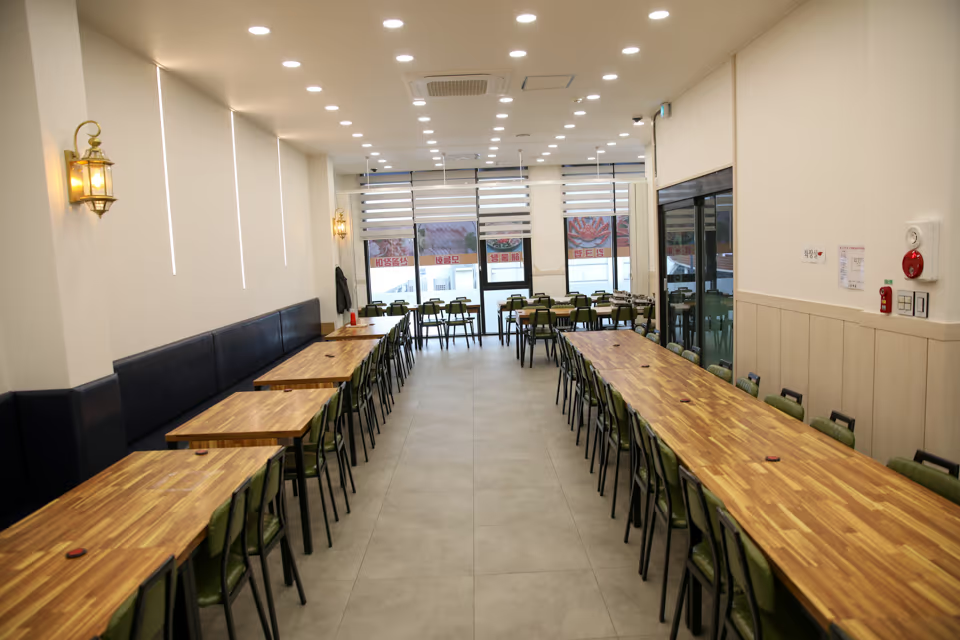
The short answer is that a place where locals eat is defined by the habits of its guests, not by its sign. Regulars do not study the menu for long. They ask what came in that day first, and they finish ordering while they are still sitting down. The photo shows the second-floor hall of Sujeong Hoejib, where long wooden tables run along the wall, so a group table and a small table for two can be split on the same floor. With generous seating across the first and second floors, regulars and travelers can arrive at the same hour without anyone being pushed out of a seat. Over more than ten years in this hall, the Jagalchi ajimae who runs the floor has watched the same five habits repeat among regulars. They ask about the day catch. They read the cut. They add a local dish beside the sashimi. They count the closing bowl of hot broth into the order from the start. And they choose their hour. The sections below take each habit one at a time, with a real photo from the hall, so you can use the list as a checklist on your own visit, wherever in Busan you end up eating.
Before You Go
- Regulars ask what came in today before they look at the menu
- Seating across two floors means regulars and travelers fit in at the same hour
- The five checks: day catch, cut, local dish, hot broth, timing
수정횟집
Why do Busan regulars check the cut of the sashimi first
Haean-ro dining hall
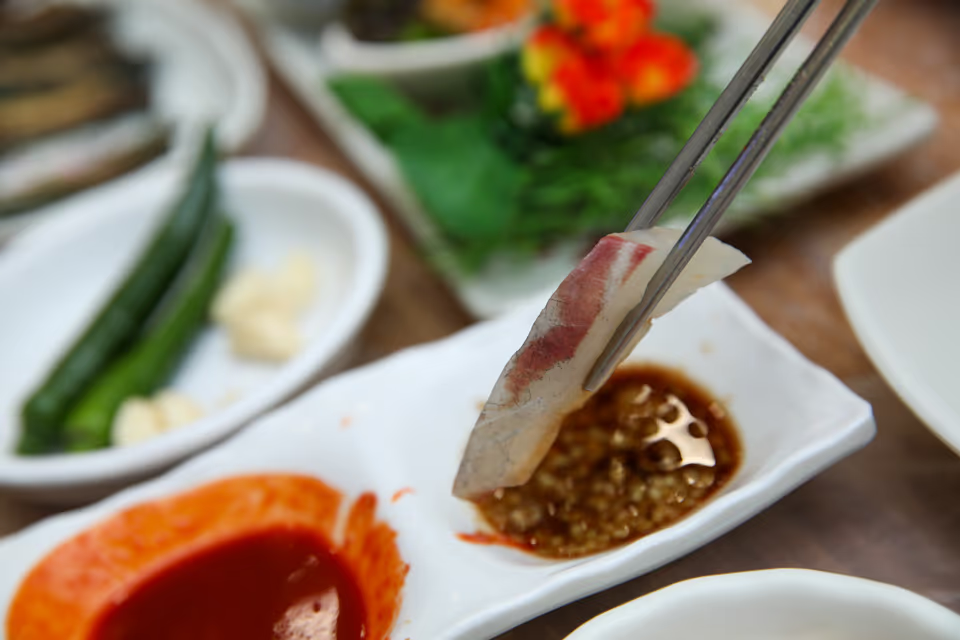
The first thing a regular does when the plate lands is lift one slice and look at the grain. As in the photo, if the flesh does not droop when held up on chopsticks and the grain on the cut face looks alive, the fish was prepared and stored properly. Thickness is another signal. White-flesh fish sliced too thin loses its chew, and sliced too thick it turns coarse, so a kitchen that changes the thickness for each species is a kitchen with good hands. Dipping that first slice lightly into a soy-based sauce with minced garlic is another regular habit. The seasoning is gentler than vinegared chili paste, so the true flavor of each species comes through untouched. Only after that first taste do most regulars reach for the chili paste or wrap a slice in lettuce. Assorted sashimi here follows fixed-size pricing, starting at KRW 60,000 (about USD 43) for a small, so once the cut checks out, you simply choose the size that matches your headcount.
Before You Go
- A slice that holds firm on the chopsticks means good preparation
- First slice goes in the soy sauce, to taste the species itself
- Assorted sashimi at fixed-size pricing from KRW 60,000 for a small
수정횟집
How live octopus and sea squirt reach the table at a local Busan spot
Haean-ro dining hall
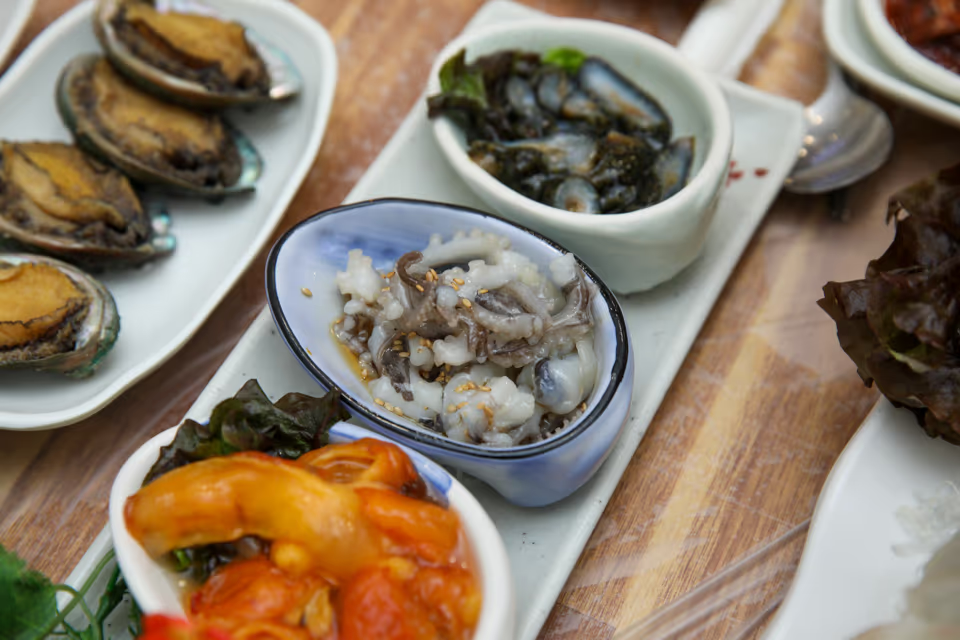
Few regulars eat only sashimi and leave. The seafood side you see in the photo, live octopus, sea squirt and abalone served in separate small dishes, comes from ordering the seafood platter (small KRW 50,000, medium KRW 80,000, large KRW 100,000, about USD 36, 58 and 72) or live octopus and abalone as single dishes. The build changes with whatever seafood arrived that day, so asking before you order is the most accurate approach. The chewy bounce of live octopus dipped in sesame oil and salt, sea squirt with its deep ocean aroma, and abalone served in the shell all differ from sashimi in temperature and texture, which changes the rhythm of the whole table. The reason regulars add this side is simple. This is a spot inside the Jagalchi waterfront trade where ingredients turn over fast, and they know a second plate with a different temperature and texture lifts the entire meal. Abalone sashimi and grilled abalone are prepared the same way, sized to your group, from KRW 50,000 for a small.
Before You Go
- Seafood platter small KRW 50,000, medium 80,000, large 100,000
- Live octopus goes in sesame oil and salt, sea squirt is eaten as is
- The build changes with what seafood arrived that day
수정횟집
Busan coal-grilled live hagfish, the dish locals order beside sashimi
Haean-ro coal grill
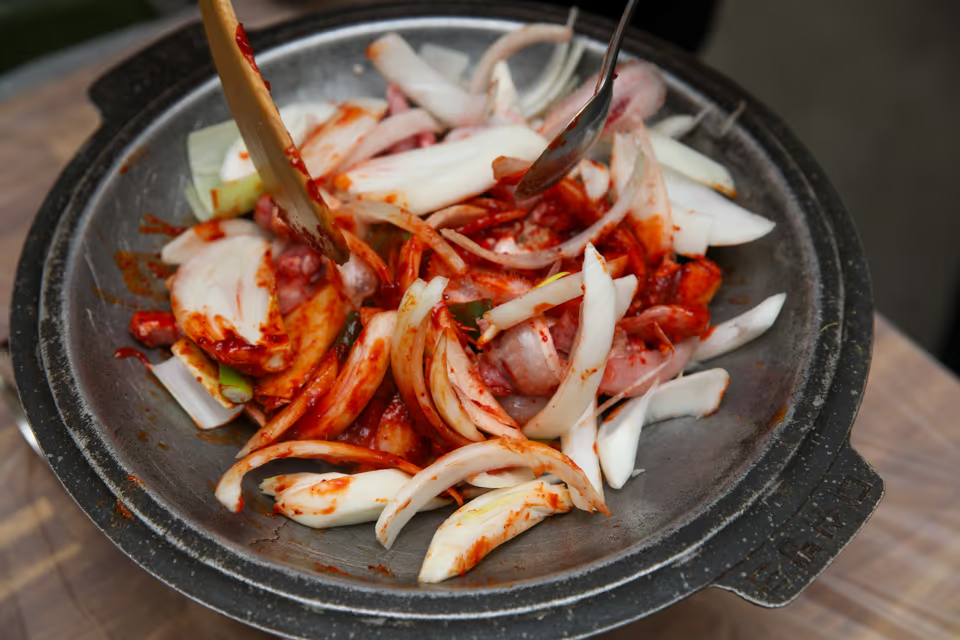
Among Jagalchi regulars, hagfish works as a kind of yardstick. Sujeong Hoejib puts domestic live hagfish over a coal fire, and the signature method, as in the photo, is to lay a generous bed of onion on a cast-iron plate and stir-fry the hagfish with its seasoning on top. Prices run KRW 60,000 for a small, 80,000 for a medium, 100,000 for a large and 120,000 for an extra large (about USD 43, 58, 72 and 87). Once the smoky flavor of the coal soaks into the sauce, the taste practically asks for a glass of soju, and some evening guests come in for the hagfish alone without ordering any sashimi. Because the live hagfish is cleaned and goes straight onto the plate, the bite still has its springiness when you chew. The sauce carrying that coal-fire flavor stays on the plate to the very end, so it keeps working as a drinking dish down to the last piece. For a traveler, ordering this beside the sashimi is the clearest way to eat the way Jagalchi locals do.
Before You Go
- Live hagfish small KRW 60,000, medium 80,000, large 100,000, extra large 120,000
- Stir-fried in seasoning over a bed of onion on a cast-iron plate
- Cleaned and cooked right away, so the bite stays springy
수정횟집
When locals order the spicy fish stew to finish a sashimi meal
Haean-ro dining hall
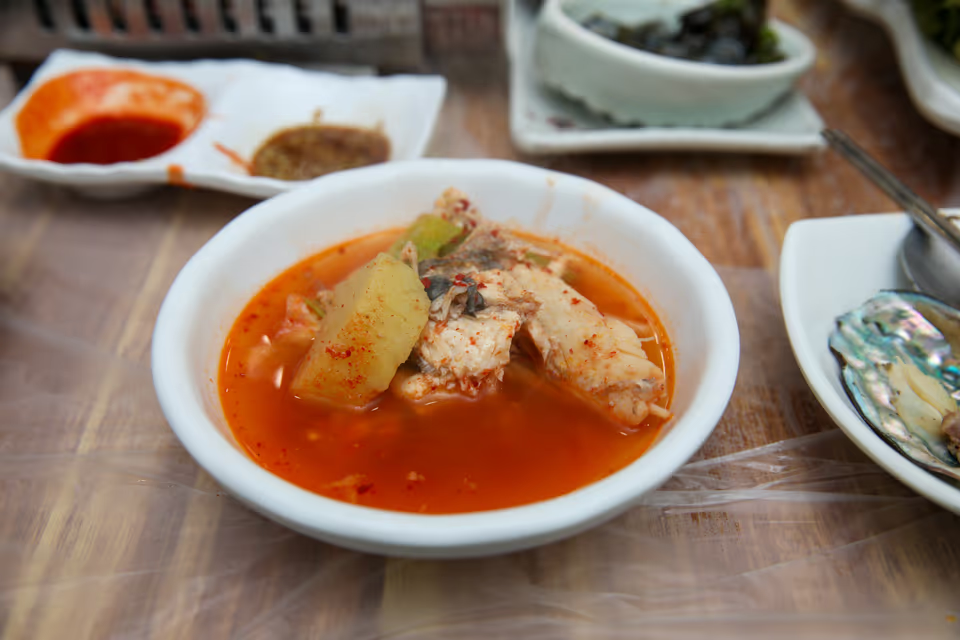
Regulars settle the finish at the ordering stage. They put in a spicy rockfish stew (from KRW 50,000, about USD 36, for a small) together with the sashimi, and when the table is in full swing they ladle it into small bowls, one each, as in the photo. The best moment is when radish and potato have sweetened the broth and the rockfish flesh is starting to come apart along its grain. Guests eating alone, or anyone who wants a lighter finish, often close with a single earthenware bowl instead, such as cod soup at KRW 15,000 or eel soup at KRW 15,000 (about USD 11 each). You can ask for the heat level to be adjusted when you order. A table that has hot broth waiting ends cleanly, whether the evening was about drinking or about a meal. Ordering the stew at the start also means the kitchen can time it, so it reaches the boil just as the sashimi plate is running low, rather than arriving after a long wait at the end.
Before You Go
- Rockfish stew small KRW 50,000, medium 80,000, large 100,000
- For a light finish, cod or eel soup at KRW 15,000 in an earthenware bowl
- Ask for the heat level when you order
수정횟집
What time do locals eat sashimi in Busan, and what the side dishes reveal
Haean-ro dining hall
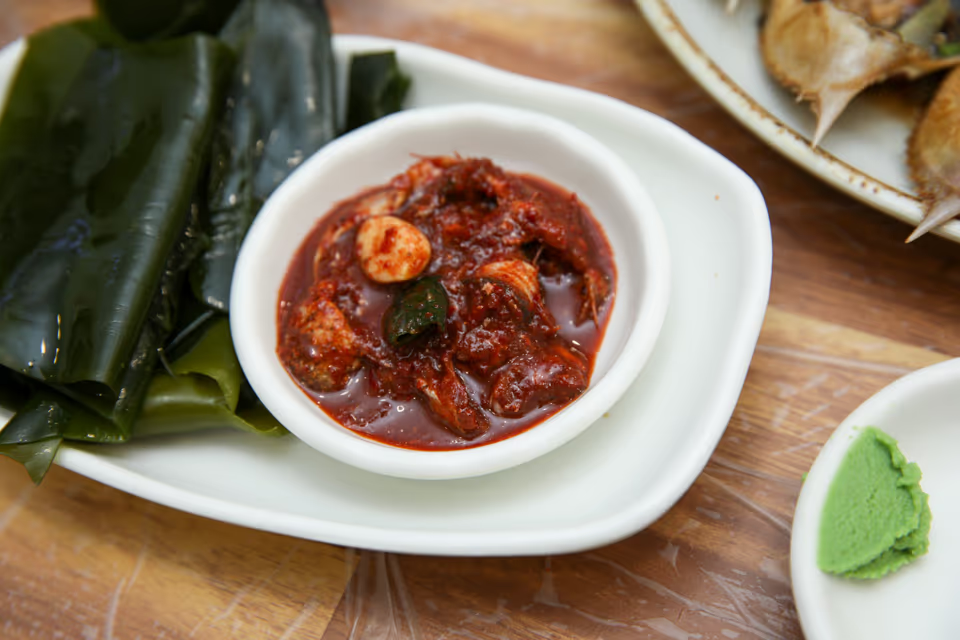
The guest who walks in alone on a weekday afternoon and orders the sashimi set meal at KRW 20,000 (about USD 14) or a sashimi rice bowl at KRW 15,000 (about USD 11) is someone who knows the timetable of this trade. They skip the evening peak and finish a quiet meal in the daytime. Their eye for side dishes is different too. As with the raw seaweed and salted clams in the photo, the side dishes are built from what came in that day, and they change daily, centered on whatever is freshest. Regulars know that a table which never repeats is itself a sign that ingredients are turning over. If you want to know how to set a bigger table, the guide that separates the different Korean sashimi spreads is the next read, and if you are coming from the Nampo-dong side, the Nampo-dong evening route connects these five habits to a real order. Read together, they turn the checklist on this page into a full evening.
Before You Go
- Daytime sashimi set meal KRW 20,000, sashimi rice bowl KRW 15,000
- Side dishes change daily, centered on whatever is freshest
- Read on with the guides to Korean sashimi spreads and the Nampo-dong evening route
| Item | Price | Notes |
|---|---|---|
| Assorted Sashimi, Small | KRW 60,000 | About USD 43 · fixed-size pricing |
| Seafood Platter | KRW 50,000 / 80,000 / 100,000 | About USD 36 / 58 / 72 · small, medium, large |
| Live Hagfish, Coal Grilled | KRW 60,000 to 120,000 | About USD 43 to 87 · small to extra large |
| Spicy Rockfish Stew | KRW 50,000 / 80,000 / 100,000 | About USD 36 / 58 / 72 |
| Cod Soup or Eel Soup | KRW 15,000 | About USD 11 · earthenware bowl |
| Sashimi Set Meal | KRW 20,000 | About USD 14 · the weekday lunch choice |
| Sashimi Rice Bowl | KRW 15,000 | About USD 11 |
Busan Local Sashimi FAQ
Nearby Spots
Jagalchi Station Exit 2
3-minute walkThe shortest approach, 220m
Jagalchi Market main hall
5-minute walkBrowse the market in the morning, then an early lunch
Shindonga Fish Market
5-minute walkWholesale and retail stalls best seen early
BIFF Square
7-minute walkA Nampo-dong stroll before or after dinner
Yeongdo Bridge
10-minute walkA night-view walk after the meal
Before You Go
- Ask what came in today before you open the menu
- Taste the first slice in garlic soy sauce, then move to chili paste
- Order the spicy stew at the start so it arrives on time
- Weekday lunch before the evening peak is the quietest hour
- 220m from Jagalchi Station Exit 2, open daily 09:00 to 21:00
The Order Regulars Follow
Ordering in the Same Sequence as a Jagalchi Regular
- Ask about the day catch and decide the assorted sashimi size
- Assorted sashimi, spicy rockfish stew and the seafood platter together
- Dip in garlic soy sauce to check the grain and the taste of the species
- Shift the pace with live octopus, sea squirt and abalone, add the live hagfish
- Close with the stew ladled into small bowls
Where Each Part Happens
Jagalchi Haean-ro restaurant row
- The main hall where regulars and travelers share tables
Jagalchi Market main hall
- Morning browsing, then an early lunch
Nampo-dong and BIFF Square
- A 7-minute stroll before or after dinner
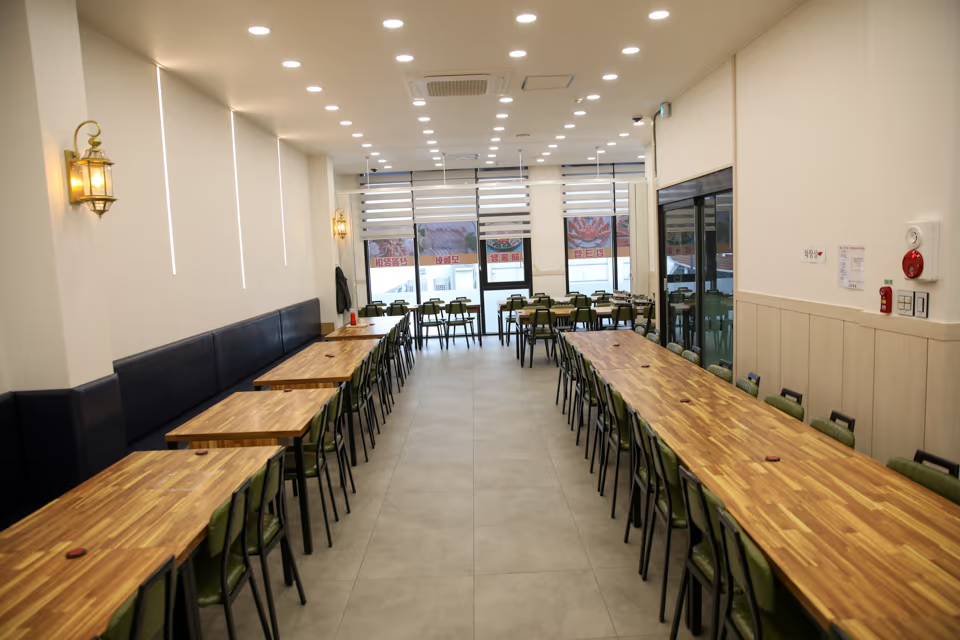
In a hall with the prices on the wall, a Jagalchi ajimae with over 10 years of experience sets your table the way she sets it for regulars
From asking about the day catch to coal-grilled hagfish and a hot stew, in the same order regulars use
Read the full guide