Seodeori-tang vs Maeuntang, What the Fish Frame Soup Really Is and How It Differs
When the part changes, so does the name, how an old Jagalchi restaurant tells its stews apart
The Short Answer
Seodeori is the name of a part, the bones and head left after a fish is filleted for sashimi, and maeuntang is a cooking style name for fish soup boiled spicy. Because the yardsticks differ, one pot goes by two names. Bone broth is heavy and rich thanks to gelatin, flesh broth is clear with plenty to chew. Ordering by the menu board name is more accurate: for a rich broth, rockfish maeuntang or seafood stew at KRW 50,000 small, 80,000 medium and 100,000 large, for a clear broth, cod or eel soup at KRW 15,000 and fresh cod or sea snail fish soup at KRW 20,000. You can ask for spice adjustment when ordering, or finish instead with braised hairtail from KRW 50,000 or a sashimi rice bowl at KRW 15,000. Side dishes change daily, built around whatever is freshest. 220m from Jagalchi Station Exit 2, inquiries at +82-10-8998-4803, open daily 09:00 to 21:00.
수정횟집
What does seodeori mean, and is seodeori-tang the same as maeuntang
Old restaurant on Jagalchi Haean-ro
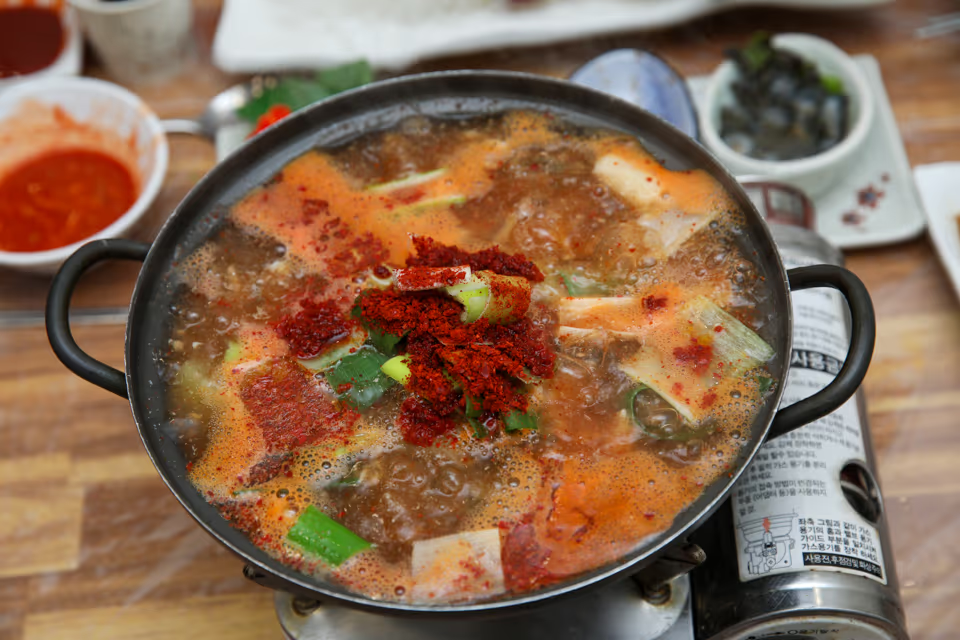
To give you the answer first, seodeori is not the name of a dish but a word for a part of the fish. Once a fish has been filleted for sashimi, what remains is the bones with the flesh taken off, the head and the area around the fins, and all of those together are called seodeori. So seodeori-tang means a broth simmered from those parts. Maeuntang, on the other hand, is closer to a word for a cooking method than for a part. Any fish soup boiled spicy with chili flakes and gochujang becomes maeuntang, whether it is made with flesh or with bones. The pot that goes up on the burner right after the sashimi at an old Jagalchi restaurant, like the one in the photo, is in fact the place where these two names overlap. Looked at by part it is seodeori-tang, looked at by cooking it is maeuntang. That is exactly why people searching online mix the two names up. Below, we separate them one by one, the part, the broth, the order it comes out in and how to order it.
Before You Order
- Seodeori = the bones and head left after filleting for sashimi
- Maeuntang = a cooking style name, fish soup boiled spicy
- The same pot is seodeori-tang by part and maeuntang by cooking
수정횟집
Fish bone broth vs fish flesh broth, how the taste differs
Dining hall on Haean-ro
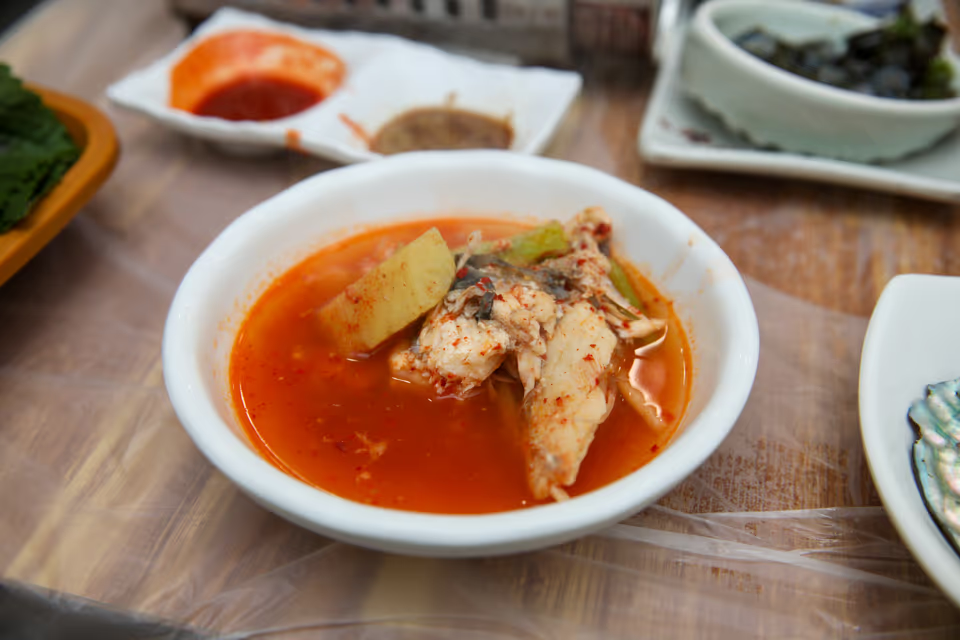
The quickest way to see the difference is to ladle one scoop into a small side bowl. As in the photo, broth drawn from the bones does not have large pieces of flesh in it, and the broth itself is rich. That is because gelatin attached to the bones and head melts out, giving the broth a heavier feel in the mouth. A stew cooked with flesh in it, by contrast, has a clearer, lighter broth with plenty of solid pieces to eat. Rather than one being better, choose according to the occasion. If you have eaten your fill of sashimi and want only hot broth to finish, the rich bone side suits you, and if you plan to have the broth with rice, the side with plenty of flesh is better. At Sujeong Hoejib, rockfish maeuntang is KRW 50,000 (about USD 36) for a small, KRW 80,000 (about USD 58) for a medium and KRW 100,000 (about USD 72) for a large, and seafood stew (haemul-tang) is prepared on the same price scale.
Before You Order
- The bone side is heavy and rich as the gelatin melts out
- The flesh side is clear and light with plenty to chew
- Rockfish maeuntang and seafood stew small KRW 50,000, medium 80,000, large 100,000
수정횟집
Why Koreans order the spicy fish stew right after the sashimi
Dining hall on Haean-ro
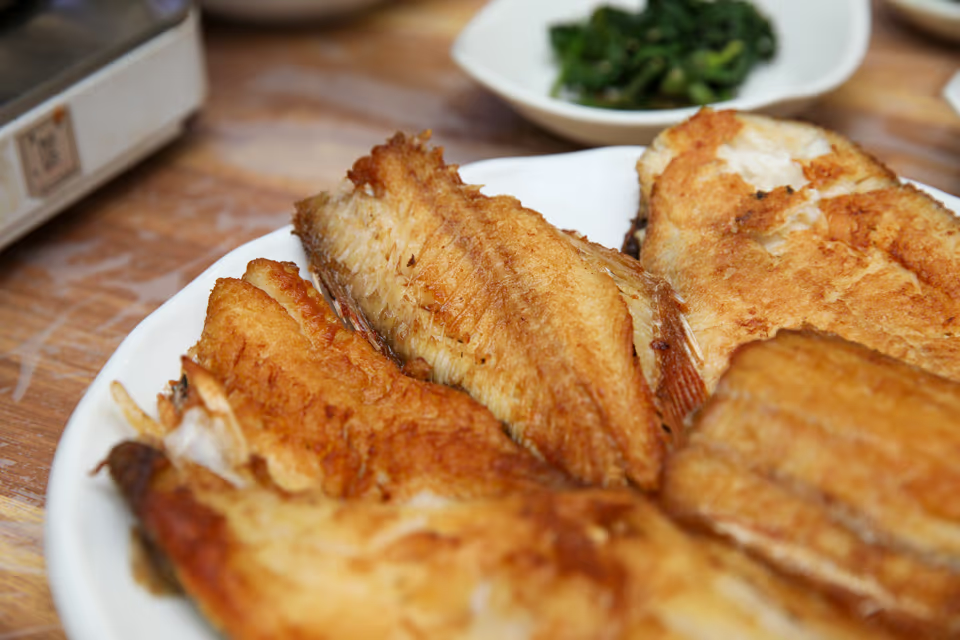
One thing to make clear first. The stews on the menu board are separate dishes with their own price, like rockfish maeuntang at KRW 50,000 for a small. Even so, there is a reason the habit of ordering a stew to follow the sashimi has settled in. When one fish is prepared, each part has its own use. The flesh goes to sashimi, the bones and head go to broth, and the rest goes to grilling or braising. The assorted grilled fish in the photo is a plate from the same line of thinking. Because a cooking method is set for each part, the order on the table also fell naturally into sashimi first, then grilled fish, then broth. This order is comfortable for guests as well. Starting with cold sashimi, passing through warm grilled fish and ending with hot broth, the temperature rises naturally as the meal comes to a close. Assorted grilled fish is KRW 40,000 (about USD 29) for a small, KRW 60,000 (about USD 43) for a medium and KRW 80,000 (about USD 58) for a large, and for anyone eating alone there is a separate grilled fish set meal at KRW 15,000 (about USD 11).
Before You Order
- Stews on the menu board are separate dishes with their own price
- Flesh to sashimi, bones and head to broth, the rest to grilling or braising
- Assorted grilled fish small 40,000, medium 60,000, large 80,000, set meal 15,000
수정횟집
How to order Korean fish soup that is not spicy
Dining hall on Haean-ro
If chili flakes are too much for you, there are two ways to go. One is to ask for the spice level to be adjusted when you order, and the other is to choose a different stew from the start. Cod soup (daegu-tang) at KRW 15,000 (about USD 11), fresh cod soup at KRW 20,000 (about USD 14), sea snail fish soup (mulmegi-tang) at KRW 20,000 and eel soup (jangeo-tang) at KRW 15,000 fall into this group. At tables with children or older guests, and at tables the day after a night of drinking, the clear options clearly go down better. In summer and during the late-season heat, plenty of guests turn the other way entirely and go cold. The photo shows premium mulhoe at KRW 25,000 (about USD 18), and regular mulhoe is KRW 18,000 (about USD 13), and once you pour the icy broth over it, your palate gets cleaned up in exactly the opposite way from a hot broth. Abalone porridge at KRW 20,000 also goes out often as a gentle finish.
Before You Order
- You can ask for the spice level to be adjusted when ordering
- For milder, cod soup or eel soup at KRW 15,000, fresh cod or sea snail fish soup at KRW 20,000
- On hot days, mulhoe at KRW 18,000 or premium mulhoe at KRW 25,000
수정횟집
Other ways to finish a sashimi meal besides spicy fish stew
Dining hall on Haean-ro
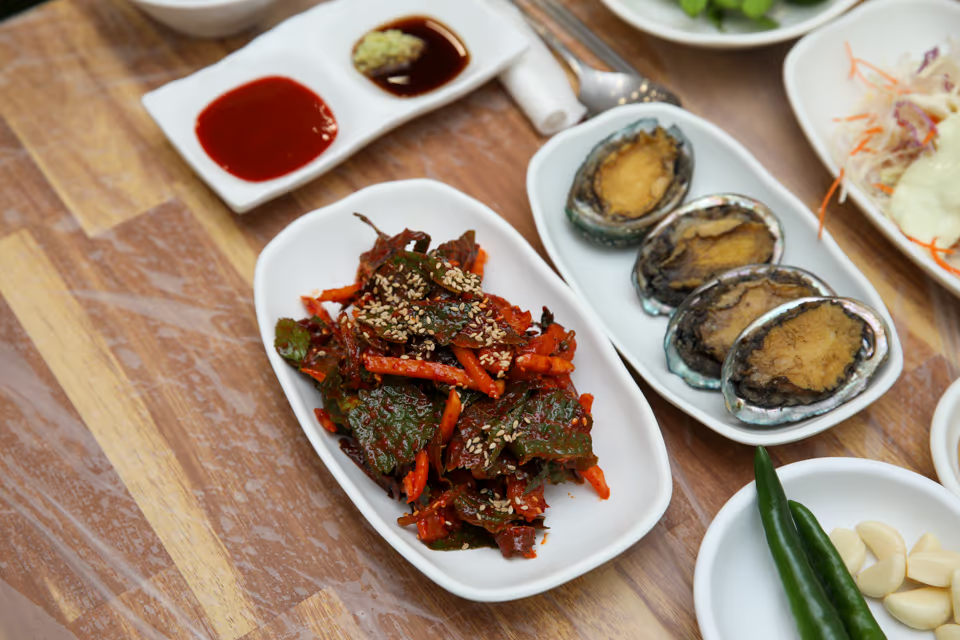
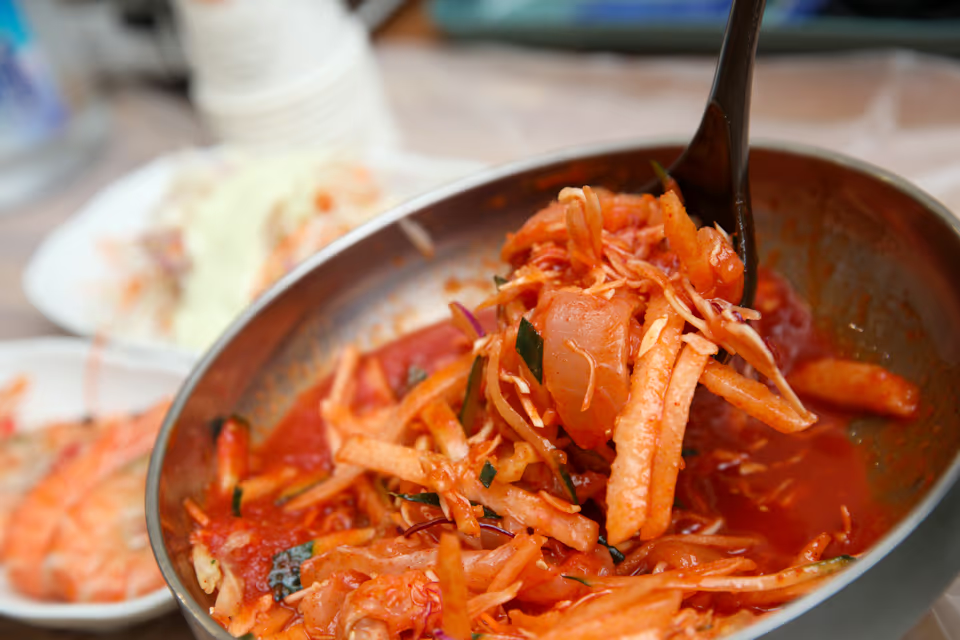
Some tables find a stew too much. That is when everyone is already full, or when time is awkward for moving on to broth. In that case a tangy spicy salad (muchim) is the better choice. A plate tossed sweet, sour and spicy with shredded vegetables, as in the photo, works to reset your appetite. If you want to finish properly with rice, braised hairtail (galchi-jorim) at KRW 50,000 (about USD 36) for a small, KRW 80,000 for a medium and KRW 100,000 for a large is a good pick, and for something light, the sashimi rice bowl at KRW 15,000 or sushi at KRW 15,000 (about USD 11) often goes out at the end of a meal too. There are also plates that suit the end of a drinking session, such as chopped live octopus (nakji tangtangi) at KRW 30,000 (about USD 22) or squid mulhoe (hanchi mulhoe) at KRW 20,000 (about USD 14). Either way, the side dishes filling the gaps on the table change daily, built mostly around whatever is freshest, so pick whatever flavor is missing from the spread of the day.
Before You Order
- Braised hairtail small KRW 50,000, medium 80,000, large 100,000
- For something light, sashimi rice bowl or sushi at KRW 15,000
- Chopped live octopus KRW 30,000 and squid mulhoe KRW 20,000 also make good finishing plates
수정횟집
How to order fish stew at a Korean sashimi restaurant, use the name on the menu
Dining hall on Haean-ro
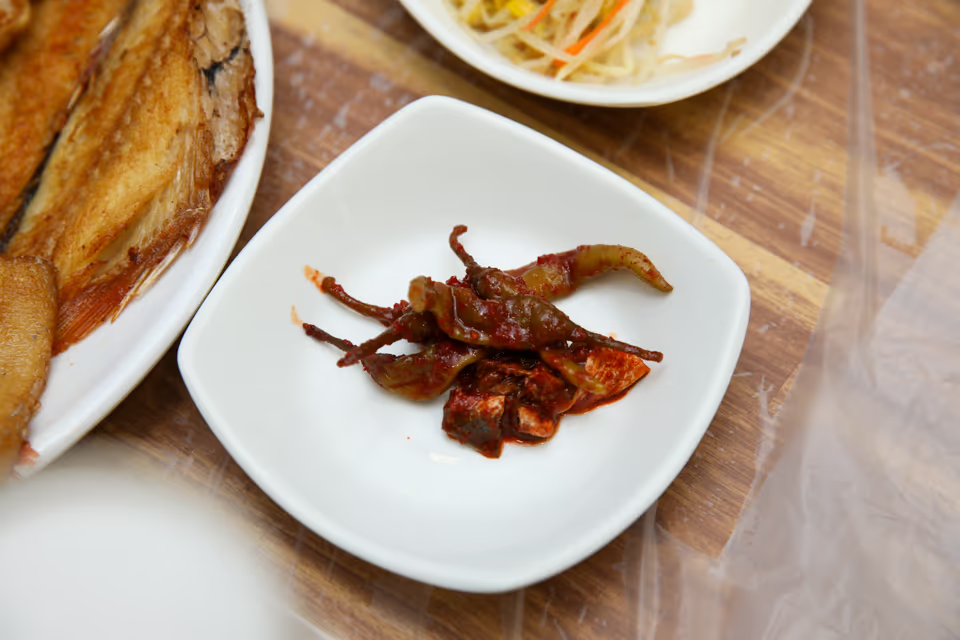
Because seodeori-tang is a word that points to a part, how it is written on the menu board can differ from restaurant to restaurant. So when you order, saying the name exactly as written on the menu board is the most accurate. At Sujeong Hoejib, for a rich broth say rockfish maeuntang, small KRW 50,000, for one with seafood in it say seafood stew, small KRW 50,000, and for a clear one say cod soup or eel soup at KRW 15,000. The small side dishes that come to the table, like the salted seafood (jeotgal) in the photo, change with the ingredients of the day. Requests like adjusting the spice level or adding rice go smoothly too if you mention them together at the ordering stage. If you are wondering how many people should order what, continue to the guide on combinations by party size, and if you are curious about the standards for choosing an old Jagalchi restaurant, continue to the guide on the five things locals check.
Before You Order
- For a rich broth, rockfish maeuntang or seafood stew at KRW 50,000 for a small
- For a less spicy one, cod soup or eel soup at KRW 15,000
- Ask for spice adjustment or extra rice together at the ordering stage
Seodeori-tang and Maeuntang FAQ
Nearby Attractions
Jagalchi Station Exit 2
3-minute walkShortest approach, 220m
Jagalchi Market main building
5-minute walkLook at live fish stalls before eating
BIFF Square
7-minute walkA Nampo-dong stroll before or after the meal
Gwangbok-ro fashion street
8-minute walkLinks up with a shopping route
Yeongdo Bridge
10-minute walkA night view walk after the meal
How the Table Flows
How a Table With a Stew Flows From Start to Finish
- Order rockfish maeuntang, small KRW 50,000, at the same time as the sashimi
- Start with cold sashimi while the pot begins to boil on the burner
- Bring in the warm course with assorted grilled fish, small KRW 40,000
- Once the flavor deepens, ladle it into side bowls to share
- With rice, braised hairtail small KRW 50,000, or light with a sashimi rice bowl KRW 15,000
Where Each Part Fits
The old restaurant row on Jagalchi Haean-ro
- Tables where the pot comes up right after the sashimi
Jagalchi Market main building
- A look at live fish stalls before the meal
Nampo-dong and BIFF Square
- A stroll 7 minutes on foot before or after eating
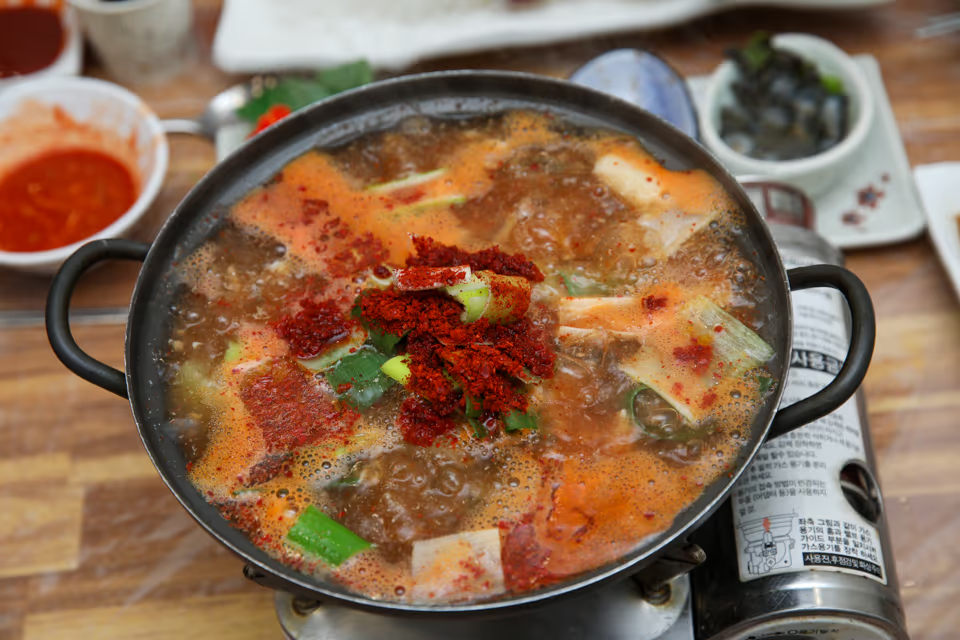
A table that wastes not even the bones, a Jagalchi ajimae with over 10 years of experience simmers the last pot
Seodeori-tang by part, maeuntang by cooking, and how to order by the menu board name
Read the full guide