Maeuntang Comparison, Sashimi Side Stew vs Specialty Stew
Seodeori-tang from leftover fish bones, pollock and catfish stews at specialty shops, and the secret herbs of Gyeongsang-do
Conclusion, Same Name, Different Worlds
Even though they share the same name, the seodeori-tang served after sashimi and the main-course stew at specialty restaurants are entirely different dishes in terms of broth, ingredients, and eating context. And the real regional divide is not about the seasoning, it is about the herbs. Banga leaf and sancho pepper from Gyeongsang-do add a flavor profile that simply does not exist elsewhere in the country. If you visit a sashimi restaurant in Busan, do not leave after the raw fish, add a pot of stew to your order and stay for the final bowl of broth. That banga-leaf-infused stew is an experience you are unlikely to find outside this region.
What Is Seodeori-tang? Korean Sashimi Restaurant Bone Stew Explained
Sashimi restaurants nationwide
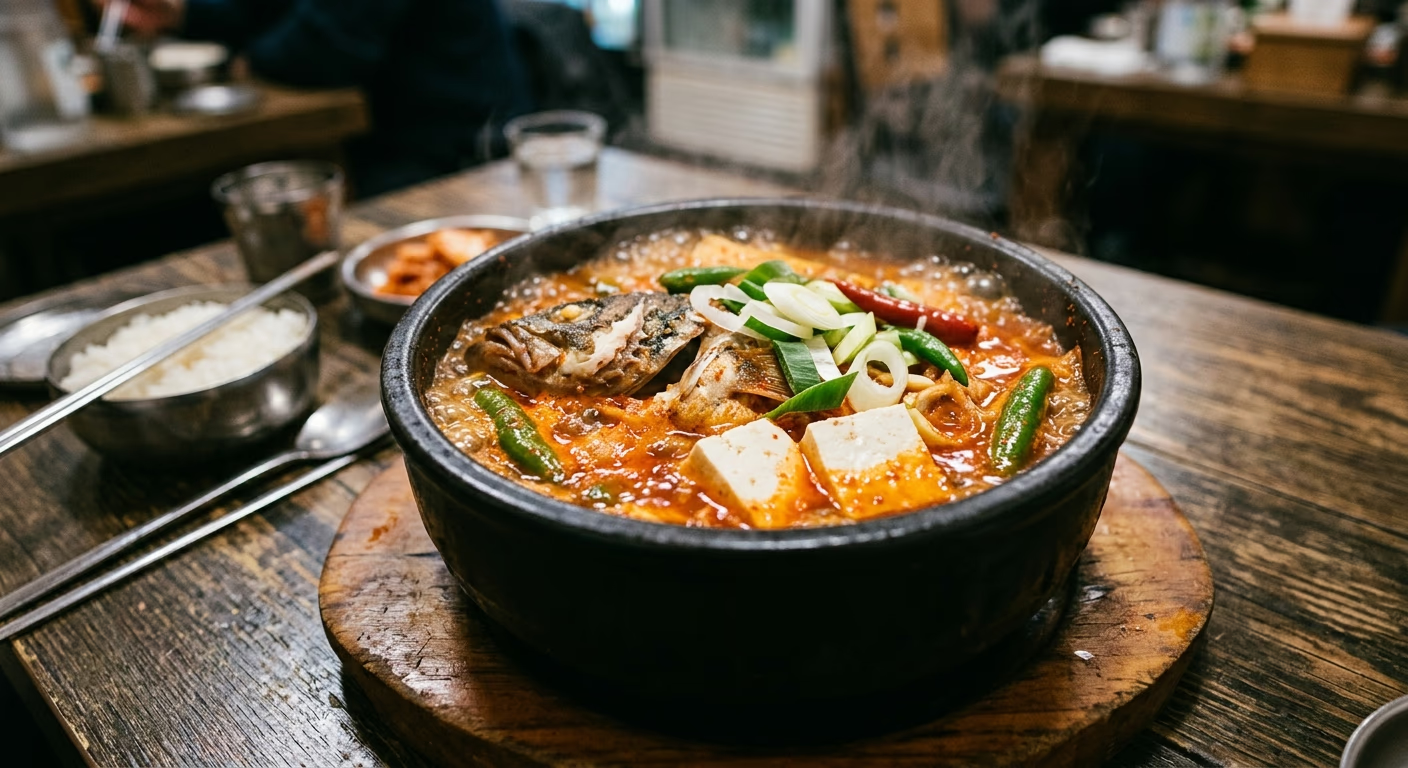
When you finish a platter of assorted sashimi or a full sashimi course, the bubbling pot of red-broth stew you ordered alongside it comes to the table. This final bowl actually has its own name, seodeori-tang. "Seodeori" refers to the leftover bones, heads, and skin after the fish has been filleted, and when these scraps are simmered with gochujang, doenjang, and gochugaru, the result is seodeori-tang. Records in Donguibogam (a 17th-century Korean medical encyclopedia) describe boiling leftover fish heads into soup, showing just how deep the tradition runs. Food researcher Lee Woo-seok has noted that "the broth served at sashimi restaurants follows a distinct method called seodeol-tang, different from what most people assume." The fascinating part is that this practice is not exclusive to any region, it is a shared culinary tradition at sashimi restaurants across the entire country.
Tips for Visitors
- This stew is a menu item of its own, order it together with the sashimi so it finishes cooking in time
- The name "seodeori-tang" comes from "seodeol" (bones and heads), and the tradition is documented in Donguibogam
- The broth flavor changes depending on the fish you ordered, olive flounder bones give a clean taste, rockfish bones produce a richer one
- If the broth has a slight viscosity, that means collagen has been properly extracted from the bones
Korean Maeuntang Specialty Restaurants, Pollock · Catfish · Cod Stew
Seoul & inland specialty restaurants
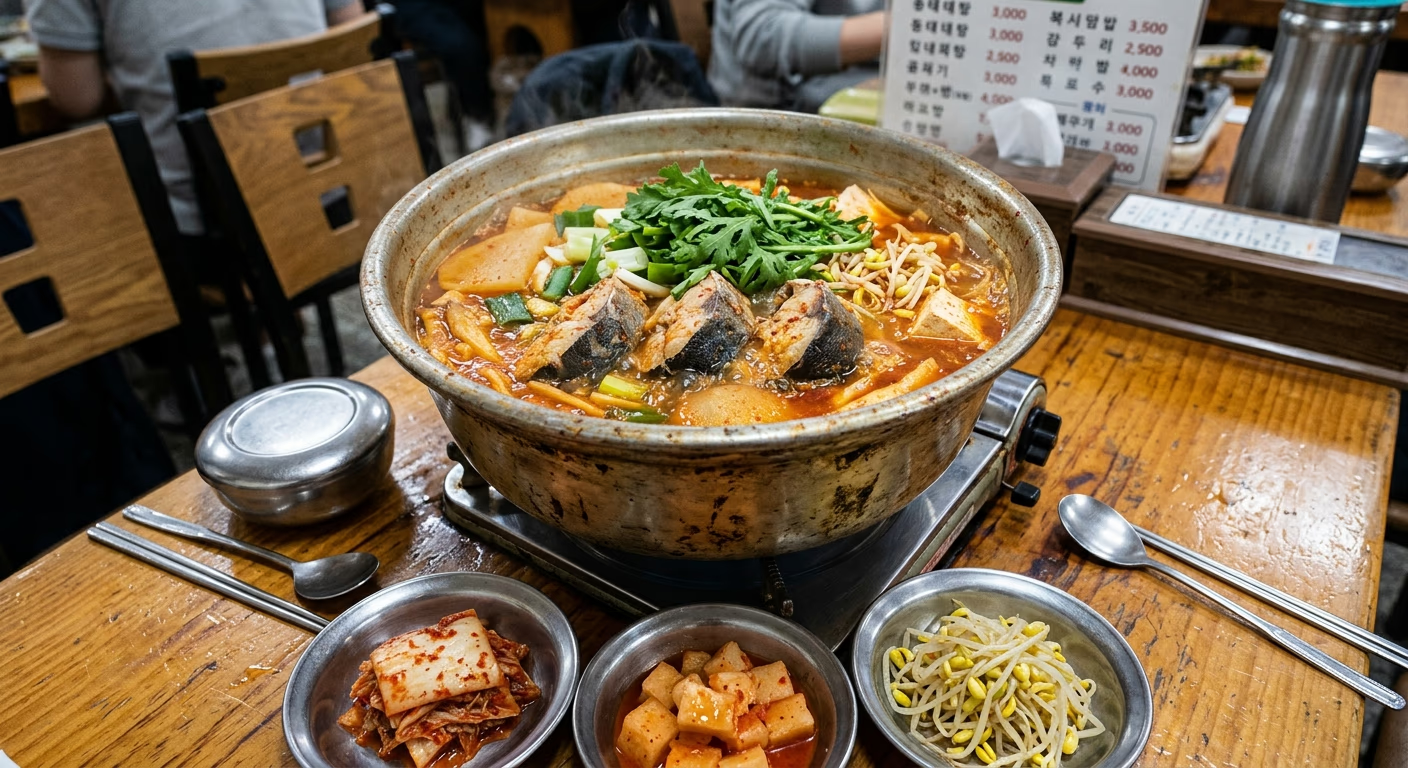
There is an entirely different world from the sashimi course finale. Think of the cod stew alley near Samgakji in Seoul, catfish specialists along Paldang and Cheongpyeong, or longstanding pollock stew restaurants that have served the same recipe for decades. At these places, the bubbling pot IS the main dish. Dongtae-jjigae (frozen pollock stew) is a beloved comfort food available year-round at a stable price. Freshwater catfish is described in the Encyclopedia of Korean National Culture as "the species enthusiasts rank above all others." Cod stew delivers a milky white broth with a refreshing umami kick, while mandarin fish (ssogari) is considered the pinnacle of freshwater ingredients.
Tips for Visitors
- The cod stew alley near Samgakji station in Seoul features restaurants that have been open for over 40 years
- Catfish specialists in Paldang and Cheongpyeong use freshwater fish from the upper Han River for deeper flavor
- Frozen pollock is available year-round at consistent prices, making it the most accessible option
- Adding ramyeon noodles or hand-torn dough (sujebi) is a common practice at specialty restaurants
Maeuntang Broth Difference, Instant Fish Bone Stock vs Pre-Made Base
Sashimi restaurant vs specialty restaurant
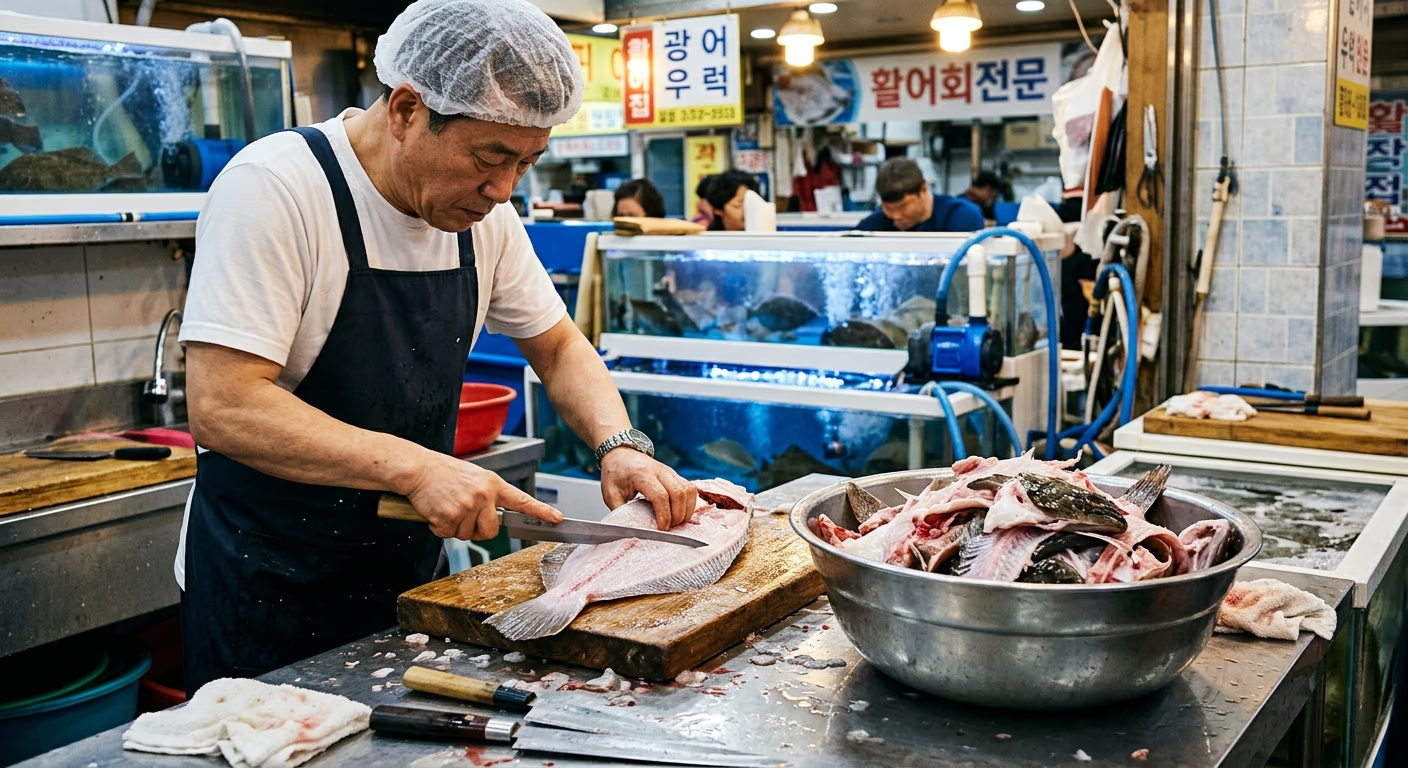
The most fundamental difference is where the broth begins. At a sashimi restaurant, the bones, heads, and skin from the fish you just ate go straight into the pot to produce an instant stock. Order olive flounder sashimi and you get olive flounder bone broth; order rockfish and the broth is rockfish-based. With an assorted platter, bones from multiple species blend into a complex, layered flavor. Specialty restaurants, on the other hand, rely on a pre-prepared base. Pollock stew uses anchovy-and-kelp stock with pollock added in, while catfish specialists simmer freshwater fish bones for hours to build their foundation. The former is "an extension of the fish you just ate," while the latter is "a perfected recipe reproduced each day."
Tips for Visitors
- A cloudy, slightly opaque broth means collagen has been thoroughly extracted, a sign of quality
- An assorted sashimi platter yields a more complex broth because bones from multiple species are combined
- Specialty restaurants use a pre-made base, so the stew arrives at the table faster after ordering
- "What fish is in the broth today?", ask at a sashimi restaurant and they will tell you which species went in
Busan Maeuntang Secret Herbs, Banga Leaf & Sancho Pepper Gyeongsang-do
Busan & Gyeongsang Province
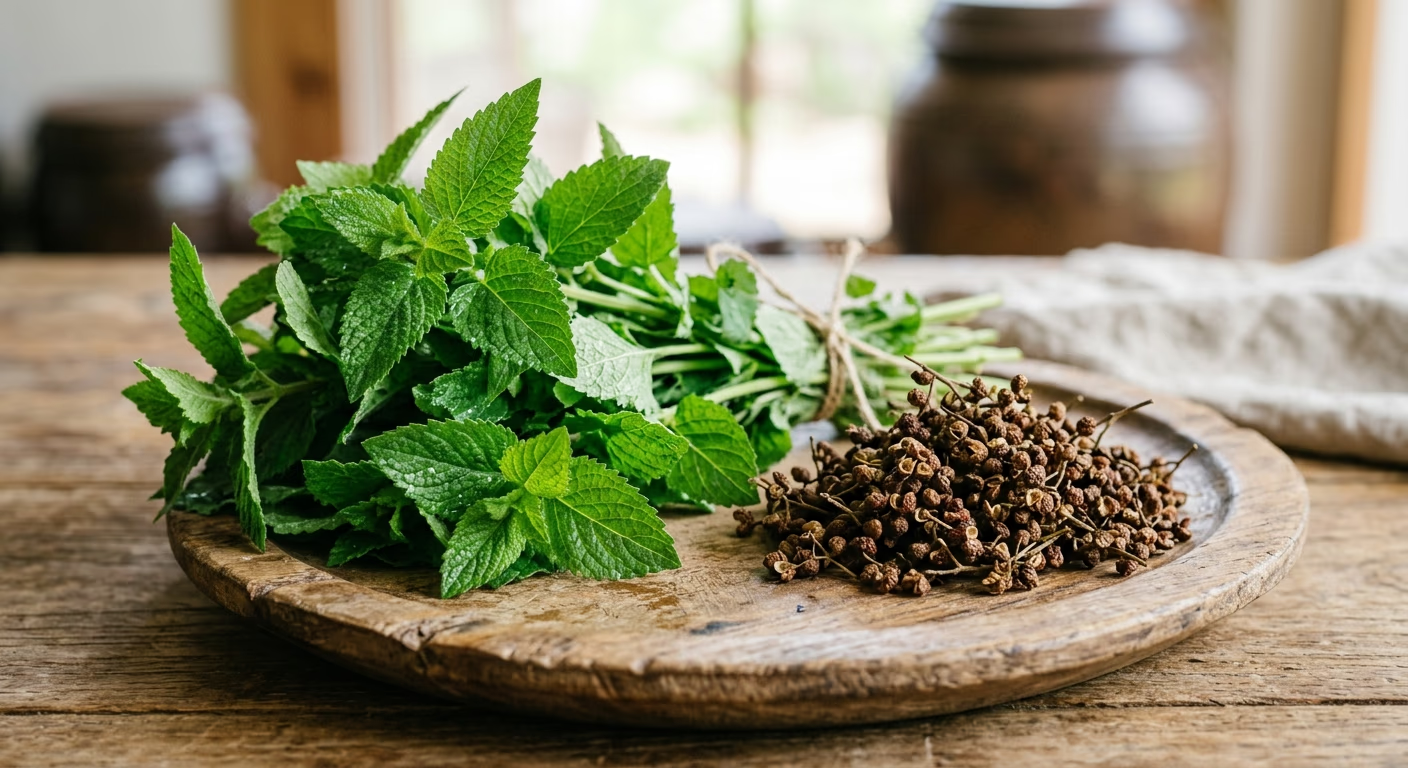
The real regional difference is not about the seasoning paste, it is about the herbs. In Gyeongsang Province (which includes Busan), cooks add banga leaf (baechohyang, a type of Korean agastache) and sancho pepper (chopi). Banga leaf carries a unique aroma somewhere between mint and perilla, cutting through fishiness while adding a refreshing herbal note. Visitors from Seoul or central Korea encountering this flavor for the first time often react with genuine surprise, it is that distinctive. Sancho pepper produces a slight numbing tingle on the tongue, similar to Sichuan peppercorn, and is an essential Gyeongsang-do spice also found in chueo-tang (loach soup). In contrast, restaurants in Seoul and central Korea use milder aromatics like water parsley (minari), crown daisy, and perilla leaves. Both the Encyclopedia of Korean National Culture and Namu Wiki document this as a defining Gyeongsang-do characteristic.
Tips for Visitors
- If the herbal aroma feels too unfamiliar, you can ask for the banga leaf to be left out
- Gyeongsang-do locals consider the stew bland without these herbs
- The numbing sensation of sancho pepper is in the same family as Chinese mala spice
- Visitors from Seoul rank this herb as the number-one surprise when eating in Busan
When to Eat Maeuntang, Sashimi Course Finale vs Main Dish Order
Sashimi restaurant vs specialty restaurant
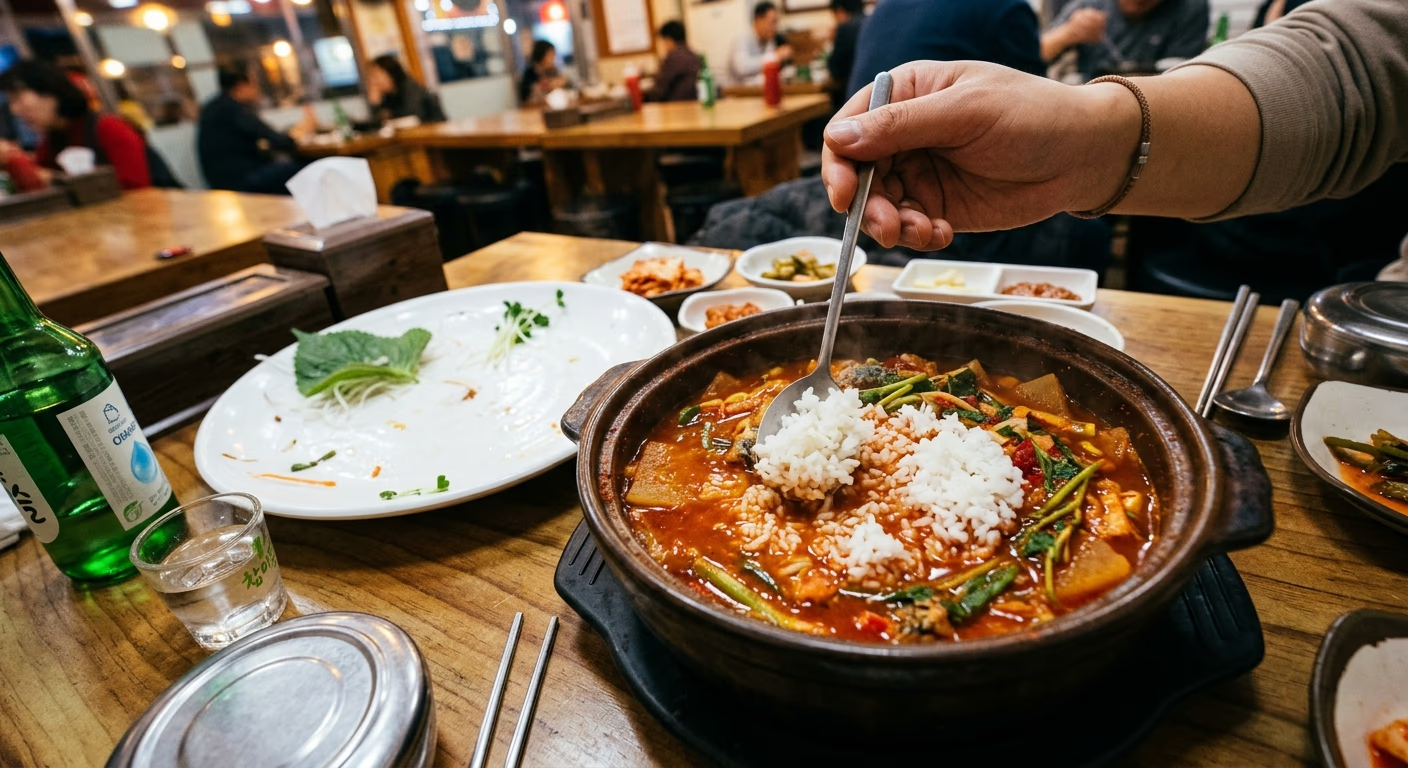
At a sashimi restaurant, the stew is the grand finale of the meal. Daehan Geupshik Shinmun (a Korean food-industry publication) even called it "a kind of dessert", the final chapter of a sequence that flows from raw fish to side dishes to piping-hot broth to rice spooned into the pot. The pot itself is a separately priced menu item, so you put the order in with the sashimi at the start and it finishes cooking exactly when you want it. At a specialty restaurant, however, the stew IS the destination. You walk into a pollock stew joint, order one pot, and eat it with rice and banchan as a complete meal. Driving to Paldang for catfish or heading to Samgakji for cod stew, the soup itself is the reason for the trip.
Tips for Visitors
- At a sashimi restaurant, the stew is ordered from the menu as its own dish, put it in with the sashimi at the start
- Spooning rice into the broth at the end is a universal Korean tradition
- At specialty restaurants, adding ramyeon noodles or sujebi dough for extra volume is perfectly normal
- Many places allow takeaway of leftover broth, feel free to ask
Korean Maeuntang Seasoning Myth Debunked, Gochujang vs Gochugaru Truth
Nationwide
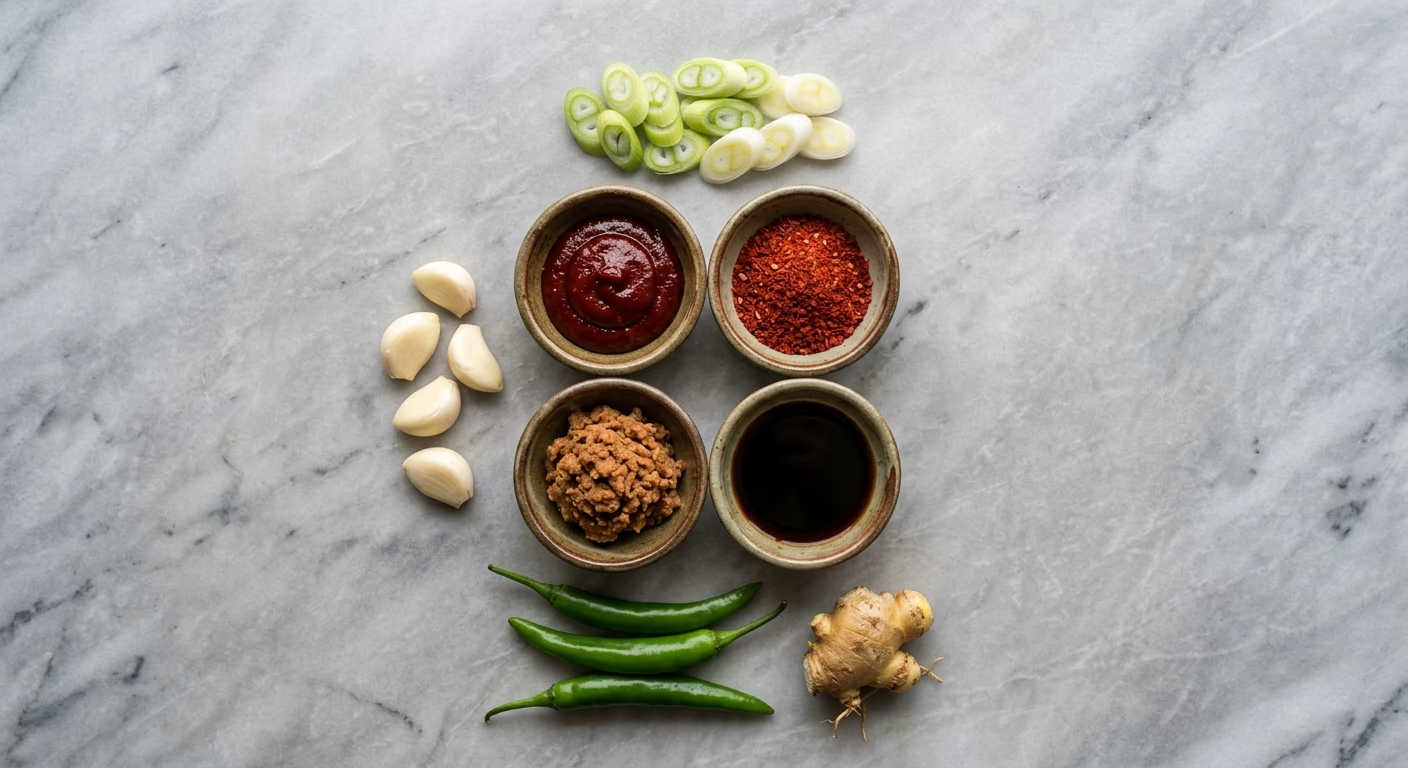
A persistent internet claim says "Busan uses gochujang, Seoul uses gochugaru." But according to the Encyclopedia of Korean National Culture, the standard method is to "add gochugaru in appropriate amounts and adjust the flavor with gochujang," and "the ratio is not fixed, it is blended freely." Namu Wiki likewise lists the base seasonings as "gochujang, soy sauce, doenjang, and gochugaru" without any regional distinction. In practice, some Busan sashimi restaurants use generous amounts of gochugaru, while certain Seoul pollock stew shops rely on a gochujang base. The seasoning depends on the individual cook and the type of fish being used, not the region.
Tips for Visitors
- The seasoning ratio depends on the fish species, not the region
- Saltwater fish often call for more gochugaru, producing a cleaner, brighter broth
- Freshwater fish are often paired with extra doenjang to tame the fishiness
- If you prefer a milder heat, just ask, most restaurants will gladly adjust the spice level
수정횟집
Jagalchi Coastal Road Sashimi Course Finale, Bone Broth Maeuntang
57-1 Jagalchi Coastal Road
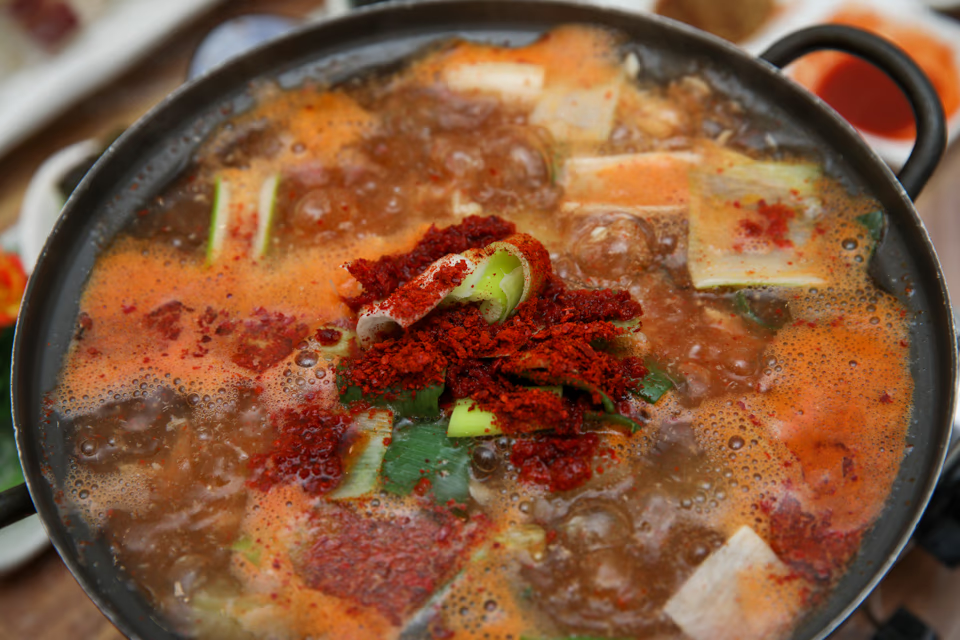
At this Jagalchi waterfront restaurant, live fish delivered every morning are filleted to order, and the leftover bones and heads go straight into the pot. The sashimi set meal (KRW 20,000) covers a plate of live-fish sashimi, rice, and side dishes, and the steaming pot is ordered separately from the menu: rockfish spicy stew or seafood stew, each KRW 50,000 for small, KRW 80,000 medium, and KRW 100,000 large. Put the pot in at the same time as the sashimi and it finishes cooking right as you reach the end of the meal. With an assorted sashimi platter (starting at KRW 60,000 for small), bones from multiple species go into that pot and the broth turns noticeably deeper. In the rockfish stew, thick chunks of flesh stay in the pot alongside the bone broth. True to the Busan tradition, a subtle banga leaf aroma drifts through the broth, unfamiliar at first, but the kind of flavor you start to miss once you have tried it.
Tips for Visitors
- The sashimi set meal (KRW 20,000) covers the sashimi, rice, and side dishes, the hot pot is ordered separately
- Rockfish spicy stew and seafood stew are their own dishes, KRW 50,000 small, KRW 80,000 medium, KRW 100,000 large
- Ordering assorted sashimi means multiple fish bone types in the broth for a richer flavor
- If the banga leaf aroma feels too unfamiliar, you can request it without, but trying it at least once is recommended
- After your meal, stroll along the coastal road, catch the Busan harbor night view, and head to Nampo-dong for dessert
Frequently Asked Questions
Nearby Attractions
Jagalchi Market
5 min walkKorea's largest seafood market, watch live fish and shellfish up close
BIFF Square
8 min walkBusan street food mecca featuring hotteok, spicy glass noodles, and more
Gukje Market
10 min walkTraditional market combining shopping and street food exploration in Nampo-dong
Yongdusan Park & Busan Tower
12 min walkPanoramic views of Busan harbor and Yeongdo from the observation deck
Yeongdo Bridge
7 min walkA bascule bridge that opens daily at 2 PM with views of Busan harbor
Tips for Visitors
- The stew is a separately priced menu item, order it together with the sashimi at the start
- Spooning rice into the broth is the official Korean way to finish a sashimi meal, do not skip it
- If you taste an unfamiliar herb in Busan, it is banga leaf, a Gyeongsang-do specialty
- If you cannot handle much spice, let the staff know in advance and they will adjust the heat
- Many sashimi restaurants offer free broth refills, ask if you want more
- Pairing a glass of soju with the stew is considered the quintessential sashimi restaurant experience
Recommended Course
Sashimi + Hot Broth, The Complete Course
- Jagalchi Station Exit 2 → arrive at Jagalchi Coastal Road
- Arrive at the restaurant, browse the fish tanks, check the daily catch
- Order the sashimi set or assorted platter plus a pot of stew, start with the live-fish sashimi
- The bone-broth stew you ordered arrives → spoon rice in for the finale
- Explore Jagalchi Market + stroll along the coastal road
- BIFF Square → hotteok dessert → Nampo-dong sightseeing
By Category
Sashimi restaurants (nationwide)
- Seodeori-tang (bone broth)
- Post-sashimi course
- Ordered as its own menu item
Gyeongsang-do & Busan
- Banga leaf aroma
- Sancho pepper kick
- Whole-rockfish stew
Seoul & inland specialists
- Dongtae-jjigae (pollock)
- Catfish stew
- Cod stew
- Fish roe stew
Gangwon & Gyeonggi freshwater
- Mandarin fish (ssogari)
- Trout
- Loach soup (chueo-tang)
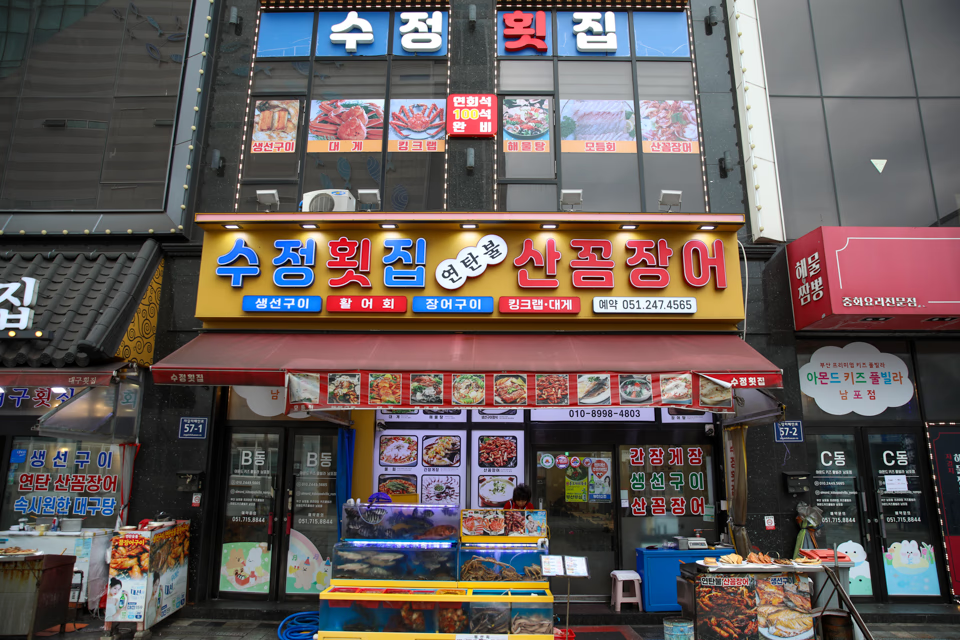
Jagalchi Coastal Road, a Jagalchi ajumae with over a decade of experienceprepares your table
Live-tank sashimi · Handmade soy crab · Charcoal-grilled hagfish · Sashimi set · Mulhoe
Read More