Korean Sashimi Dipping Sauces, Chojang, Soy Sauce with Wasabi or Ssamjang for Each Fish
Why four little sauce dishes come to the table, and which one your chopsticks should reach for with each kind of fish
The Short Answer
The four sauces at a Korean sashimi restaurant each have a job. White flesh takes soy sauce with a touch of wasabi, red flesh takes chojang, and a wrap takes a little chojang and one slice of garlic with ssamjang spread thinly on the greens only. When chojang builds up, dab raw seaweed in jeotgal to reset. The order runs first piece plain, then soy sauce, then chojang, then wraps, from mild to strong. Based on the table setup at a restaurant 220m from Jagalchi Station Exit 2.
수정횟집
Why a Korean sashimi table comes with chojang, soy sauce, wasabi and ssamjang
Jagalchi Haean-ro
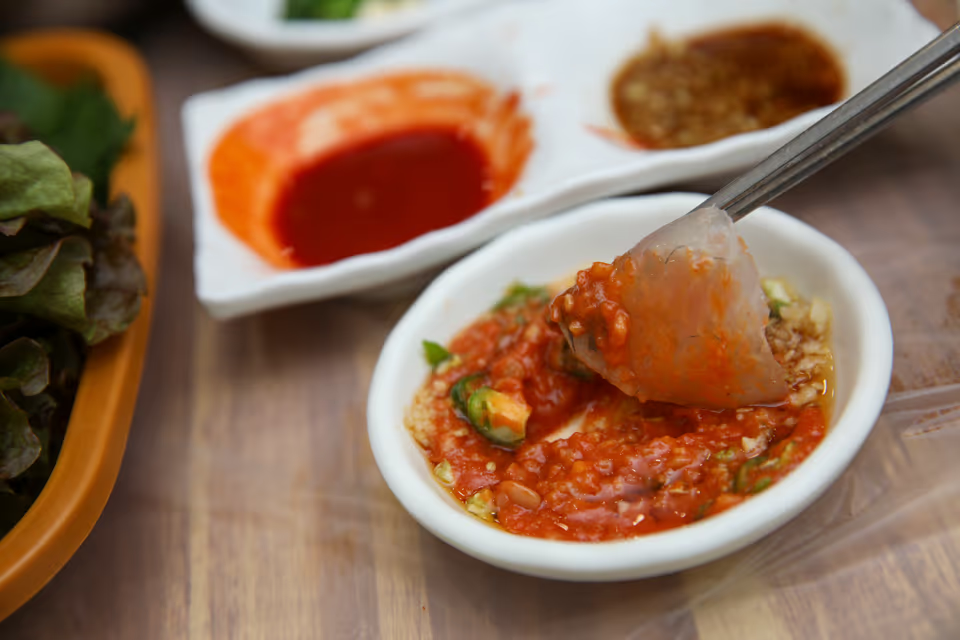
Four sauces arrive together because each fish, and each way of eating it, calls for a different one. Chojang is a tangy sauce of chili paste mixed with vinegar and sugar, so it tames the richness of red flesh and any fishy edge, while soy sauce keeps the gentle sweetness of mild white flesh exactly as it is. Wasabi works alongside the soy sauce to lay an aroma on top, and ssamjang is built on fermented soybean paste, so when you wrap a slice in lettuce or perilla leaf it binds the fish and the greens together. On a Jagalchi table many restaurants add one more dish: chojang with minced garlic and Cheongyang green chili stirred in. Dip a piece of white flesh into it and a sharper garlic bite comes forward before the chojang does. Eight out of ten guests start with chojang alone, and after two or three pieces their chopsticks drift over to the soy sauce dish. The reason is simple: switching sauces on the same plate makes the difference between species stand out far more clearly. Having four dishes does not mean you have to use all four. A plate built mostly on white flesh can run on soy sauce alone from the first piece to the last. If red-tinged slices are mixed in, though, keeping the chojang dish close by is the better call. When a dish runs empty, just say so and it gets refilled, and garlic and chili come back by the plateful.
Sauce Tips
- Chojang tames red flesh and fishy edges, soy sauce brings out the sweetness of white flesh
- The garlic and green chili mix is sharper than chojang and suits white flesh well
- Empty dishes get refilled when you ask, so there is no need to ration your dipping
수정횟집
Which sauce goes inside a lettuce or perilla leaf sashimi wrap
Jagalchi Haean-ro
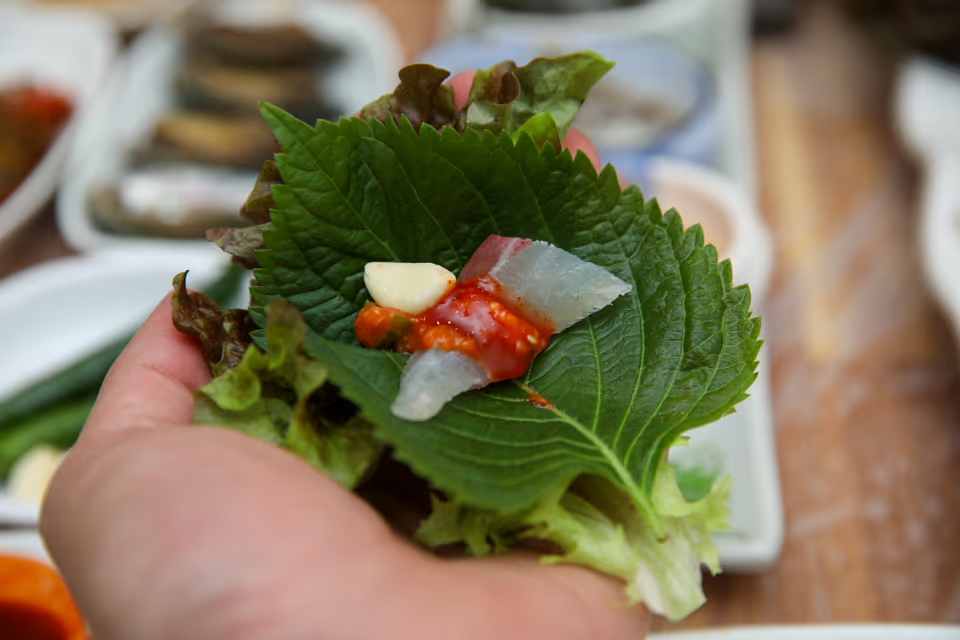
For a wrap, the base is a little chojang and one slice of garlic, and ssamjang belongs on the greens rather than on the fish, spread only lightly. Lay a perilla leaf over a lettuce leaf, set one piece of white-flesh sashimi on top, add a pea-sized dab of chojang and tuck in the garlic, and you have a Jagalchi-style sashimi wrap. Put ssamjang straight onto the fish and the fermented soybean aroma smothers it, so the trick is to spread the ssamjang thinly on the inside of the perilla leaf. Some guests add both chojang and ssamjang, but the saltiness doubles up, so picking just one works better. Thick-cut white flesh suits a wrap best. Species with real chew, like flatfish or rockfish, keep their presence even surrounded by vegetables, while thinly sliced red flesh simply disappears inside the leaves. Watch the tables on a weekend evening and the wraps mostly show up in the second half of the plate. The first few pieces get dipped in sauce alone to check each species, and once a glass or two has gone down, the wrapping begins. Add half a Cheongyang chili and its heat stacks on top of the chojang until the fish vanishes, so bite the chili separately rather than rolling it in. One piece of fish per wrap is the rule, because two pieces will not fit in your mouth and the sauce runs down your hand.
Sauce Tips
- Spread ssamjang thinly inside the perilla leaf, never on top of the fish
- Chojang and ssamjang together double the saltiness, so choose one
- One piece per wrap, and thick white flesh keeps its presence inside the leaves
수정횟집
Which sauce suits white-flesh sashimi and which suits red flesh
Jagalchi Haean-ro
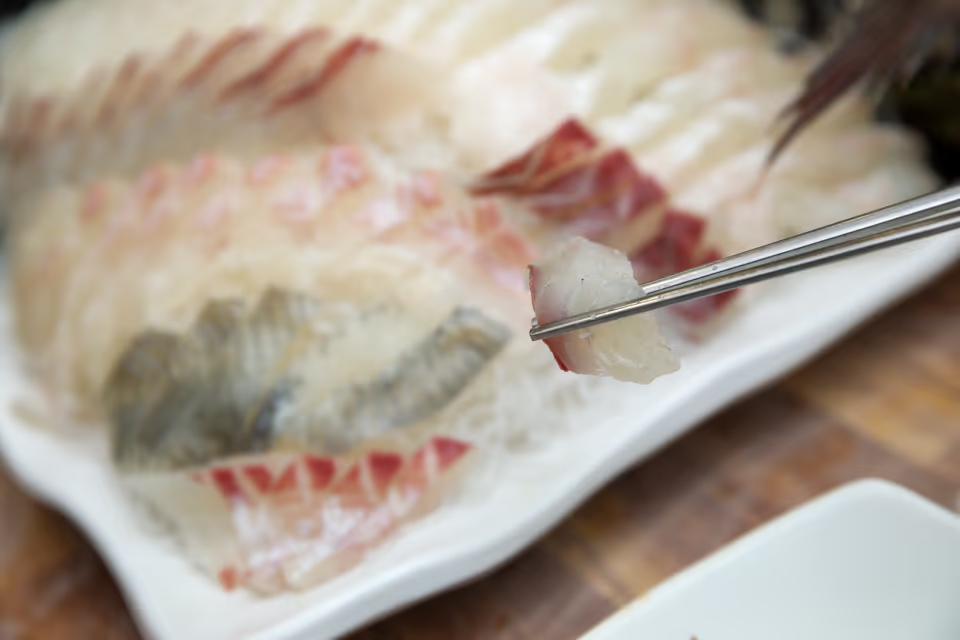
White flesh pairs with soy sauce and a touch of wasabi, and red flesh pairs with chojang. White-flesh species like flatfish, rockfish and sea bream taste clean with a faint sweetness, so dunking them deep in chojang turns the taste of the fish into the taste of the sauce. Rather than stirring wasabi into the soy sauce dish, set a pea-sized bit on top of the slice and touch it lightly to the soy sauce, which keeps the aroma at its most vivid. Species with a red tint, on the other hand, carry some fat, and tangy chojang cuts right through it. When an assorted platter brings white and red flesh together, the basic move is to split them: white toward the soy sauce, red toward the chojang. Premium wild-caught species such as starry flounder (isigari) or stripe-sided flounder have firm flesh and deep savory flavor, so a light touch of soy sauce or a pinch of salt is right for them. When the restaurant's Jagalchi ajimae with over ten years of experience serves a wild-caught plate, she recommends soy sauce before chojang. She also tells guests to eat the very first piece with nothing on it at all. Once you have tasted the grain of the fish, your mouth knows which sauce fits before you have to think about it. Dishes where chojang is already tossed through, like spicy sashimi salad or a sashimi rice bowl, need no extra sauce added.
Sauce Tips
- Do not stir wasabi into the soy sauce, set it on the slice and touch it lightly to the soy
- With a wild-caught plate, taste the first piece plain before choosing a sauce
- Spicy sashimi salad and the rice bowl already contain chojang, so add nothing
수정횟집
Why raw seaweed and salted seafood come out between sauces
Jagalchi Haean-ro
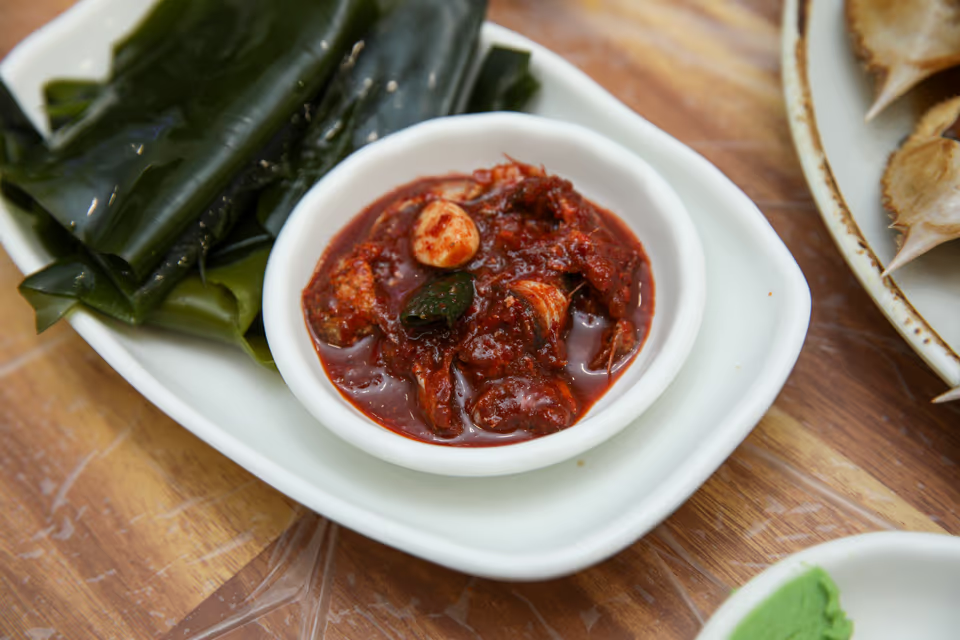
Raw seaweed and salted seafood (jeotgal) are there to rinse away sauce that has built up in your mouth, so they are meant to be eaten between pieces of sashimi. Dip three or four slices in chojang in a row and the tanginess lingers on your tongue, so the texture of the next piece barely registers. That is the moment to take one strip of raw seaweed and dab it lightly in the jeotgal: the ocean aroma and the salty edge push the chojang out, and your mouth returns to where it started. You can dip the seaweed in chojang too, but that only stacks up more chojang, so the jeotgal is the right partner. The jeotgal tends to be a strong kind, like salted hairtail innards or salted anchovy, which is exactly why the portion is small. Take too much at once and the saltiness drowns the fish, so just touch it to the tip of the seaweed. Evening guests who are drinking tend to settle into a rhythm of about three pieces of sashimi to one strip of seaweed, and that rhythm is how you eat a whole plate with the same clean taste right to the end. Side dishes rotate daily based on what is fresh, so some days bring another sea vegetable in place of the seaweed, and it works the same way. Guests using soy sauce instead of chojang have less left on the palate and reach for these sides less often, but even then it pays to rinse once after the red flesh before moving back to white.
Sauce Tips
- After three or four chojang dips in a row, rinse with one strip of raw seaweed
- Dab the seaweed in jeotgal rather than chojang so the chojang does not stack up
- Three pieces of sashimi to one strip of seaweed keeps the taste even to the end
수정횟집
In what order to switch sauces as you work through a sashimi platter
Jagalchi Haean-ro
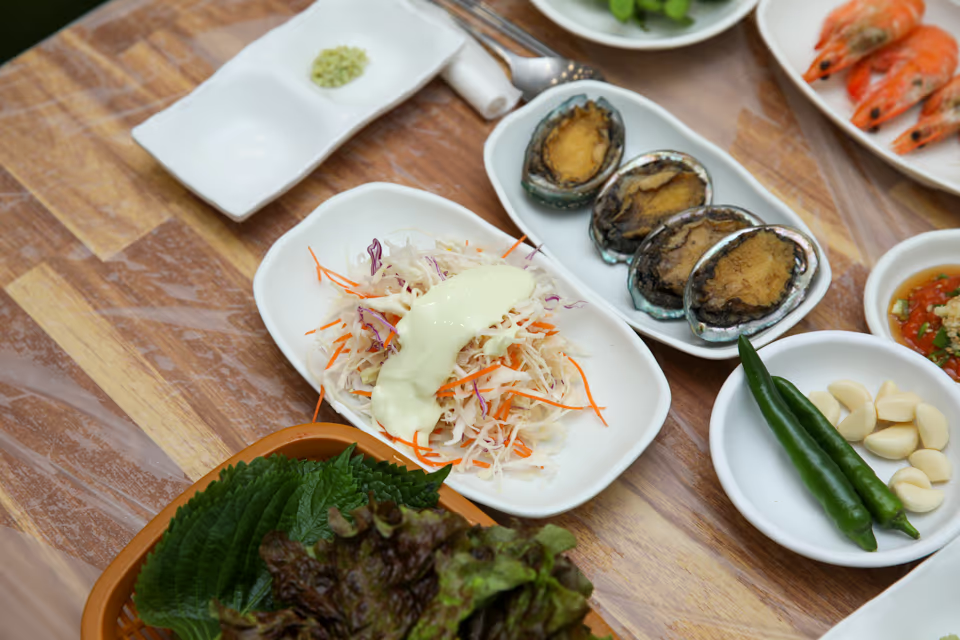
The first piece with no sauce, the next with soy sauce and wasabi, the middle stretch with chojang or the garlic mix, and the late stretch in wraps: that sequence lets you enjoy one plate the longest. The reason for this order is that moving from mild sauces to strong ones keeps the earlier flavor from masking what comes after. Start with chojang and by the second piece your tongue has already adjusted to the tang, so the clean taste of soy sauce comes across as flat. The cabbage salad that arrives on the table is meant to slot into the middle of the sequence. Its mayonnaise dressing softens the sourness of the chojang, so a chopstick or two after the chojang stretch and before the wraps makes the switch feel natural. Lunch guests are short on time and often finish on chojang alone, while many evening guests follow the full order. With drinks the chojang stretch gets longer, and with rice the soy sauce stretch gets longer, which is another difference worth knowing. If the order feels like too much to remember, keep just two rules: white flesh starts with soy sauce, red flesh starts with chojang. Your mouth will sort out the rest on its own. Switch to wraps when about a third of the plate is left, and the remaining sashimi feels like a brand new dish.
Sauce Tips
- First piece plain, then soy, then chojang, then wraps, from mild to strong
- A chopstick or two of cabbage salad fits between the chojang stretch and the wraps
- Switching to wraps with a third of the plate left makes the rest feel like a new dish
수정횟집
How the sauces are set at a restaurant 220m from Jagalchi Station Exit 2, and how to get there
Jagalchi Station Exit 2, 220m
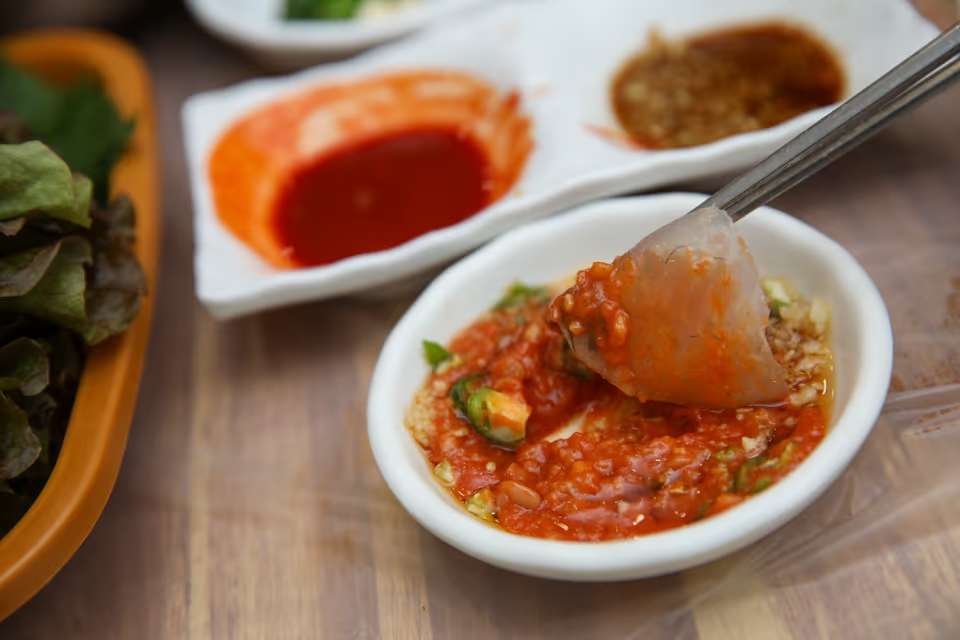
Our restaurant sets four dishes as standard: chojang, soy sauce with wasabi, ssamjang, and the garlic and Cheongyang chili mix, along with lettuce, perilla leaf, raw seaweed, jeotgal and cabbage salad. It sits 220m from Jagalchi Station Exit 2 on Busan Metro Line 1, toward Jagalchi Haean-ro, about a 3-minute walk. Busan Station is three stops away on Line 1, so you can be seated within 20 minutes of your KTX pulling in. The first and second floors seat 190 in total, and group dinners are hosted on the second floor. For four or more, calling +82-10-8998-4803 ahead means the platter size and the seats are ready when you arrive. The sauce setup shifts a little by menu. The sashimi set meal at KRW 20,000 (about USD 14) comes with all four dishes, and from the small assorted platter at KRW 60,000 (about USD 43) upward, individual sauce dishes are added for each person at the table. With premium wild-caught sashimi from KRW 80,000 (about USD 58), the order flips: the soy sauce dish goes down first and chojang comes only on request. Nearby, the Jagalchi Market main hall is a 3-minute walk, BIFF Square 5 minutes, Gukje Market 8 minutes and Yongdusan Park 12 minutes. A taxi runs about 10 minutes and KRW 6,000 to 8,000 (about USD 4 to 6) from Busan Station, or 20 minutes and KRW 12,000 to 15,000 (about USD 9 to 11) from Seomyeon. Avoid the 11:30 to 13:00 lunch rush and the 18:30 to 20:00 dinner rush and you sit down without a wait.
Sauce Tips
- Four sauce dishes plus lettuce, perilla, raw seaweed, jeotgal and cabbage salad come as standard
- A wild-caught plate gets the soy sauce dish first, with chojang on request
- 220m from Jagalchi Station Exit 2 toward the coastal road, groups of four or more call +82-10-8998-4803
| Item | Price | Sauce Setup |
|---|---|---|
| Sashimi Set Meal | KRW 20,000 | About USD 14 · one-person table, all four sauces included |
| Assorted Platter, Small | KRW 60,000 | About USD 43 · for 2, a sauce dish for each person |
| Assorted Platter, Medium | KRW 80,000 | About USD 58 · for 3, fixed-size pricing |
| Premium Wild-Caught Sashimi | From KRW 80,000 | About USD 58 and up · daily species selection, soy sauce set first |
| Spicy Sashimi Salad | Sized to group | Arrives already tossed in chojang |
| Sashimi Rice Bowl | KRW 15,000 | About USD 11 · mixed with chojang, no extra sauce needed |
Sashimi Sauce FAQ
Nearby Attractions
Jagalchi Market main hall
3-minute walkLive and fresh fish stalls, a good look at the day species
Gukje Market
8-minute walkTraditional market food and shopping
BIFF Square
5-minute walkSsiat-hotteok and other snacks after the meal
Yongdusan Park
12-minute walkBusan Tower views, an after-dinner stroll
Sauce Tips
- Remember just two rules: white flesh starts with soy sauce, red flesh starts with chojang
- Do not stir wasabi into the soy sauce, set it on the slice and touch it to the soy
- After three or four chojang dips, dab raw seaweed in jeotgal to reset your palate
- Ssamjang goes thinly inside the perilla leaf, one piece of fish per wrap
- 220m from Jagalchi Station Exit 2 toward the coastal road, groups of four or more call +82-10-8998-4803
Sample Evening Course
A Jagalchi Evening Platter Eaten in Sauce Order
- Check the day species with your own eyes in the Jagalchi Market main hall
- Order a small assorted platter and taste the first piece plain
- Split the plate, white flesh to soy sauce and wasabi, red flesh to chojang
- Reset with raw seaweed and jeotgal, then switch to lettuce and perilla wraps
- Close with a small rockfish spicy stew, then a stroll along Gwangbok-ro in Nampo-dong
What to Eat Where
Jagalchi Haean-ro (sashimi restaurant row)
- Four-sauce table setup
- Assorted sashimi platter
- Premium wild-caught sashimi
Jagalchi Market main hall (live and fresh fish)
- Live fish browsing
- 2nd-floor restaurants
- Fresh fish stalls
Gukje Market (ingredients)
- Chili paste and soybean paste shops
- Dried seafood
- Jeotgal
On Jagalchi Haean-ro, a Jagalchi ajimae with over 10 years of experience serves the plate with all four sauce dishes
Chojang, soy sauce, ssamjang and garlic mix as standard · live fish sashimi · premium wild-caught, 220m along Jagalchi Haean-ro
Read the full guide