Why Sashimi Comes in White, Red and Blue-Backed, and What Each Colour Tells You
How a fish swims sets the colour of its flesh, and where the fat sits decides the taste, the sauce and the order you eat in
The Short Answer
How a fish swims sets its flesh colour, and colour reads as fat: white flesh means short-burst muscle with little fat, red means endurance muscle with fat banked between the fibres, and blue-backed means an oil layer under the skin that oxidises fast. Eat white first, then red, and blue-backed immediately; pair white with vinegared chili sauce in a wrap, red with soy sauce and wasabi. An assorted platter from KRW 60,000 lays white as the base with the day red family on top, 220m from Jagalchi Station Exit 2.
수정횟집
Why sashimi splits into white, red and blue-backed
Jagalchi Haean-ro
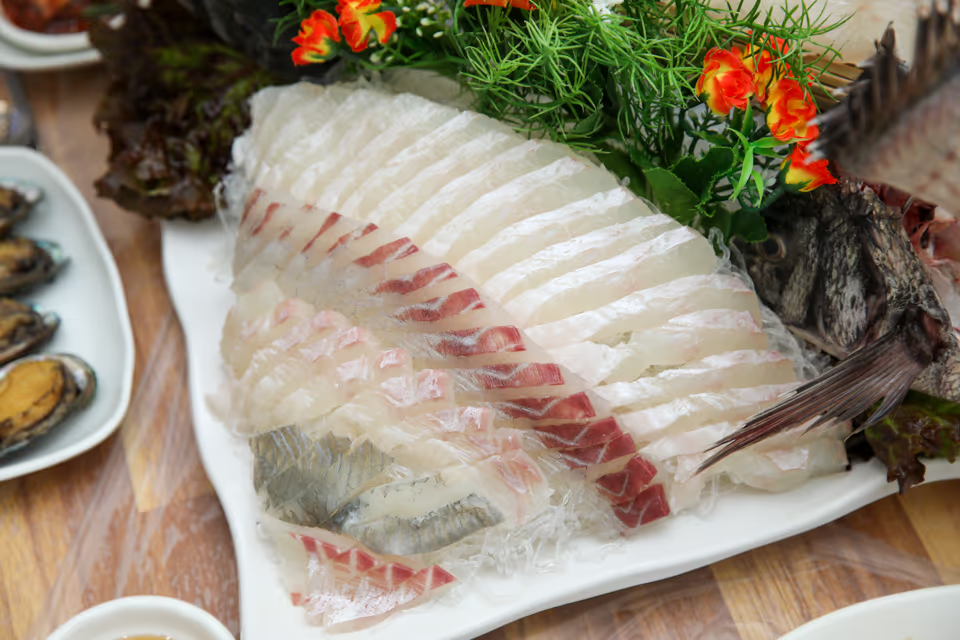
The colour of the flesh is set by how that fish swims. Flounder, rockfish and sea bream stay near the bottom and twist their bodies only in the instant prey passes, so they run mostly on white muscle built for short bursts, which leaves the flesh pale and low in fat. Species like tuna, yellowtail and salmon work the other way: they cover long distances without resting, so their muscle carries a great deal of the pigment that stores oxygen, which turns the flesh red, and they stock fat between the muscle fibres as the fuel for staying in motion. Mackerel, gizzard shad and Spanish mackerel have blue backs with flesh closer to the red side, but because their oil gathers right beneath the skin they get grouped separately as the blue-backed family. Put simply, the three branches are white flesh with burst muscle and little fat, red flesh with endurance muscle and plenty of fat, and blue-backed with an oil layer toward the skin, and these same three are what the Jagalchi floor calls them. Eight in ten guests ask why the colours differ the moment the plate lands. The answer is short: flesh that moved a lot is red. That is also the reason the restaurant veteran with over a decade at Jagalchi sets the plate down with the white toward the outside and the red toward the inside, because that arrangement is the eating order.
Before You Order
- The more a fish swam, the redder and fattier the flesh. Colour is the fat label
- White toward the outside and red toward the inside shows you the eating order
- Within one fish, belly cuts running reddish and back cuts looking pale is normal
수정횟집
What white-flesh sashimi tastes like and why it comes first for a beginner
Jagalchi Haean-ro
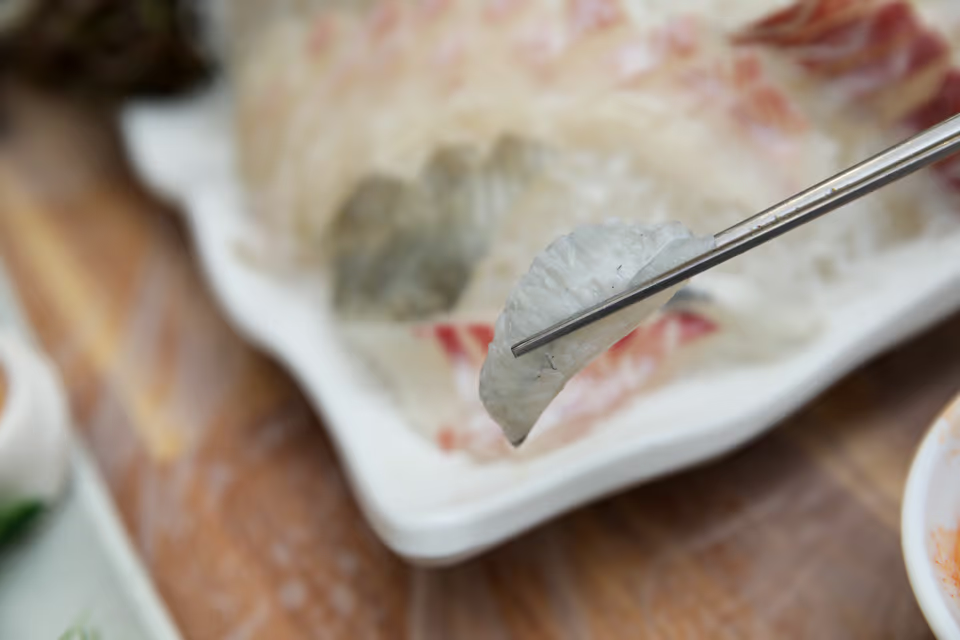
White flesh carries almost no fishy edge and its sweetness rises the longer you chew, which is why it is the first thing we recommend to anyone eating raw fish for the first time. Flounder comes out cut thin so the springy chew leads, rockfish has firmer flesh than flounder with a more pronounced bite, and sea bream is the softest of the three with a quiet sweetness that lingers. With little fat, elasticity arrives before any sense of melting in the mouth, and that is exactly what lets it pair well with strongly seasoned combinations like vinegared chili sauce or a leaf wrap. It is also why most of the fish that goes into the sashimi set meal at KRW 20,000 (about USD 14) or the sashimi rice bowl at KRW 15,000 at a Jagalchi Haean-ro restaurant belongs to this family: it is the dependable one. Look at a group table around 7 PM and the white plate empties first, with chopsticks only reaching the red side after a few rounds of drinks. If your party includes a child or an older guest meeting raw fish for the first time, or anyone who avoids fishy flavours, starting with a small size weighted toward white flesh is the choice that does not go wrong.
Before You Order
- Remember flounder for the chew, rockfish for firmness, sea bream for softness and ordering gets easy
- If anyone avoids fishy flavours, a small size weighted toward white flesh is safe
- White flesh feels tough cut thick, so eat it just as it arrives
수정횟집
Why red-flesh sashimi is fatty and which species belong to it
Jagalchi Haean-ro
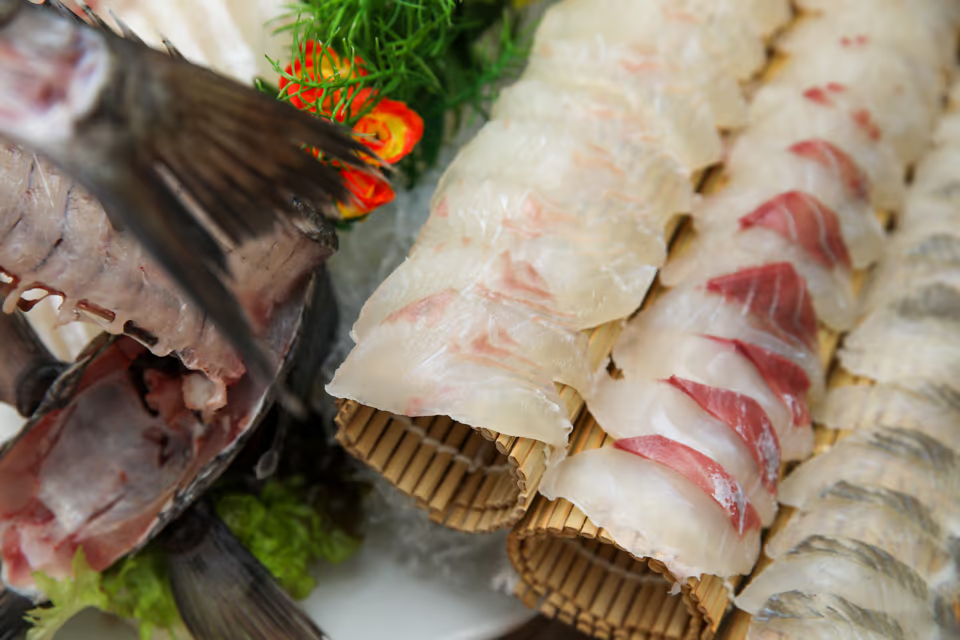
Red flesh is fatty because that fish swims without resting. Tuna, yellowtail, salmon and skipjack have to keep covering long distances, so they bank fat between the muscle like fuel, and once that fat reaches your mouth it melts at body temperature and turns into a deep savory flavour. Yellowtail puts on flesh as winter approaches with the belly cuts especially rich, while salmon carries even fat through all four seasons and stays soft enough that someone new to raw fish finds little to resist. One piece weighs heavier in the mouth than white flesh, so three or four pieces fill you, which is why the share it takes up on a platter is normally smaller than the white side. On Jagalchi Haean-ro there are days when the fatty family comes out separately as premium wild-caught sashimi from KRW 80,000 (about USD 58) at the day-selected species price, and from the medium size at KRW 80,000 upward the red share rises noticeably. On a weekend evening, about half the tables are ones where the red plate empties first. With drinks involved, the red going first is the Jagalchi pattern.
Before You Order
- The red family satisfies in three or four pieces, so manage the order rather than the quantity
- Yellowtail means winter belly cuts; salmon means even fat all year
- Dip the red side lightly in soy sauce with a little wasabi on top and the finish settles
수정횟집
Why blue-backed sashimi is sensitive to freshness and how it should be eaten
Jagalchi Haean-ro
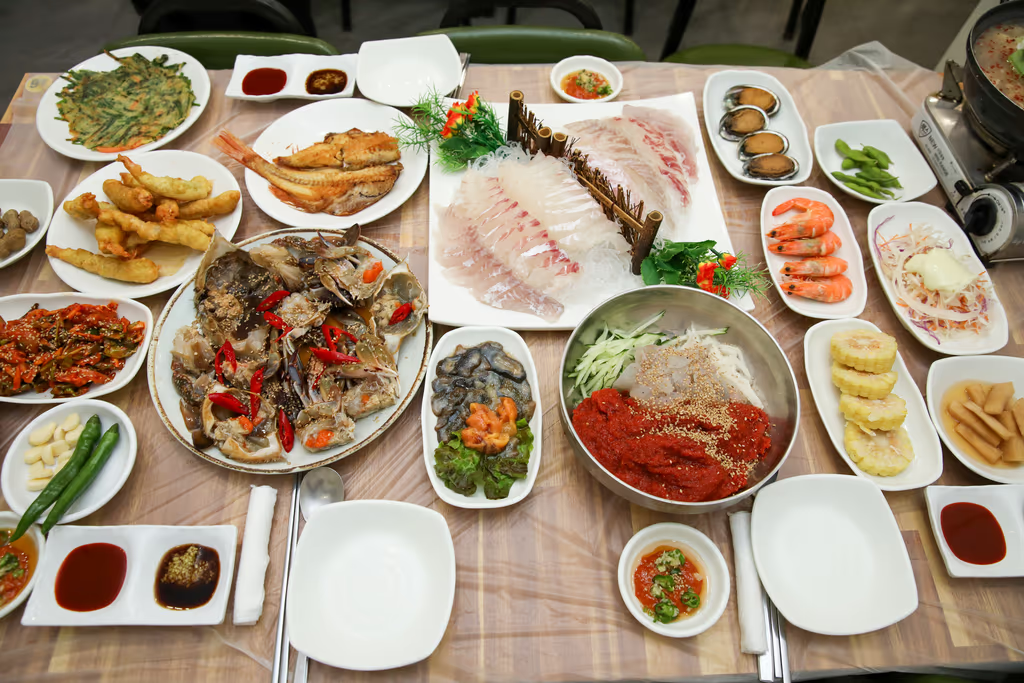
Blue-backed sashimi is sensitive to freshness because the oil layer sitting right beneath the skin oxidises quickly once it meets air. For blue-backed species like mackerel, gizzard shad, Spanish mackerel and saury, that oil layer is the core of the richness, and the same oil becomes the source of a fishy smell as time passes. So the rule for this family is to eat it immediately after it has been cut, and a Jagalchi restaurant prepares it only once the order comes in and brings it straight out. Ginger, garlic or chopped spring onion alongside settles the oily weight, and soy sauce with a generous amount of wasabi suits it better than the vinegared chili sauce. Gizzard shad comes alive in autumn cut bones and all for a nutty chew, and with mackerel, the clearer the silver pattern on the skin side, the better the condition. Some guests try blue-backed for the first time and say it tastes fishy, and nine times in ten that is a case of the plate arriving and then sitting a while before they ate. Eat it the moment it arrives and the richness comes first. If there is a pregnant guest or a child at the table, shifting this family toward the cooked grilled fish set at KRW 15,000 (about USD 11) is the easier call.
Before You Order
- Eat the blue-backed plate first the moment it arrives; waiting only costs you
- Ginger, spring onion and wasabi soy sauce settle the oily weight of blue-backed fish
- Gizzard shad is best cut bones and all in autumn; mackerel wants a clear silver pattern
수정횟집
How the chili sauce, soy sauce and wrap pairings change by colour
Jagalchi Haean-ro
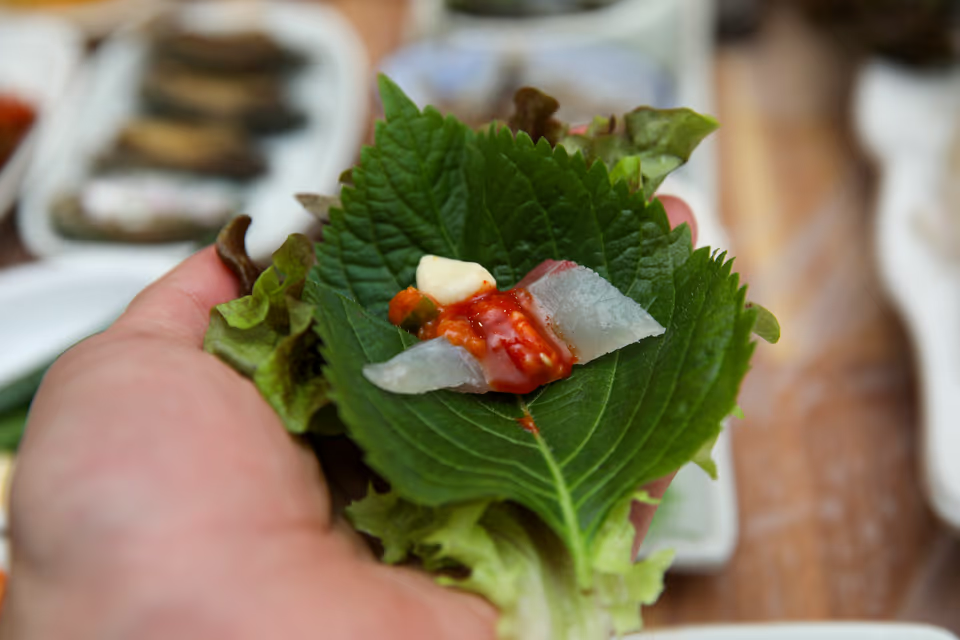
White flesh wants vinegared chili sauce and a wrap, red flesh wants soy sauce and wasabi, and blue-backed wants ginger soy sauce. With little fat, the white side has a clean enough taste that the sharpness of the chili sauce does not cover the flesh but actually lifts its sweetness, and wrapping it in lettuce or perilla leaf with a clove of garlic turns one mouthful into a meal in place of rice. The red side carries plenty of fat, so laying chili sauce on it stacks oil and sweetness together and turns heavy fast, which makes a light dip in soy sauce with a little wasabi on top the cleaner move. The Jagalchi wrap goes in this order: one perilla leaf with lettuce layered on it, one piece of white flesh, a little chili sauce and one clove of garlic, while the fatty family does better eaten plain than wrapped, because that keeps the fat tasting of itself. The raw seaweed or cabbage salad served alongside rinses the palate regardless of colour, so take them between plates, and the side dishes rotate daily based on what is fresh. If the chili sauce dish empties first at a table it is a table that likes white flesh, and if the soy sauce goes first it is a table that likes the red side, which is the rule of thumb you can see from the floor.
Before You Order
- Remember white with chili sauce and a wrap, red with soy and wasabi, blue-backed with ginger soy
- Perilla leaf, then lettuce, one piece of white flesh, a little chili sauce, one clove of garlic
- Chili sauce on fatty fish stacks oil and sweetness, so eating it plain is better
수정횟집
How the colour ratio on an assorted platter gets set and what it costs
Jagalchi Station Exit 2, 220m
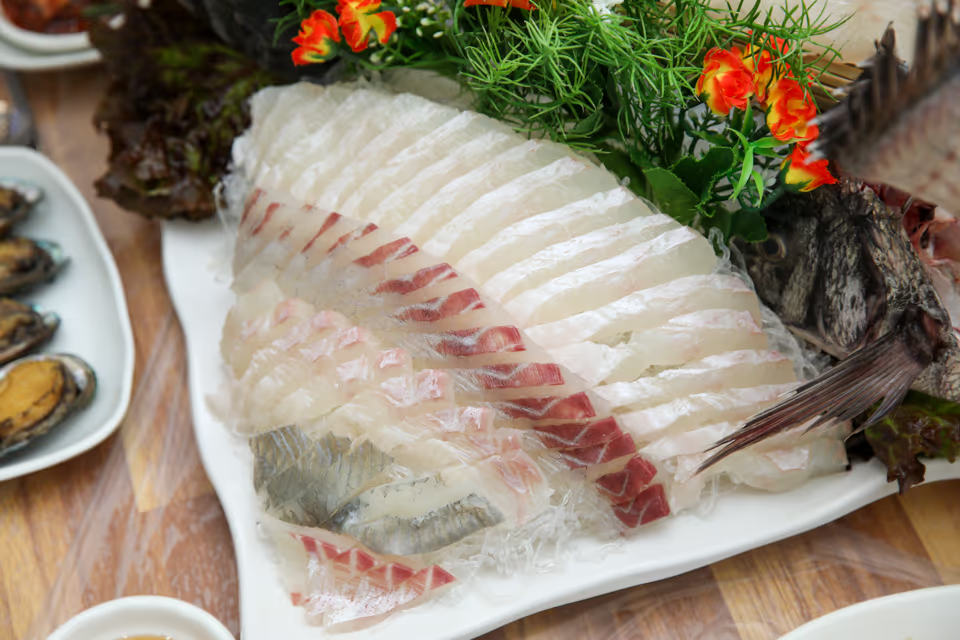
The assorted platter at a Jagalchi Haean-ro restaurant is built by laying white flesh as the base and setting the red family that came in that day on top, under fixed-size pricing at KRW 60,000 small (about USD 43), KRW 80,000 medium (about USD 58), KRW 100,000 large (about USD 72) and KRW 120,000 extra large (about USD 87). The small size, built for two, is weighted toward the white side; from medium up, one or two more fatty species go on; and the large and extra large grow the plate itself while the range of colours widens with it. If you want to enjoy the red side on its own, there is the route of premium wild-caught sashimi from KRW 80,000 at the day-selected species price, where you get offered the species that yielded well that day, such as spotted halibut or roughscale sole. Saying mostly white flesh, or a bit more of the red, when you order gets the ratio adjusted within the same size. The location is 220m from Jagalchi Station (Line 1) Exit 2 toward Jagalchi Haean-ro, about a 3-minute walk, and with 190 seats across the first and second floors it takes group dinners. For four or more, calling +82-10-8998-4803 ahead holds the size and the seat. Around 7 PM is the busiest, so avoiding that hour gets you seated with no wait.
Before You Order
- Small at KRW 60,000 for two and medium at KRW 80,000 for three or four are the most common
- A bit more of the red, or mostly white flesh, is all it takes to adjust the ratio
- If you want only the red side, ask about premium wild-caught from KRW 80,000
| Item | Price | Notes |
|---|---|---|
| Assorted Platter, Small | KRW 60,000 | About USD 43 · for 2, weighted toward white flesh |
| Assorted Platter, Medium | KRW 80,000 | About USD 58 · for 3 to 4, red family added |
| Assorted Platter, Large | KRW 100,000 | About USD 72 · for 4 to 5, wider range of colours |
| Assorted Platter, Extra Large | KRW 120,000 | About USD 87 · for a group |
| Premium Wild-Caught Sashimi | From KRW 80,000 | Day-selected species price, spotted halibut or roughscale sole |
| Sashimi Set Meal | KRW 20,000 | About USD 14 · single tray, white flesh centred |
Sashimi Colour FAQ
Nearby Attractions
Jagalchi Market main hall
3-minute walkLive and fresh fish wholesale, a short walk after the meal
BIFF Square
5-minute walkSsiat-hotteok and other snacks after the meal
Gukje Market
8-minute walkTraditional market food and shopping
Yeongdo Bridge
7-minute walkDeck lifts Saturdays at 2 PM, a walk by the water
Before You Order
- Colour is the fat label: the more the fish swam, the redder and fattier
- Eat white flesh first, then red, and blue-backed the moment it arrives
- Change the sauce by colour and the same plate tastes different
- A bit more red, or mostly white, adjusts the ratio within the same size
- 220m from Jagalchi Station Exit 2 toward the coastal road, about a 3-minute walk
Suggested Evening Course
An Evening Working Through All Three Colours
- Arrive on Jagalchi Haean-ro, order a medium platter with a bit more red
- If blue-backed is on the plate, eat it first while the oil is fresh
- Work the white flesh with chili sauce in a perilla wrap and garlic
- Move to the red side with soy sauce and a little wasabi
- Close with a spicy stew, then walk to BIFF Square
What to Eat Where
Jagalchi Haean-ro (all three colours)
- Assorted platter
- Premium wild-caught sashimi
- Grilled fish set
- Sashimi set meal
Jagalchi Market main hall (live and fresh fish)
- Live fish browsing
- Fresh fish stalls
- 2nd-floor food court
Nampo-dong and BIFF Square (after the meal)
- Ssiat-hotteok
- Cafes
- Gwangbok-ro shopping
On Jagalchi Haean-ro, a Jagalchi ajimae with over 10 years of experience sets the white toward the outside and the red toward the inside
Assorted platter from KRW 60,000 · Premium wild-caught from KRW 80,000 · Colour ratio adjustable, 220m from Jagalchi Station Exit 2
Read the full guide