Where to Eat Sashimi in Busan, Comparing Jagalchi, Gijang, Gwangalli and Haeundae
None of the four districts leads on everything, so settling one criterion that matches your schedule and your company is what makes the district visible
The Short Answer
Busan sashimi districts come in four types and none leads on everything: Jagalchi for access and fixed pricing from KRW 60,000, Gijang for wild-caught species at the cost of half a day, Gwangalli for the bridge view with the seat cost added, and Haeundae for proximity to your hotel with peak-season waits. Work through travel, headcount, time of day and budget in that order and the district settles itself, then check the tank and the menu listing. 220m from Jagalchi Station Exit 2.
수정횟집
Which district in Busan is the better one for eating sashimi
Across Busan
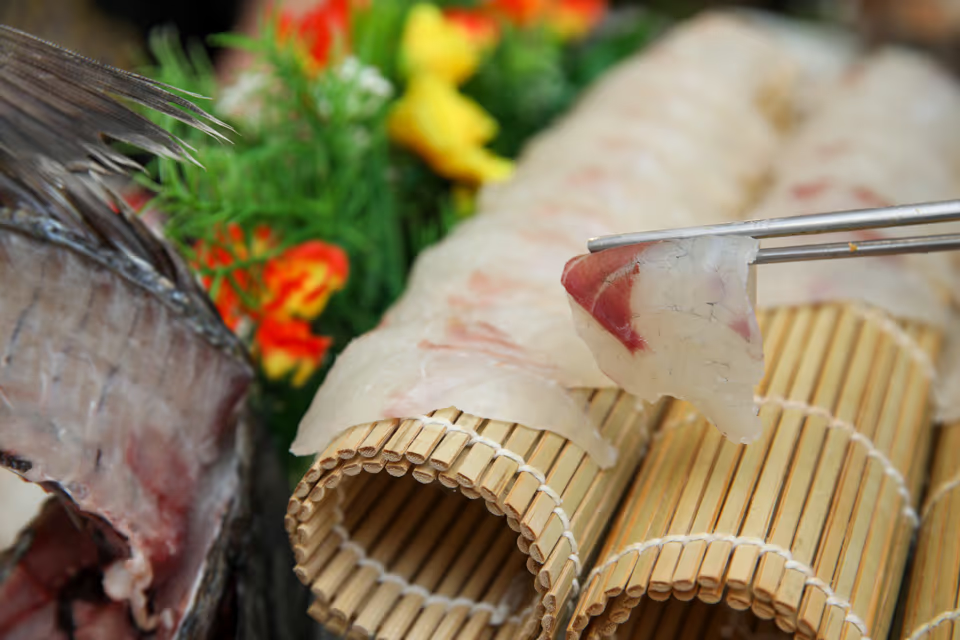
The answer splits by your schedule, your means of travel and who you came with, and the sashimi districts of Busan divide broadly into four types. Jagalchi, the downtown market type, is reachable on foot from a subway station with the market and the restaurants attached to each other, which fits a short schedule. Gijang, the harbour type, takes close to an hour by car from downtown but carries the enjoyment of picking wild-caught species right in front of the harbour. Gwangalli, the beachfront night-view type, has the seat looking at the bridge lights as its whole point, while Haeundae, the tourist-district type, puts your accommodation and the beach close by in exchange for long waits in peak season. Lay the four against the four criteria of access, price bracket, atmosphere and parking and not one of them leads across the board. Jagalchi is strong on access and price stability, Gijang on species, Gwangalli on the view and Haeundae on connecting to where you sleep. As the restaurant veteran with over a decade at Jagalchi sees it, eight in ten guests travelling in and out the same day by KTX pick Jagalchi, while guests who brought a car and are staying a night tend to fold in Gijang or the beachfront as well. The five sections below take these four criteria apart one at a time.
Before You Choose
- Public transport and a day trip means Jagalchi; your own car and an overnight folds in Gijang or the beachfront
- If the fish itself is the purpose, market or harbour type; if the view is, the beachfront
- In any district, look at the tank and the price listing on the menu before anything else
수정횟집
What is different between sashimi at Jagalchi and at Gijang
Jagalchi and Gijang
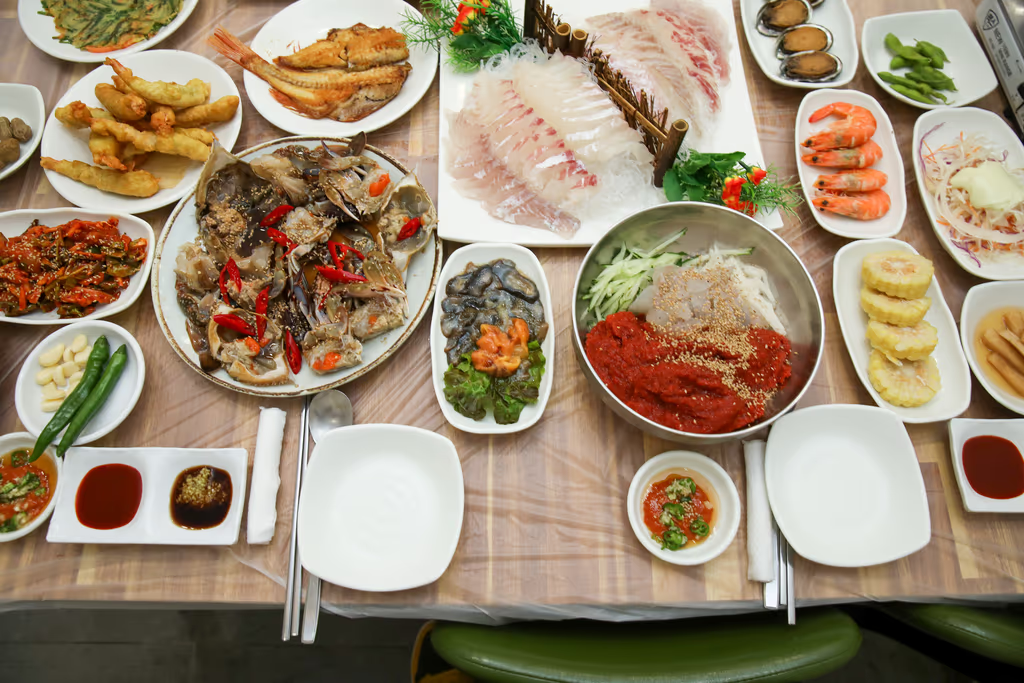
The biggest differences are distance and the breadth of species. Jagalchi is two stops from Busan Station on Line 1, and a 3-minute walk from Jagalchi Station Exit 2 puts you on the restaurant street, with the market main hall and the restaurants packed within one block, so picking your fish and sitting down takes 20 minutes end to end. Gijang runs about 50 minutes by car from downtown, and on public transport it means two or more transfers, which costs you a whole half-day. In exchange, being right in front of the harbour means a high share of wild-caught species, and for a guest hunting a seasonal species that enjoyment is considerable. On price, Jagalchi is the stable one through fixed-size pricing. With an assorted platter at KRW 60,000 small (about USD 43), KRW 80,000 medium, KRW 100,000 large and KRW 120,000 extra large, naming your headcount is all it takes for the price to be set, while premium wild-caught sashimi gets quoted from KRW 80,000 at the day-selected species price. The harbour type prices by species and weight, so the range runs wide from day to day. Seven in ten guests follow the flow of Jagalchi on a first visit to Busan and Gijang from the second, which makes choosing by schedule more sensible than trying to compare the two in one trip.
Before You Choose
- Jagalchi is 3 minutes from the station; Gijang is about 50 minutes by car from downtown
- Fixed-size pricing sets the price on your headcount alone, which makes the math fast
- Many guests take Jagalchi on the first visit and fold in Gijang from the second
수정횟집
How access and parking differ between the districts
Jagalchi Station Exit 2, 220m
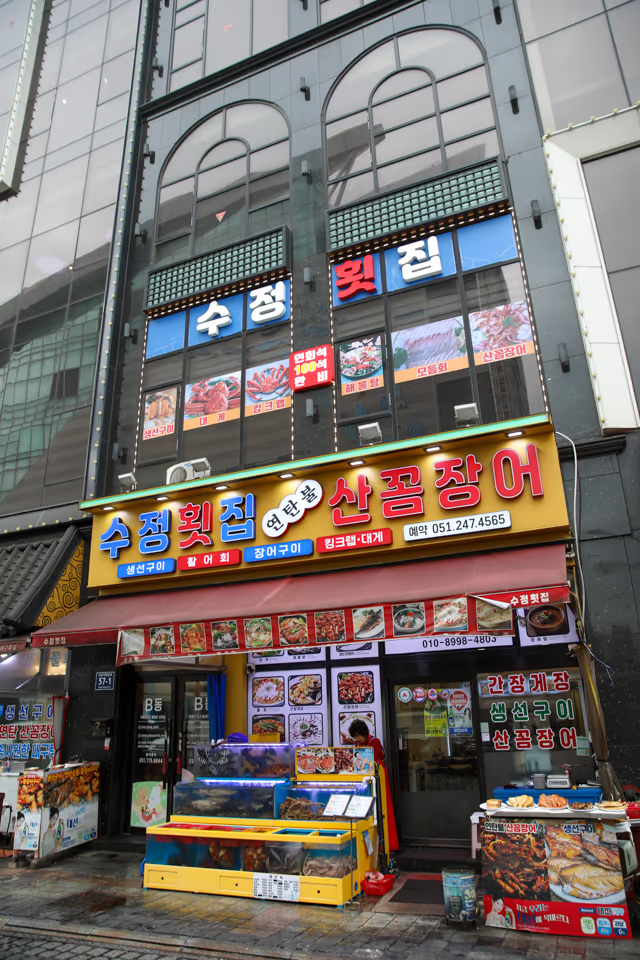
On public transport Jagalchi is the easy one; with your own car Gijang and the beachfront are. Jagalchi is 220m from Jagalchi Station (Line 1) Exit 2 toward Jagalchi Haean-ro, about a 3-minute walk, and two stops from Busan Station, so you can be seated within 20 minutes of the KTX arriving. City buses 8, 30, 71, 113 and 1003 stop at Jagalchi Market, and a taxi runs about 10 minutes and KRW 6,000 to 8,000 from Busan Station, or 20 minutes and KRW 12,000 to 15,000 from Seomyeon. For parking you use the market public car park and the paid car parks nearby, but around 7 PM on a weekend they fill often enough that public transport is the better call. Gijang makes a car effectively necessary and offers easy parking in front of the harbour, at the cost of a congested drive back into the city. Gwangalli and Haeundae both need a walk of 10 minutes or more from the subway station to the beach, and parking along the beach road has plenty of days in the summer peak where a full circuit finds nothing. If you plan to drink, Jagalchi being walkable from the station makes getting home the simplest of the four. In the evening the shop fronts have their tanks lit, so you can spot the place from across the street.
Before You Choose
- Two stops from Busan Station on Line 1, seated within 20 minutes of arriving
- Car parks fill often around 7 PM on a weekend, so public transport is better
- If you are drinking, somewhere walkable from the station keeps getting home simple
수정횟집
How Gwangalli and Haeundae differ in atmosphere and price structure
Gwangalli and Haeundae
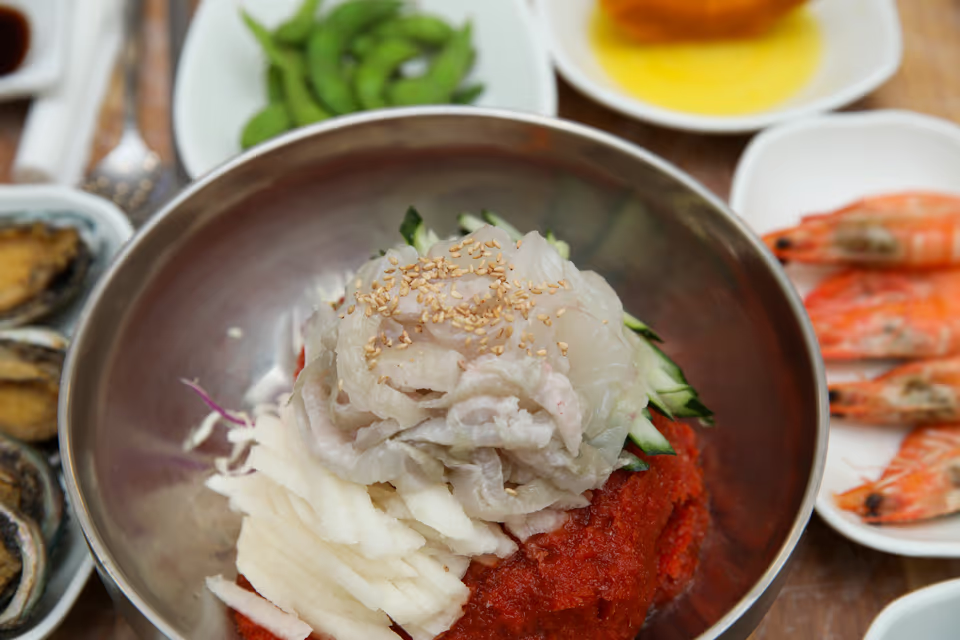
Gwangalli is an evening occasion built on watching the bridge at night, while Haeundae is a daytime occasion linking your accommodation and the beach. The Gwangalli restaurant street runs long along the shore and the window seat is itself the product, so the structure has the cost of sitting somewhere with a view riding on top of the same fish. Guests crowd in at the hour the bridge lights come on after sunset, which makes a window seat difficult without a reservation. Haeundae, as a tourist district, carries a high share of out-of-town guests with long waits in peak season, and plenty of places build their menus around a tourist standard. Both are choices that buy the view and the walking route to your room rather than the fish, so if the fish itself is why you came, the market or harbour type satisfies more. On the beach, summer brings a lot of demand for mulhoe, and by Jagalchi prices mulhoe at KRW 18,000 (about USD 13) and premium mulhoe at KRW 25,000 (about USD 18) is a one-meal price, with shredded raw fish and vegetables in an icy broth. Guests who spend a summer afternoon on the beach and then come over to Jagalchi by subway in the evening for a full sashimi table before heading back have grown noticeably in number over the last few years.
Before You Choose
- A Gwangalli window seat is difficult without a reservation once the sun is down
- Haeundae in peak season means long waits and menus built to a tourist standard
- More guests now split it: the beach in the afternoon, Jagalchi in the evening
수정횟집
A date, family, a company dinner or dining alone, which district matches which
Across Busan
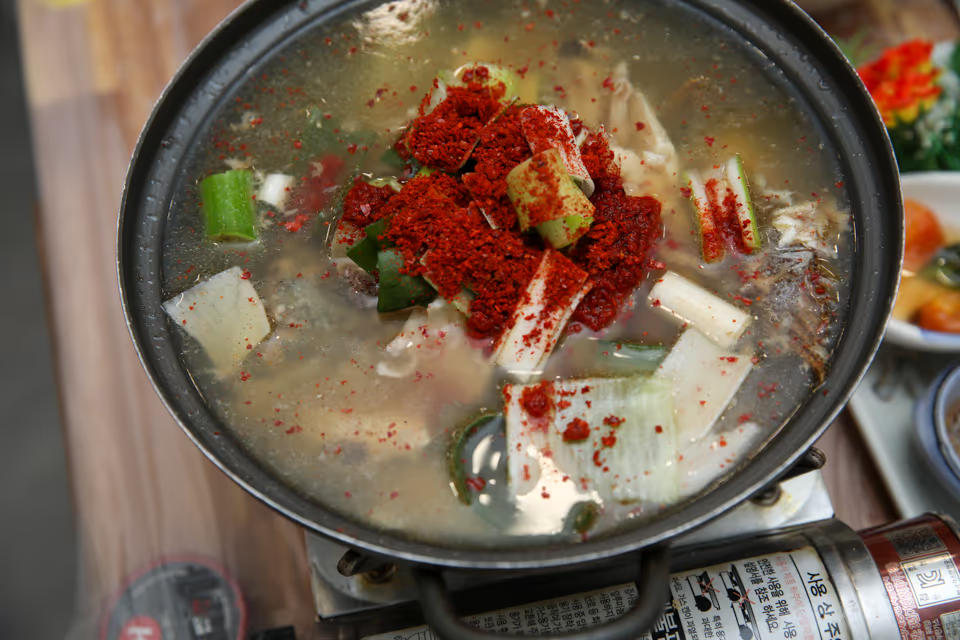
A date suits Gwangalli, family and older parents suit Jagalchi, a company dinner suits the market type with its seat count, and dining alone suits somewhere with set menus. For a date, a beachfront window where the night view becomes the conversation is good, at the cost of accepting a reservation and a wait. An occasion where you are bringing your parents is easier at Jagalchi, where the walking distance is short and cooked dishes like the spicy stew and the porridge come out alongside. A small rockfish spicy stew at KRW 50,000 (about USD 36), abalone porridge at KRW 20,000 (about USD 14) and fresh cod soup at KRW 20,000 all reach the same table for anyone eating less raw fish. A company dinner needs a place that uses the first and second floors together for 190 seats before twenty people can sit at once, and the Jagalchi Haean-ro restaurants meet that condition. Alone, the market type with single-person items like the sashimi set meal at KRW 20,000, the sashimi rice bowl at KRW 15,000 or the grilled fish set at KRW 15,000 carries less pressure. Around 7 PM on a weekend is the busiest hour, so for a company dinner either move an hour earlier or call +82-10-8998-4803 ahead to make the seat certain. Side dishes rotate daily based on what is fresh, so for a table with older guests you are welcome to ask in advance what the side dishes are that day.
Before You Choose
- With older parents, the market type where stew and porridge reach the same table is easier
- A twenty-person dinner needs a place using both floors, like 190 seats across two
- Alone, look at single-person items like the set meal at KRW 20,000 or the rice bowl at KRW 15,000
수정횟집
What order to work through when choosing a sashimi district in Busan
Jagalchi Station Exit 2, 220m
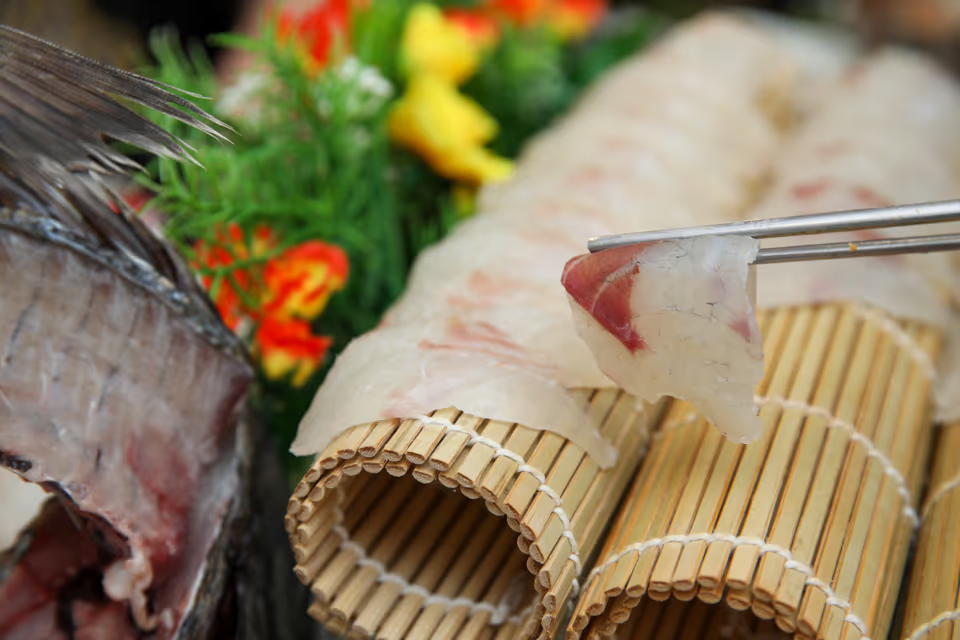
Work through means of travel, headcount, time of day and budget in that order and the district settles itself. Public transport leaves Jagalchi; your own car leaves Gijang and the beachfront as candidates. Past eight people, the market type with its seat count; at two people, anywhere works. If the time of day is an evening with a night view, Gwangalli; if it is lunch or an early evening, Jagalchi and Gijang have the shorter waits. On budget, places with fixed pricing make the math fast. By Jagalchi prices, four people with a medium assorted platter at KRW 80,000 plus a small rockfish spicy stew at KRW 50,000 works out to about KRW 32,500 each (about USD 24), and you can read the beachfront type as the same build with the seat cost added. On a two-day trip, many guests split it as Jagalchi on the first evening and Gijang or the beachfront on the second day, while on a day trip, bundling it all around Jagalchi with the market main hall 3 minutes away, BIFF Square 5 minutes and Gukje Market 8 minutes keeps the moving to a minimum. In any district, checking just two things, whether the species in the tank are alive and moving and whether the menu lists prices by size, cuts the chance of a bad call. A shop that has both of those rarely has its price and its quality far apart, whatever district it sits in.
Before You Choose
- Travel, then headcount, then time of day, then budget narrows the candidates to one
- For four, a medium platter at KRW 80,000 plus a small stew at KRW 50,000 is about KRW 32,500 each
- Check only two things: live fish in the tank and prices by size on the menu
| Item | Price | Notes |
|---|---|---|
| Assorted Platter, Small | KRW 60,000 | About USD 43 · for 2, fixed pricing |
| Assorted Platter, Medium | KRW 80,000 | About USD 58 · for 4 |
| Assorted Platter, Large | KRW 100,000 | About USD 72 · for 5 to 6 |
| Premium Wild-Caught Sashimi | From KRW 80,000 | Day-selected species price, spotted halibut or roughscale sole |
| Mulhoe | KRW 18,000 | About USD 13 · a summer meal, premium mulhoe KRW 25,000 |
| Rockfish Spicy Stew, Small | KRW 50,000 | About USD 36 · the close for family or a company dinner |
Busan Sashimi District FAQ
Nearby Attractions
Jagalchi Market main hall
3-minute walkLive and fresh fish wholesale, a short walk after the meal
BIFF Square
5-minute walkSsiat-hotteok and other snacks after the meal
Gukje Market
8-minute walkTraditional market food and shopping
Yongdusan Park
12-minute walkBusan Tower and an evening view over the harbour
Before You Choose
- Settle your means of travel first; it decides more than the fish does
- Public transport and drinking both point to somewhere walkable from a station
- Past eight people you need a place with the seat count, not the view
- Check the tank and the price listing in any district, and the rest follows
- 220m from Jagalchi Station Exit 2 toward the coastal road, about a 3-minute walk
Suggested Day Course
A Day Trip That Stays Inside One District
- Arrive at Busan Station, two stops on Line 1 to Jagalchi
- Walk the market main hall, 3 minutes from the restaurant street
- Order a medium platter plus a small spicy stew for four
- Snacks at BIFF Square, 5 minutes on foot
- Back to Busan Station on Line 1 with no transfer
What Each District Offers
Jagalchi, the downtown market type
- Assorted platter
- Premium wild-caught sashimi
- Spicy stew
- Single-tray set meals
Gijang, the harbour type
- Wild-caught species
- Seasonal fish
- Priced by weight
Gwangalli and Haeundae, the beachfront
- Window seats
- Bridge night view
- Summer mulhoe
On Jagalchi Haean-ro, a Jagalchi ajimae with over 10 years of experience sets the table 3 minutes from the station
Fixed-size pricing from KRW 60,000 · Two stops from Busan Station · 190 seats across two floors, 220m from Jagalchi Station Exit 2
Read the full guide