Banchan at a Korean Sashimi Restaurant, What Each Side Dish Is For and When to Eat It
The side dishes are not decoration, they are what lets one platter of sashimi last two hours
The Short Answer
The free banchan at a Jagalchi sashimi restaurant split into rice dishes, stir-fried fish cake, seasoned bean sprouts, cubed radish kimchi and greens, and palate cleansers between bites, braised squash, boiled green soybeans and cabbage salad. They are made the same day from market ingredients, so the lineup changes each visit. The cabbage salad belongs right after spicy sauce, raw seaweed takes jeotgal only on a chopstick tip, and seaweed soup is for when your mouth feels heavy. Refills are free, but not clearing everything before the sashimi protects the flavor. 220m from Jagalchi Station Exit 2, 190 seats on two floors.
수정횟집
What free banchan come with sashimi at a Korean restaurant
Jagalchi Haean-ro
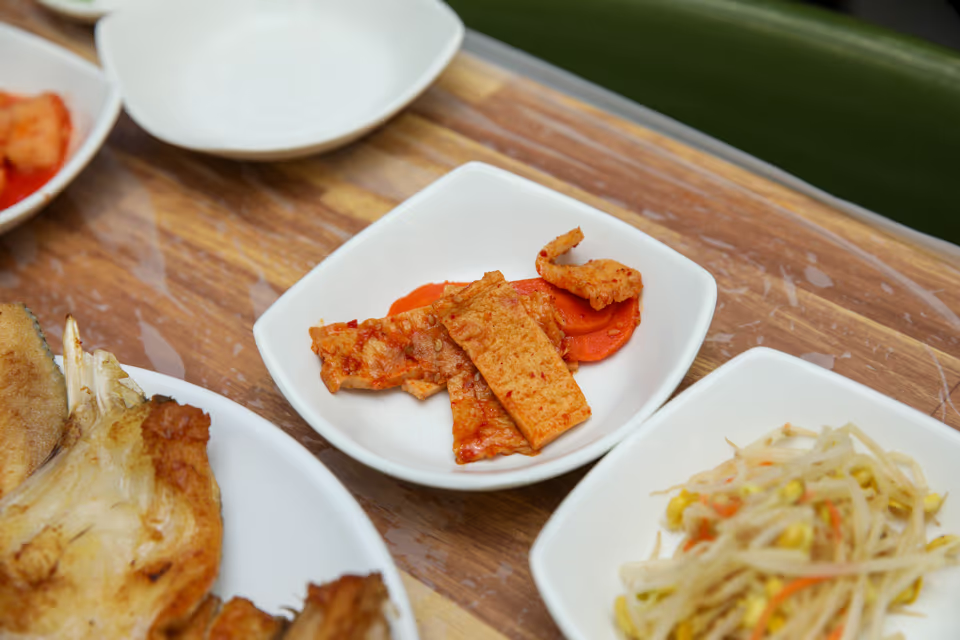
The standard side dishes at a Jagalchi sashimi restaurant come in two broad groups. One group is eaten with rice. Stir-fried fish cake, seasoned bean sprouts, cubed radish kimchi, seasoned greens such as spinach or seaweed, and stir-fried dried squid strips belong here, and as in the photo each is set down in its own small white dish. A table of four usually gets six or seven little dishes, and a table for one shrinks to four or five. The other group is for rinsing your palate between pieces of sashimi. Braised kabocha squash, boiled green soybeans, cabbage salad and pickled radish belong here, and because they are sweet or crunchy, eating them after a spicy sauce resets your mouth. Separate the two groups and it becomes clear which dish to pick up when. The rice group goes along with a bowl of rice or with rice stirred into the spicy fish stew, and the palate group goes in one chopstick-load at a time between every two or three pieces of sashimi. What matters is that all of these are the standard spread included in the price of the sashimi. They are different from dishes ordered separately, such as soy-marinated crab at KRW 30,000 (about USD 22) or grilled abalone. This is also why the Jagalchi veteran with over a decade on the job lays down the side dishes before the sashimi platter when setting the table. While guests sit waiting for the sashimi, these are the dishes their chopsticks reach for first.
Before the Table Is Set
- Rice dishes go with rice and stew, palate cleansers go between bites of sashimi
- The standard spread is included, crab and abalone are separate orders
- When you sit down, the side dishes arrive before the sashimi
수정횟집
Why the banchan are different every time you visit
Jagalchi Haean-ro
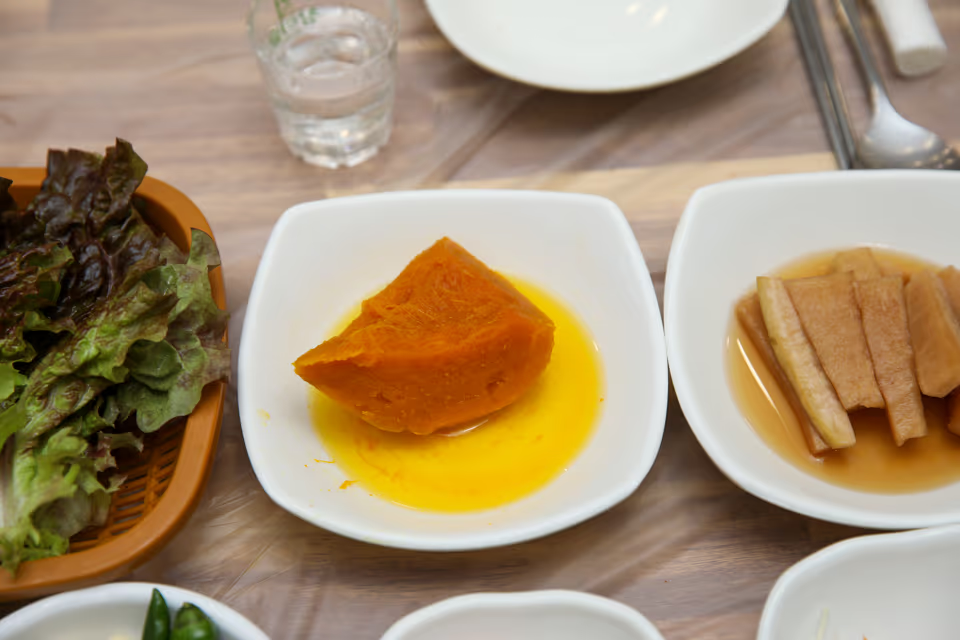
The side dishes differ every visit because they are made from whatever ingredients are in good shape at the market that day. Jagalchi is inside the market, so vegetables and seaweed that came in that morning get trimmed and used the same day, and nothing is made in bulk ahead of time to be sent out over several days. Side dishes change daily, built mostly around what is fresh. So it is common for the braised squash you had last time to be missing and boiled green soybeans to appear in its place. As you can see in the photo, some days braised squash, green soybeans, cabbage salad and raw seaweed all appear on one table, and other days only two of them come out. From a guest point of view this can be a little disappointing, since a side dish you enjoyed last time may not show up this time. Turned around, though, it also means that side dishes kept for a long time are not served. If you really need a particular side dish, ask when you order. If it is on hand that day it will go on your table, and if not, something similar goes out instead. If there is a side dish your child always eats, or someone who cannot handle spicy food, saying so in advance is the sure way. How many little dishes cover the table is not a matter of generosity but of what ingredients came in that day.
Before the Table Is Set
- The lineup changes because the side dishes are made that day from market ingredients
- If you need a particular side dish, ask when you order
- Mention it in advance if someone cannot eat spicy food
수정횟집
When to eat the cabbage salad between bites of sashimi
Jagalchi Haean-ro
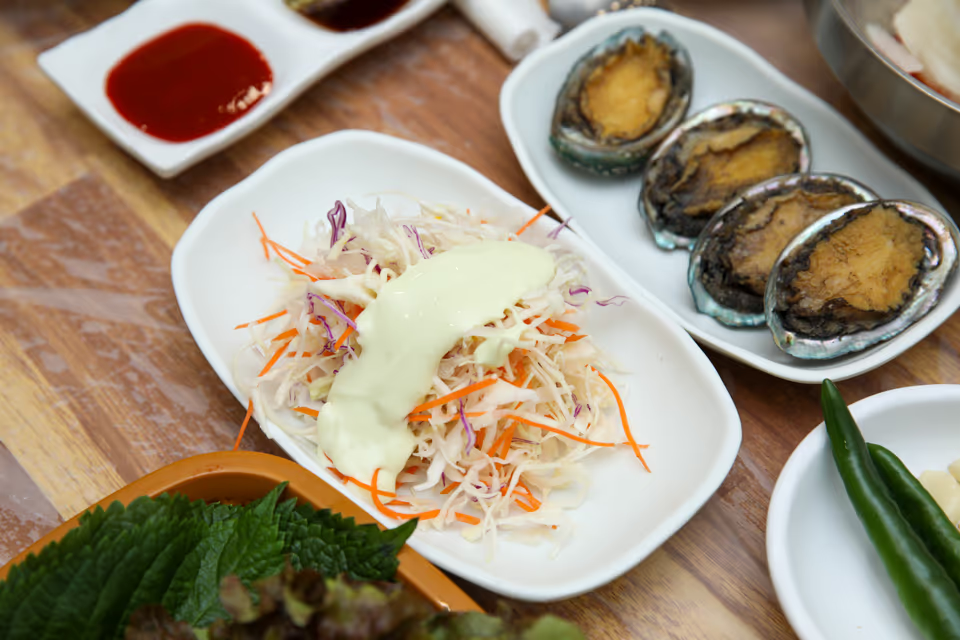
The cabbage salad belongs right after you eat something with a spicy sauce, one chopstick-load at a time. It is shredded cabbage and carrot under a mayonnaise dressing, sweet and soft, so eating it after sashimi dipped in vinegared chili paste or spicy-sauced hagfish rinses your mouth and makes the next piece taste good again. Clear it the moment you sit down, on the other hand, and sweetness and oil coat your tongue so you cannot taste the gentle sweetness of white-flesh sashimi. For the first 10 minutes after the sashimi arrives, it is better not to touch this plate. Watching the tables at the Jagalchi Haean-ro restaurant, the cabbage salad is one of the side dishes that empties fastest, and chopsticks crowd it especially after a tray of live hagfish grilled over charcoal arrives. The spicy sauce is strong, so its job of cooling your mouth midway matters that much more. At a table with children it is also the plate little hands reach for first, so if your child needs a share, setting some aside separately is a good idea. Depending on the day of ingredients, pickled radish or another vegetable dish comes out instead of the salad, but the role is the same. If it is sweet or crunchy, keep it for after the spicy sauce.
Before the Table Is Set
- Leave the salad alone for the first 10 minutes after the sashimi arrives
- The salad turn comes after the spicy hagfish tray lands
- If your child needs a share, set it aside when it reaches the table
수정횟집
Why raw seaweed and jeotgal come as a pair
Jagalchi Haean-ro
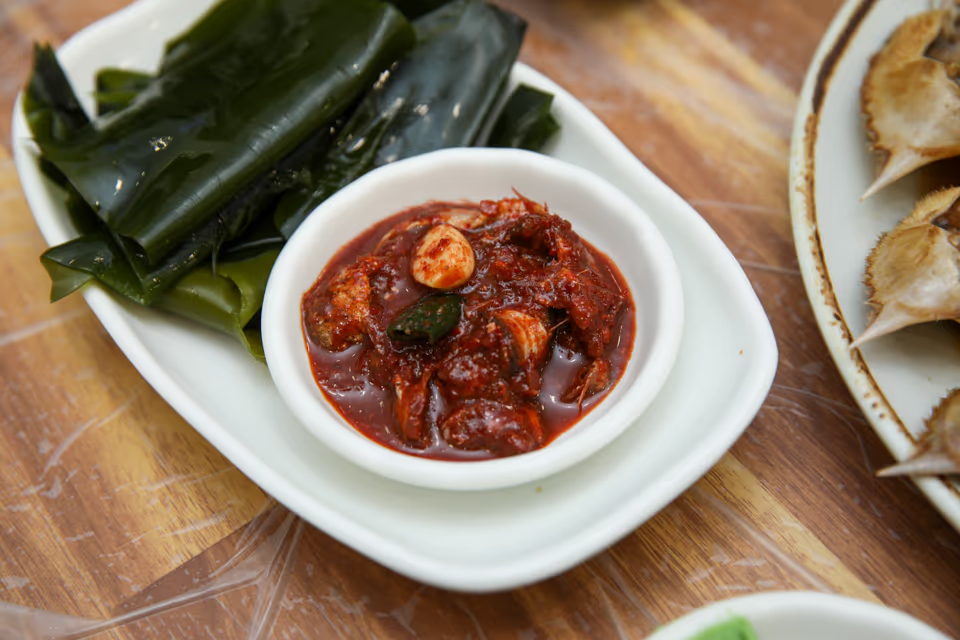
Raw seaweed eaten on its own tastes bland, and jeotgal, salted fermented seafood, eaten on its own tastes too salty, so the two come out as a set. Spread out one leaf of raw seaweed, dab on a tiny bit of jeotgal and eat it, and the scent of the sea meets the saltiness and your mouth feels refreshed. When several pieces of sashimi have made your mouth feel heavy, one bite of this pairing makes it light again. Controlling the amount is all there is to it. Pile on the jeotgal and the saltiness lingers and covers the taste of the next piece of sashimi, so for one leaf of seaweed, as much jeotgal as clings to the tip of a chopstick is plenty. Raw seaweed also works as a wrap. Put a piece of white-flesh sashimi on the seaweed, add a little jeotgal and fold it up, and you get a wrap with a different texture from a lettuce wrap, and because the seaweed itself carries the scent of the sea, it heads in the same direction as the sashimi. Layered thick, though, it gets chewy, so spreading one leaf at a time works better. Raw seaweed that comes in during spring is the most tender, and after summer the texture gets a little chewier, and on chewy days dipping it in a little vinegared chili paste instead of jeotgal goes down more easily. The amount of raw seaweed and jeotgal varies with how they came in that day, and if it runs short just say so and it will be topped up. If someone at the table cannot handle salty food, put the jeotgal dish on the far side of the table and use just the seaweed.
Before the Table Is Set
- For one leaf of seaweed, jeotgal on the tip of a chopstick is enough
- Wrap white-flesh sashimi in seaweed for a texture unlike a lettuce wrap
- If salt is a concern, move the jeotgal to the far side and use only seaweed
수정횟집
When to drink the seaweed soup served with sashimi
Jagalchi Haean-ro
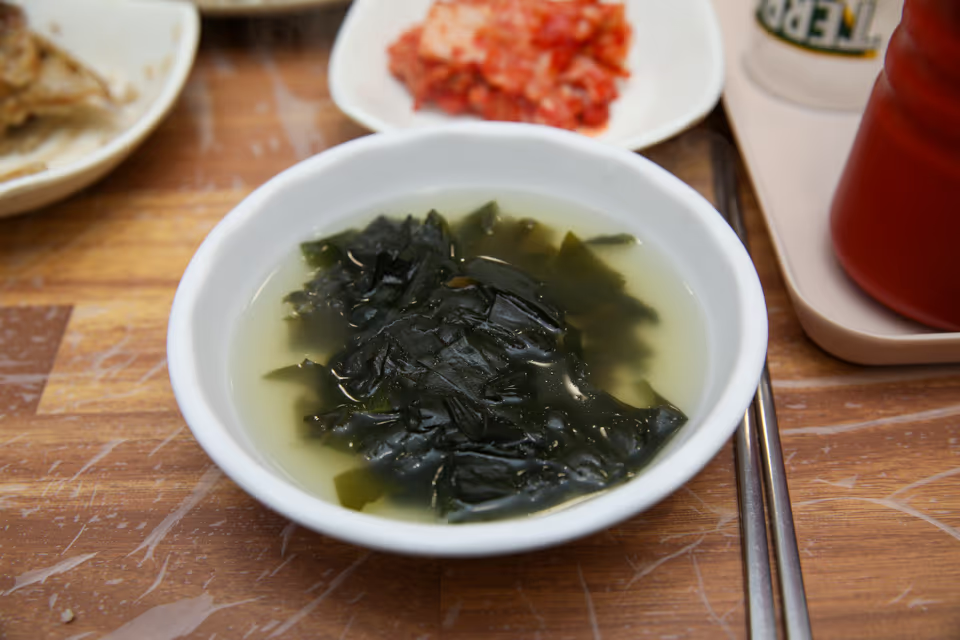
The seaweed soup is a broth that sits between the side dishes and the spicy fish stew. A sashimi table usually closes with a spicy broth such as the small rockfish spicy stew at KRW 50,000 (about USD 36), but on many days the small bowl set down before that is seaweed soup. It is made with only seaweed and soy sauce, no beef or clams, so the taste is clear and mild, and a spoonful between spicy bites settles your mouth. At a table with children, this soup is the easiest one to stir rice into. It is not spicy and the seaweed is soft, so a bowl empties with nothing more than a spoon. The same goes for older family members or anyone who finds spicy broth hard going. Put the spicy stew at the other end of the table and sit by the seaweed soup. There are two moments to drink it. A spoonful when your mouth starts feeling heavy from the sashimi, and a bowl to warm up before the spicy stew arrives. Empty it right at the start and you fill up and have less room for sashimi. The side dishes and soup change daily, built mostly around what is fresh, so some days another clear soup comes out instead of seaweed soup. Either way, the role is the same.
Before the Table Is Set
- A spoonful when the sashimi starts to feel heavy is the right moment
- Children and older guests are comfortable sitting by the seaweed soup
- Finish it at the start and you fill up before the sashimi
수정횟집
Are banchan refills free, and in what order is the table set
Jagalchi Station Exit 2, 220m
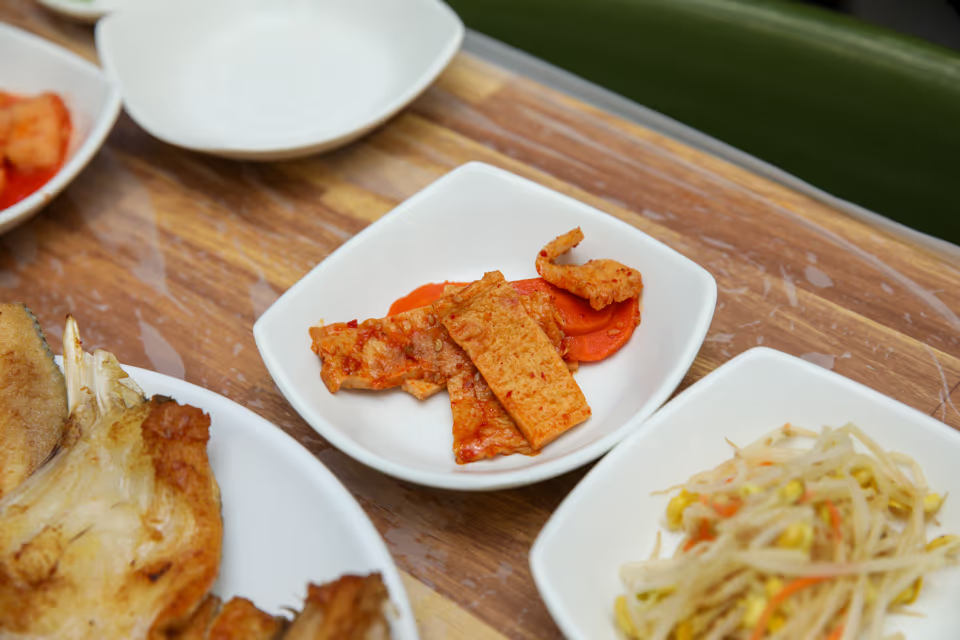
Empty side dishes get refilled when you ask. They are the standard spread, so there is no extra charge, and asking for more of one particular dish is fine too. There is one trick, though. Clear all the side dishes and get refills before the sashimi arrives, and by the time the sashimi does come out your mouth already feels heavy. Rather than refilling, keeping a little of each side dish between bites of sashimi protects the flavor. For a table of four, if half of the side dish plates are still left when the sashimi stage ends, that table kept good order. The table gets set in the order side dishes, sashimi, extras, broth. When you sit down the little side dishes go down first, the sashimi you ordered, such as small assorted sashimi at KRW 60,000 (about USD 43) or medium at KRW 80,000 (about USD 58), comes next, extras like steamed shrimp or abalone follow, and the spicy stew comes last. That means the 10 to 20 minutes before the sashimi arrives is time with nothing but side dishes, and how you use it decides how the whole table feels that day. The location is 220m from Exit 2 of Jagalchi Station on Busan Metro Line 1 toward Jagalchi Haean-ro, a 3-minute walk, with 190 seats across the first and second floors. Groups of four or more can call +82-10-8998-4803 ahead and a table will be held.
Before the Table Is Set
- Ask and empty side dishes are refilled at no extra charge
- Do not clear all the side dishes before the sashimi arrives
- 220m from Jagalchi Station Exit 2 toward the coastal road, a 3-minute walk
| Item | Price | Notes |
|---|---|---|
| Standard Side Dishes | Included | Lineup changes with the day of ingredients, free refills |
| Assorted Sashimi, Small | KRW 60,000 | About USD 43 · for 2, side dishes included |
| Assorted Sashimi, Medium | KRW 80,000 | About USD 58 · for 3 to 4 |
| Rockfish Spicy Stew, Small | KRW 50,000 | About USD 36 · broth to close the table, ordered separately |
| Soy-Marinated Crab | KRW 30,000 | About USD 22 · a separate dish, not a standard side |
| Sashimi Set Meal | KRW 20,000 | About USD 14 · tray for one with rice and side dishes |
Sashimi Restaurant Banchan FAQ
Nearby Attractions
Jagalchi Market main hall
3-minute walkLive and fresh fish wholesale and retail, a short walk after the meal
BIFF Square
5-minute walkSsiat-hotteok and other street snacks
Gukje Market
8-minute walkTraditional market food and shopping
Yongdusan Park
12-minute walkBusan Tower and the harbor at night
Before the Table Is Set
- Do not clear the side dishes in the 10 to 20 minutes before the sashimi arrives
- Cabbage salad and squash belong one bite at a time right after spicy sauce
- Dab raw seaweed with only as much jeotgal as fits on a chopstick tip
- Ask and empty side dishes are refilled at no extra charge
- 220m from Jagalchi Station Exit 2 toward the coastal road, a 3-minute walk
Sample Side Dish Order
An Evening Table That Keeps the Side Dish Order
- Sit down and order medium assorted sashimi while the side dishes go down
- Sashimi arrives, spend the first 10 minutes on white-flesh fish instead of side dishes
- In the spicy stretch, one bite each of cabbage salad and squash
- When your mouth feels heavy, raw seaweed with jeotgal and a spoonful of seaweed soup
- Close with a small rockfish spicy stew, finishing the side dishes with rice
Which Side Dish Goes Where
Side dishes for rice
- Stir-fried fish cake
- Seasoned bean sprouts
- Cubed radish kimchi
- Seasoned greens
Palate cleansers between bites
- Cabbage salad
- Braised kabocha squash
- Boiled green soybeans
- Pickled radish
Taste of the sea
- Raw seaweed with jeotgal
- Seaweed soup
On Jagalchi Haean-ro, a Jagalchi ajimae with over 10 years of experience lays down the side dishes before the sashimi
Side dishes included in the sashimi price · free refills · made the same day from market ingredients, 220m from Jagalchi Station Exit 2
Read the full guide