How to Eat Sea Pineapple, Live Octopus and Sea Cucumber in Busan, the Right Order for First-Timers
Mild to pungent, the Jagalchi method for finishing a plate of sea cucumber, octopus and sea pineapple without losing a single flavor
The Short Answer
Sea pineapple, octopus and sea cucumber taste right when eaten in that reverse order, sea cucumber first and sea pineapple last, moving from mild to pungent. Sesame oil with salt suits the sea cucumber and octopus while a touch of chili paste suits the sea pineapple, and live octopus cut small, rolled in oil and chewed long is safe even for a child. At a restaurant 220m from Jagalchi Station Exit 2, the seafood platter is sized by group.
수정횟집
What order should a first-timer eat sea pineapple, live octopus and sea cucumber in
Jagalchi Haean-ro
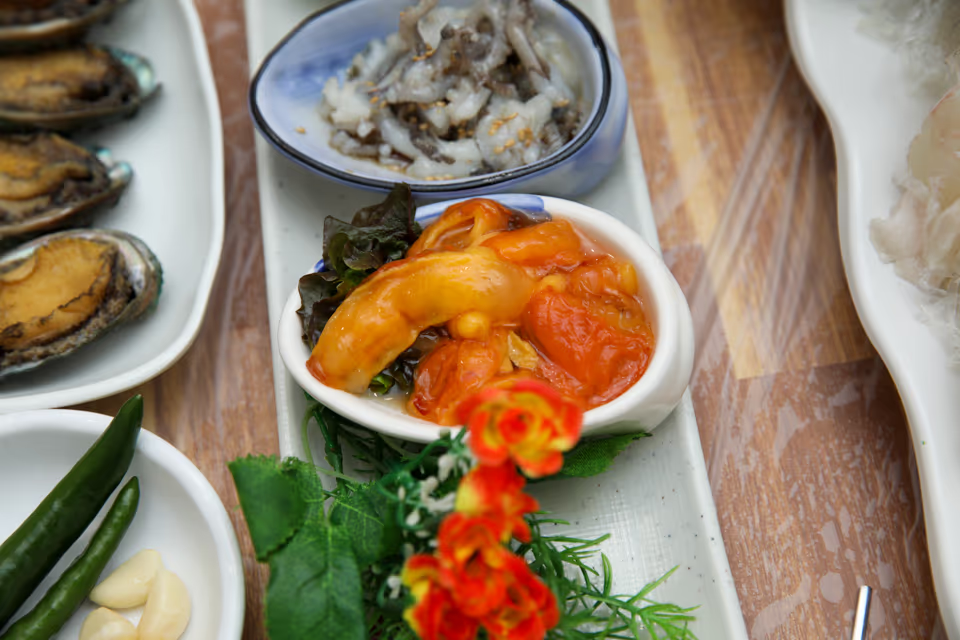
For a first time, sea cucumber, then live octopus, then sea pineapple is the right order. You move from the mildest to the most pungent so the earlier flavor never gets buried by the later one. Sea cucumber is mostly about a crisp, snappy texture, so it opens your palate. Octopus carries a nutty sesame oil aroma and the fun of chewing, so it belongs in the middle. Sea pineapple (meongge) has a distinctive aroma strong enough that it has to come last, or it masks the other two. Reverse it and start with sea pineapple, and the aroma lingers in your mouth until the sea cucumber tastes like nothing at all. Even when all three plates arrive at once, holding this order lets each one show its own character. Take two or three pieces of one at a time, rotating between them, and rinse your mouth with water or soju in between, and the final piece of sea pineapple tastes as clear as the first. When we serve these three, the octopus plate and the sea pineapple plate sit side by side with abalone alongside, and eight out of ten guests reach for the octopus first. Fixing the order also fixes where the three plates go. Put the sea cucumber dish closest to you and the sea pineapple plate farthest away, and your hand naturally moves in sequence. The movement catches the eye, which is exactly why the restaurant's Jagalchi veteran, with over a decade on the job, steps in to recommend starting with the sea cucumber. When a first-timer says there is one of the three they cannot manage, it is almost always the sea pineapple, but hold the order and use only a light touch of chili paste and seven out of ten reach for a second piece. Chili peppers and garlic come separately beside the plate, so if the aroma feels like too much, try chewing a piece of pepper alongside.
Before You Eat
- Sea cucumber, octopus, sea pineapple, moving from mild to pungent
- Take two or three pieces of one at a time and rinse your mouth in between
- If the sea pineapple aroma is too much, chew a piece of chili pepper alongside
수정횟집
How sea cucumber gets prepared and which sauce it takes
Jagalchi Haean-ro
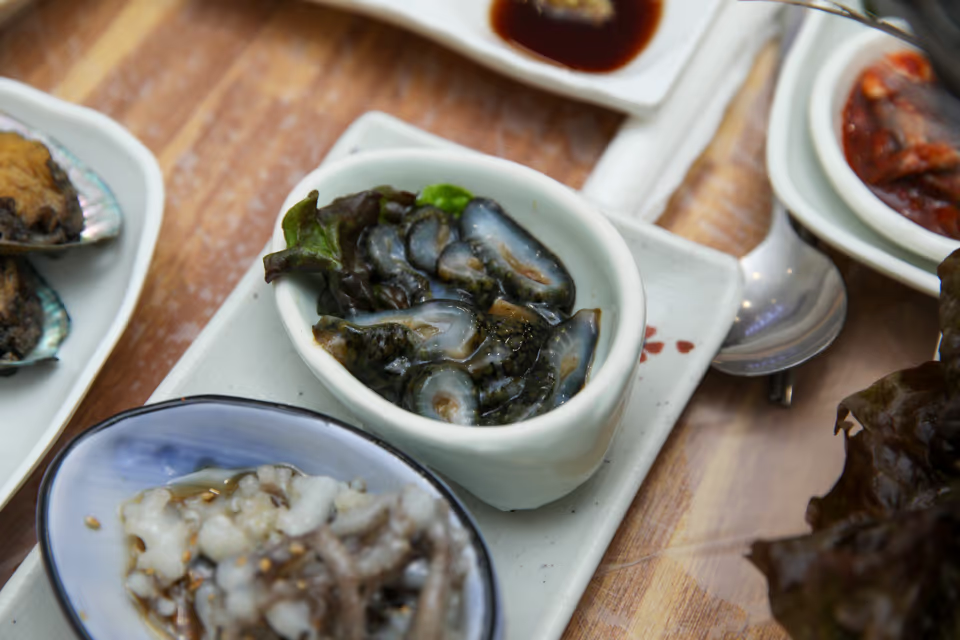
Sea cucumber is split open, the innards removed, rinsed in seawater, then sliced thin on the diagonal and served. Two things make or break the prep. The innards have to come out completely or you get a gritty, sandy feel, and it has to be sliced and served immediately or the snap in the texture disappears. Soak it too long in water and the flesh goes soft; leave it in open air too long and it turns limp. Within 10 minutes of prep is when it belongs on the table. We prep it only once the order comes in, serve it in a small dish, and set the octopus plate down in front of it. If the sound when you chew has gotten quieter, time has passed since it hit the table, so when the dish arrives, reaching for it before anything else is the right move. The flavor is mild enough you might say there is almost none, and instead the sound and the resilience when you chew are the whole point. That is why the sauce matters. Dip it in sesame oil with salt stirred in and nuttiness attaches to it; dip it in chili paste and the sourness sharpens the texture. For a first time, starting with the oil-and-salt dish and moving to chili paste makes the sea cucumber's own character easier to read. Dark color with clearly defined bumps means good sea cucumber, and when sliced, a cross-section that looks translucent and glossy means it is in good condition. If the cross-section looks cloudy and droops without resistance, it was prepped a while ago, and asking for another plate is fair. The flesh firms up in the cold months, so it moves especially well between winter and spring, and in summer we check the condition more often before serving. For drinking, it suits a clear rice wine better than soju, and picking up a piece between slices of sashimi sharpens the next bite.
Before You Eat
- A translucent, glossy cross-section means good condition, cloudy and drooping means it is old
- Start with sesame oil and salt the first time, then switch to chili paste from the second piece to compare
- Picking up a piece between sashimi slices sharpens the next bite
수정횟집
Why sea pineapple tastes bitter and how to bring out the aroma instead
Jagalchi Haean-ro
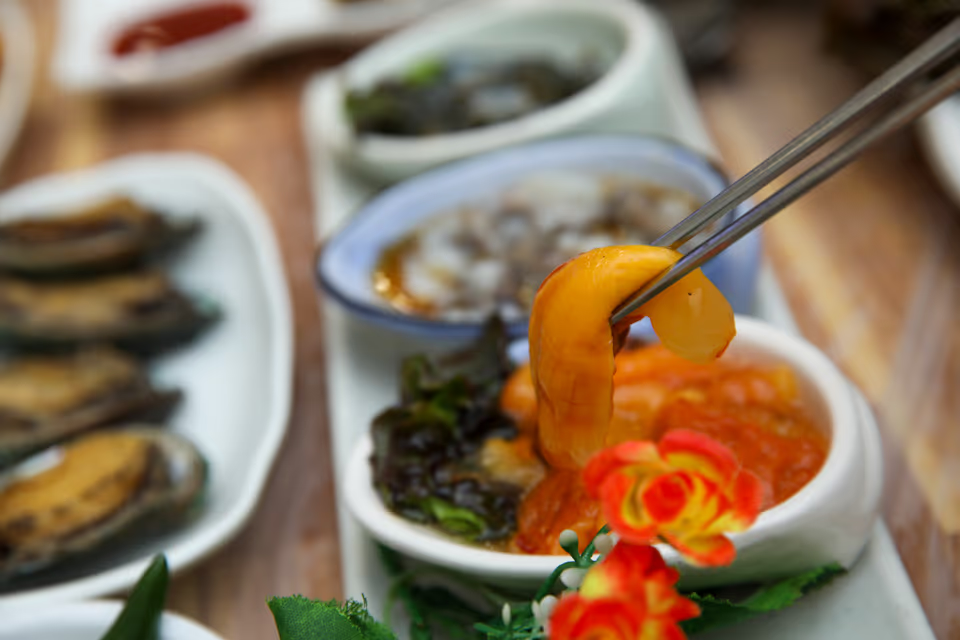
The bitterness in sea pineapple comes from water left inside the shell and from the dark innards. Peel the shell during prep and clear out the dark part and the water properly, and the bitterness drops sharply, leaving sweetness and aroma behind. So the same sea pineapple tastes different depending on the prep. Good sea pineapple has a deep orange color and plump flesh, and it does not go slack when you pick it up with chopsticks. The aroma rises from the back of your palate the more you chew, and to keep that aroma alive, use only the smallest touch of chili paste or none at all. Dip it generously and the aroma dies, leaving only sourness. Sesame oil does not suit sea pineapple, so the oil dish stays with the sea cucumber and octopus. The technique is to put a whole piece in your mouth, chew only two or three times, and swallow. Chew it long and the bitterness comes back up. That aroma is also why it pairs best with soju: a sip rinses the aroma away so the next piece registers fresh. Spring into early summer is when the flesh fills out most, so the plate comes out heavier in that stretch. For a first-timer, starting with half a piece is also an option. The lettuce or perilla leaf that comes on the plate is not garnish, it is wrapping material. If the aroma feels like too much, wrapping one piece of sea pineapple in perilla lets the perilla aroma push back about half of it, making a first attempt far easier. We often see guests who tried sea pineapple once and said they could not manage it come back next visit asking for it first, after nothing changed but the order and the sauce. The liquid left on the plate is better left undrunk, and if the aroma bothers you, chewing a piece of chili pepper alongside lets the heat hold the aroma down.
Before You Eat
- Only the smallest touch of chili paste, and never sesame oil on sea pineapple
- Chew a piece two or three times and swallow, so the bitterness does not come back up
- Deep orange, plump flesh that does not go slack is what good sea pineapple looks like
수정횟집
How to eat live octopus safely, and what children and older guests need
Jagalchi Haean-ro
Live octopus has to be cut small, rolled in sesame oil with salt, then chewed thoroughly before swallowing. The risk is the suckers. They keep moving for a while after being cut, and if one attaches inside your throat it can block your airway, so swallowing a large piece is the single thing to avoid. We cut the octopus into small pieces, sprinkle sesame over it, and set a sesame oil dish alongside so you can roll each piece before eating. Oil coating the suckers weakens their grip, and small pieces are easier to chew through. Children and older guests need separate care. For a child, an adult should cut the pieces smaller again, then give one piece at a time and have them chew more than ten times before swallowing. For an older guest with a weaker bite, serve small pieces from the body rather than a whole tentacle, and cut them finer still if they wear dentures. If a child is frightened by the movement, waiting until it stops is also an option. After a few minutes the sucker movement weakens, and at that point it is easier to chew with almost no grip left. Swallowing a large piece after heavy drinking is also dangerous, so clearing the octopus plate once people are drunk is the right call. Do not swallow absent-mindedly while talking, put the piece in your mouth and focus only on chewing. If a sucker does attach to your palate or tongue, do not panic, hold a spoonful of the oil dish in your mouth or drink water while pushing it off with your tongue and it comes loose. Hold to these three, cut small, roll in oil, chew long, and even a first-timer can enjoy it without trouble. Weekend dinner at 7 PM is the busiest hour, and we walk family guests ordering an octopus plate at that time through this once more at the table.
Before You Eat
- Roll a small piece in the oil dish, chew more than ten times, then swallow
- For a child, an adult cuts it smaller again and gives one piece at a time
- Clearing the octopus plate once people are drunk is the safer call
수정횟집
How to order these three alongside an assorted sashimi platter
Jagalchi Haean-ro
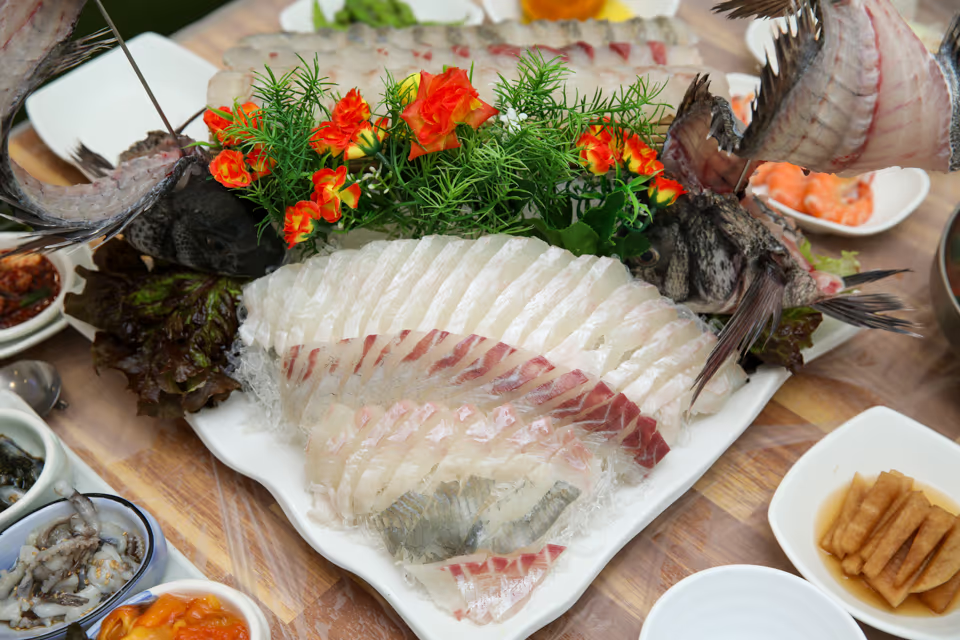
Ordering the three raw shellfish as a side to an assorted sashimi platter is the most common approach, and here, ordering the seafood platter means it comes sized to your group. The assorted platter runs on fixed-size pricing, KRW 60,000 small (about USD 43) for 2, KRW 80,000 medium for 3 and KRW 100,000 large for 4, and adding the seafood platter puts sea pineapple, octopus, sea cucumber and abalone in a row beside the white-fish plate. The seafood platter is sized by headcount rather than priced by size, so all you need to say when ordering is how many of you there are. Plenty of guests worry that a small platter plus a seafood platter for two will leave too much, but since it comes sized for two, it sits comfortably next to a small plate. The order that works is to eat a little of the raw shellfish first, move on to the white-fish sashimi, then come back mid-meal to the sea cucumber and octopus as a palate cleanser, the Jagalchi way. Sea pineapple has a strong enough aroma that placing it after white-fish sashimi masks the sashimi, so eating it all at the start or all at the end works better. For an anniversary or a business dinner, the combination that goes out is premium wild sashimi from KRW 80,000 (about USD 58) under Daily Selection Pricing plus the seafood platter. Whichever species had the best yield that day, striped flounder or parrotfish, goes on the large plate with the raw shellfish dishes alongside, and the table fills out completely. Depending on the day, one or two of these three may come along with the assorted platter as a side dish, and side dishes rotate daily based on what is fresh. For four people, a large plate plus the seafood platter, finished with a small rockfish stew at KRW 50,000 (about USD 36), fills out two hours of an evening comfortably.
Before You Eat
- The seafood platter is sized by group, so just say how many of you there are
- For four, a large assorted platter plus the seafood platter and a small rockfish stew is the standard
- Do not put sea pineapple after white-fish sashimi, eat it all at the start or all at the end
수정횟집
How to pair chili paste, sesame oil and salt, and where to eat them
Jagalchi Station Exit 2, 220m
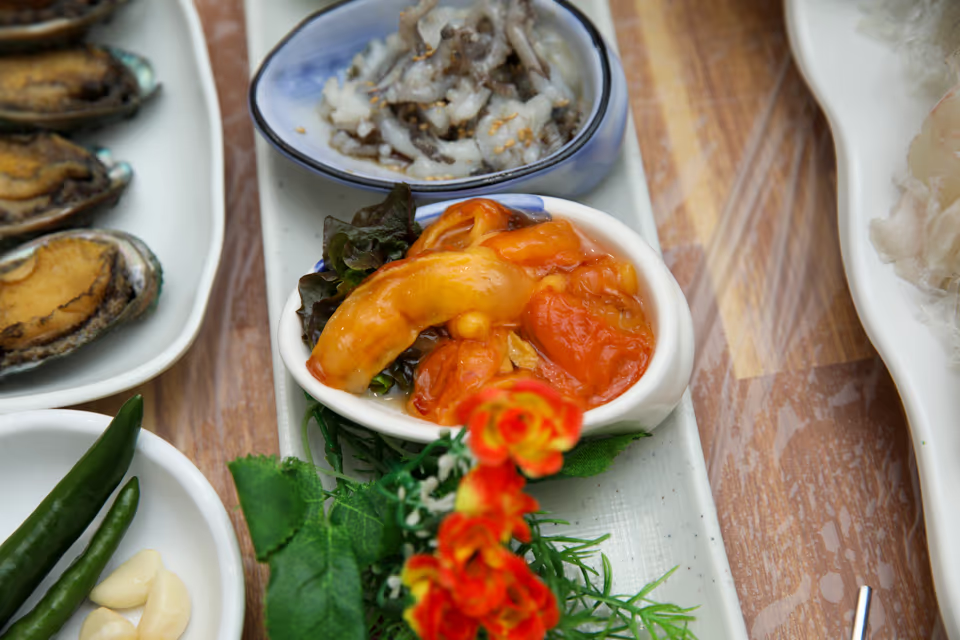
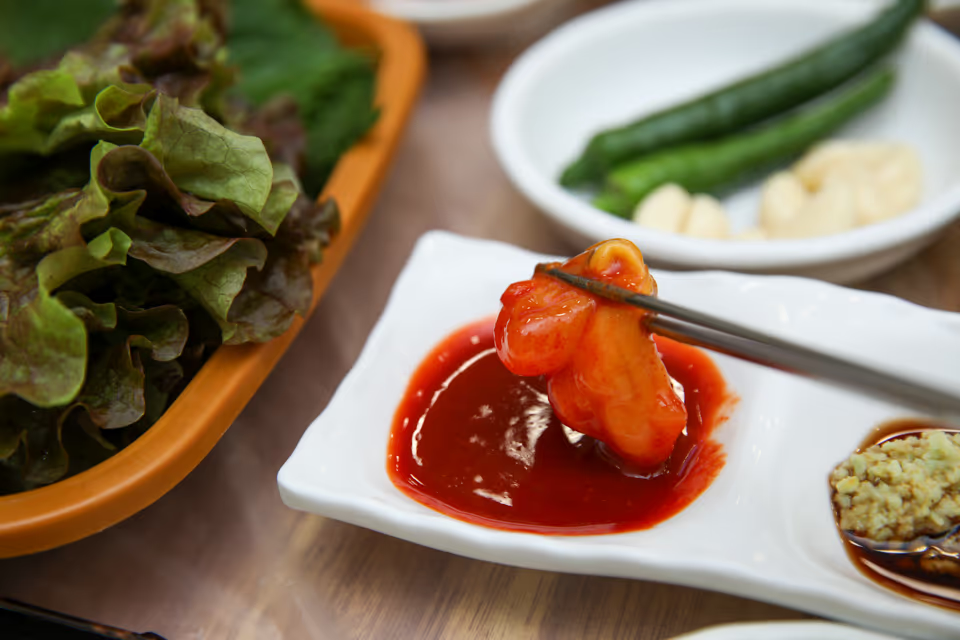
The base pairing is sesame oil with salt for the sea cucumber and octopus, the smallest touch of chili paste for the sea pineapple, and chili pepper and garlic alongside all three. That is exactly why the pepper and garlic dishes and the chili paste and oil dishes all come out beside the plate. The oil dish is sesame oil with salt stirred in and a little sesame added, and it attaches nuttiness to the mild sea cucumber and octopus. Chili paste sharpens the texture with sourness but covers aroma, so it goes on the sea pineapple only lightly. The pepper is there to hold the aroma down with heat when it feels like too much, and garlic chewed together with the octopus settles any fishy edge. The mistake first-time guests make most often is dunking all three deep in the chili paste, which makes all three taste identical. We set the dishes out separately, so comparing one piece at a time with different sauces makes the difference obvious right away. Asking for salt on its own and dipping the sea cucumber without the oil is also worth doing. Salt alone brings the sea cucumber's sweetness out a little more, while the octopus needs the oil so the suckers grip less. The restaurant sits 220m from Jagalchi Station (Line 1) Exit 2 toward Jagalchi Haean-ro, about a 3-minute walk. It is two stops from Busan Station on Line 1, so you can be seated within 20 minutes of the KTX arriving, and seating across the first and second floors totals 190, making group dinners possible. For four or more, calling +82-10-8998-4803 ahead holds the seat. Nearby are the Jagalchi main hall at a 3-minute walk, BIFF Square 5 minutes, Gukje Market 8 minutes and Yeongdo Bridge 7 minutes, and a taxi runs about 10 minutes and KRW 6,000 to 8,000 (about USD 4 to 6) from Busan Station, or 20 minutes and KRW 12,000 to 15,000 (about USD 9 to 11) from Seomyeon.
Before You Eat
- Sesame oil and salt for sea cucumber and octopus, a touch of chili paste for sea pineapple
- Dunking all three in chili paste makes them taste the same, so use the dishes separately
- 220m from Jagalchi Station Exit 2 toward the coastal road, about a 3-minute walk
| Item | Price | Notes |
|---|---|---|
| Seafood Platter | Sized by group | Sea pineapple, octopus, sea cucumber and abalone, portioned to headcount |
| Assorted Platter, Small | KRW 60,000 | About USD 43 · for 2, fixed-size pricing |
| Assorted Platter, Medium | KRW 80,000 | About USD 58 · for 3 |
| Assorted Platter, Large | KRW 100,000 | About USD 72 · for 4 |
| Premium Wild Sashimi | from KRW 80,000 | About USD 58 · Daily Selection Pricing, striped flounder and parrotfish among others |
| Rockfish Stew, Small | KRW 50,000 | About USD 36 · to finish, enough for four to share |
Raw Shellfish FAQ
Nearby Attractions
Jagalchi Market main hall
3-minute walkLive fish and seafood wholesale, a look at the sea pineapple and sea cucumber stalls
BIFF Square
5-minute walkSsiat-hotteok and other snacks after the meal
Gukje Market
8-minute walkTraditional market food and shopping
Yeongdo Bridge
7-minute walkOpens Saturdays at 2 PM, a walk after the meal
Before You Eat
- Sea cucumber, octopus, sea pineapple, eating from mild to pungent
- For live octopus, hold to three things: cut small, rolled in oil, chewed more than ten times
- Only a touch of chili paste on sea pineapple, and sesame oil only on sea cucumber and octopus
- The seafood platter is sized by group, so just say how many of you there are
- From Jagalchi Station (Line 1) Exit 2, 220m toward the coastal road, about a 3-minute walk
Suggested Evening Course
A Jagalchi Evening That Opens with Three Raw Shellfish
- Browse the sea pineapple and sea cucumber stalls at the Jagalchi main hall, get an eye for color and bumps
- Arrive on Jagalchi Haean-ro, name your headcount and add the seafood platter to an assorted platter size
- Taste sea cucumber, octopus and sea pineapple in order, switching sauces as you go
- Move on to white-fish sashimi with soju, returning to the sea cucumber mid-meal as a palate cleanser
- Finish with a small rockfish stew, then snacks at BIFF Square to close the evening
What to Eat Where
Jagalchi Haean-ro (restaurant row)
- Seafood platter sized by group
- Assorted platter small to extra-large
- Premium wild sashimi
Jagalchi Market main hall (stalls)
- Sea pineapple and sea cucumber stalls
- Live fish browsing
- 2nd-floor food court
Nampo-dong and BIFF Square (after the meal)
- Ssiat-hotteok
- Cafes
- Gwangbok-ro shopping
On Jagalchi Haean-ro, a Jagalchi ajimae with over 10 years of experience sets the table starting with the raw shellfish
Seafood platter sized by group · Assorted platter by fixed size · Premium wild sashimi, 220m from Jagalchi Station Exit 2
Read the full guide