Korean Spicy Sashimi Salad (Hoe-muchim), How It Differs from Mulhoe and a Rice Bowl
A plate of sashimi tossed in vinegared chili paste, what separates it from mulhoe and a rice bowl, and how per-group ordering works
The Short Answer
Hoe-muchim is sashimi tossed with perilla leaf and vegetables in vinegared chili paste, separated from mulhoe by having no broth and from a sashimi rice bowl by having no rice. The sauce should coat thinly rather than pool, and noodles or rice go in only when you are halfway through. At a restaurant 220m from Jagalchi Station Exit 2 the salad is sized to your group, with mulhoe at KRW 18,000 and the rice bowl at KRW 15,000 as comparison points.
수정횟집
What separates sashimi salad, mulhoe and a sashimi rice bowl
Jagalchi Haean-ro
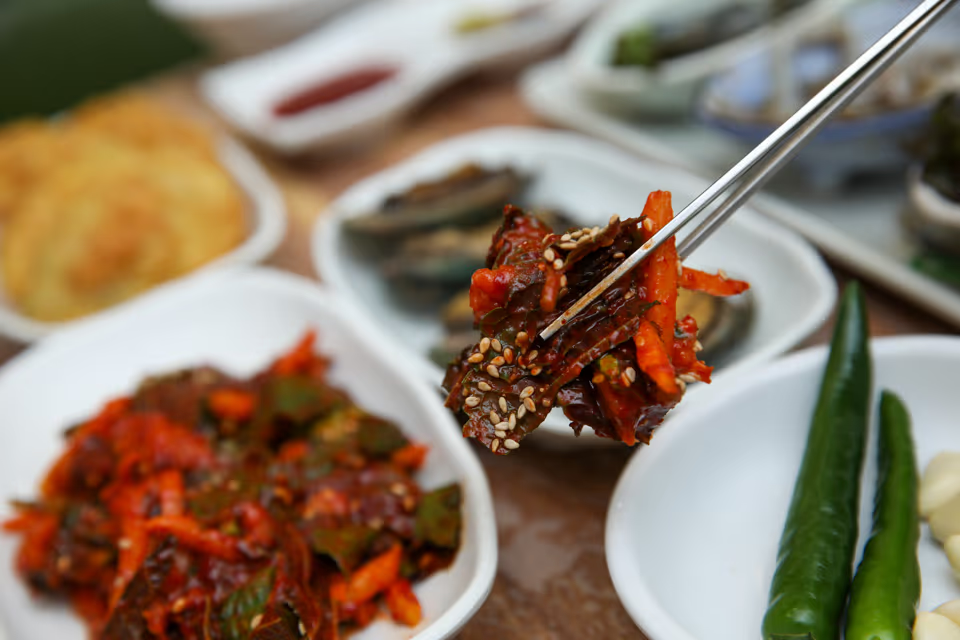
Hoe-muchim is a tossed dish of shredded sashimi mixed with vegetables like perilla leaf, cucumber and onion in vinegared chili paste, finished with a sprinkle of sesame. Having no broth is the first thing that separates it from mulhoe, and having no rice underneath is the second thing that separates it from hoe-deopbap. Mulhoe takes the same sashimi and vegetables and floats them in an icy broth you eat with a spoon, a summer dish, while hoe-deopbap lays sashimi and vegetables over rice and gets stirred with the same chili paste into a one-bowl meal. All three center on vinegared chili paste so the flavor runs similar, but the temperature and how full you get differ. The salad sits near room temperature so the savory depth of the fish comes through intact, mulhoe is cold and holds up against the heat, and the rice bowl includes rice so it becomes a full meal. Eight out of ten guests ask which of the three to order, and the answer sits in the character of the occasion. An evening with drinks means the salad, a lunch on its own means the rice bowl, and a sweating afternoon means mulhoe. At the Jagalchi Haean-ro restaurant, mulhoe is KRW 18,000 (about USD 13), premium mulhoe KRW 25,000 (about USD 18) and the sashimi rice bowl KRW 15,000 (about USD 11), while the salad is sized to your group rather than priced by portion. When the restaurant's Jagalchi veteran with over a decade on the job sets the table, that is the distinction she asks about first.
Before You Order
- Drinks in the evening means the salad, lunch alone means the rice bowl, a hot afternoon means mulhoe
- The salad sits near room temperature so the savory depth of the fish stays intact
- The salad is sized to your group, so naming your headcount is the whole order
수정횟집
What goes into the vinegared chili paste for sashimi salad
Jagalchi Haean-ro
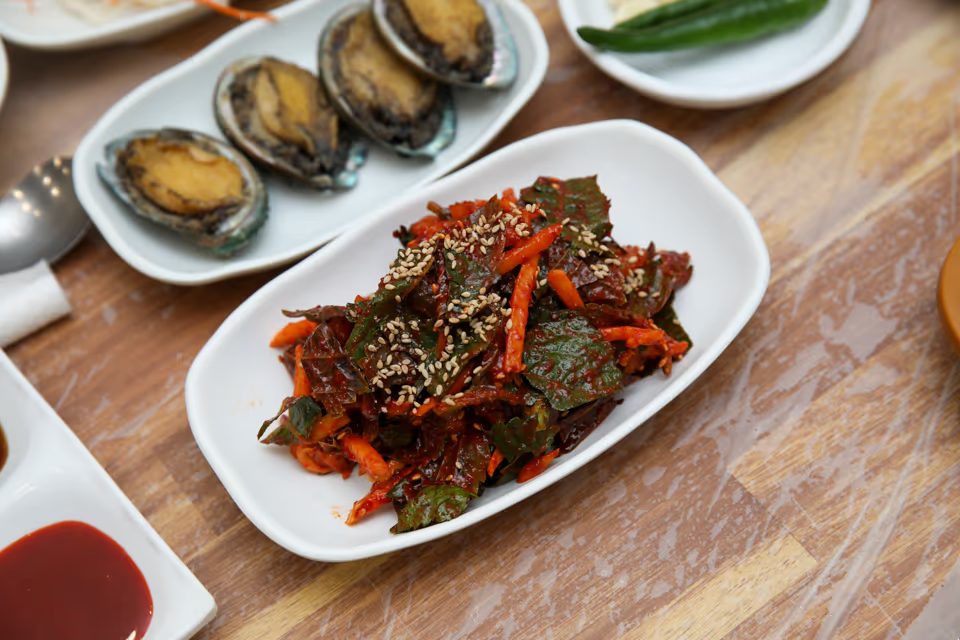
The base is six things: chili paste, vinegar, sugar, minced garlic, sesame oil and whole sesame seeds, and the vegetables are perilla leaf, cucumber, onion and carrot. The Jagalchi version runs a higher vinegar ratio than inland versions so the first taste is sharper, and some places use plum syrup instead of sugar, which leaves a lighter finish. Look at the photo and the perilla leaf has gone red, and a well-made salad has the sauce coating the fish and vegetables thinly rather than pooling. Sauce pooling at the bottom means too much vinegar and chili paste went in, or the vegetables gave up water, so eating it the moment it arrives is what keeps the crunch alive. The fish is a white-flesh species cut into strips, and cutting too thick leaves the sauce sitting on the outside while cutting too thin loses the chew, so about the thickness of a little finger is right. Perilla leaf has a strong aroma that settles any fishy edge, cucumber and onion add crunch, and carrot brings the color. Whole sesame goes on last to add its toasted aroma, which is why it never gets mixed in ahead of time. We toss it only once the order comes in, so the vegetables reach the table before they wilt. Getting the vinegared chili paste right is half the dish, and the other half comes down to how fast you eat it.
Before You Order
- Sauce pooling at the bottom means too much vinegar, eat it the moment it arrives
- Fish cut about the thickness of a little finger holds both the sauce and the chew
- Whole sesame goes on last for the aroma, so it is never mixed in ahead
수정횟집
When to add thin noodles or rice to the sashimi salad
Jagalchi Haean-ro
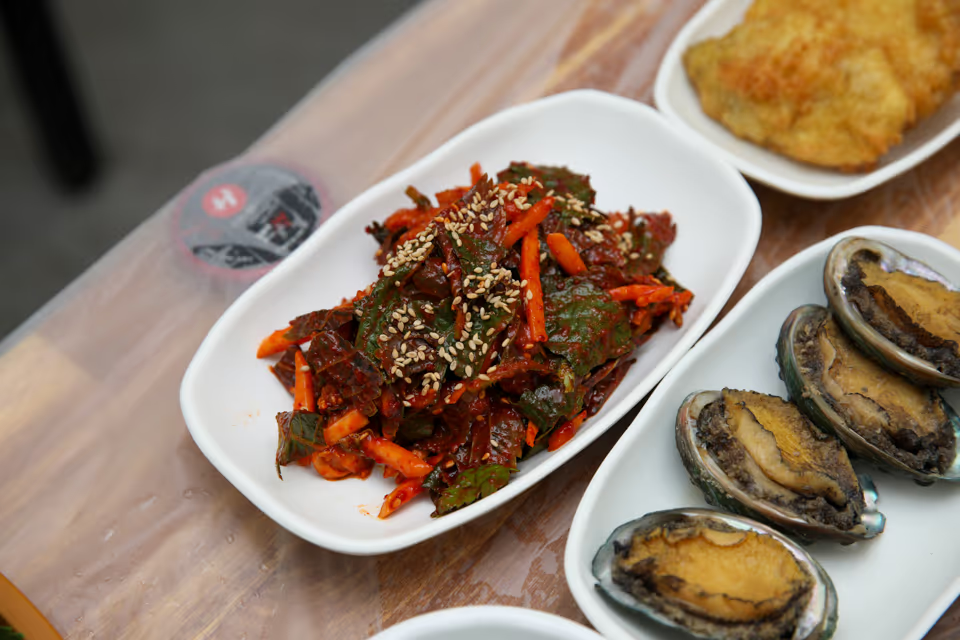
The timing is when you are about halfway through the fish and the sauce is still there. Mixing from the start presses the fish down and draws water out of the vegetables, thinning the sauce. For noodles, add a handful of somyeon that has been boiled, rinsed in cold water and drained, then scrape the sauce and perilla fragments left at the bottom of the plate and toss lightly. For rice, stirring half a bowl with a little seaweed flake gives you something close to a sashimi rice bowl, except the fish has already soaked in the sauce so the savory depth runs stronger. Which one you pick splits by occasion. Nine out of ten guests drinking in the evening call for noodles, and anyone coming for lunch as a meal asks for rice. Noodles close out the sauce without filling you up in a drinking session, while rice completes a meal. If you want both, the natural order is noodles stirred in first and rice saved for the stew. One caution: noodles left sitting swell and absorb all the sauce, so eat them the moment they are mixed. For a table of four, two handfuls of noodles and one bowl of rice is enough, and adding more later beats leaving any behind.
Before You Order
- Add noodles or rice only when you are about halfway through, not from the start
- Noodles suit a drinking session, rice completes a lunch
- Noodles swell if they sit, so eat them the moment they are mixed
수정횟집
How to order sashimi salad, and what sized to your group means
Jagalchi Haean-ro
The order ends with three things: your headcount, whether you are drinking, and whether you want noodles or rice. Sized to your group means that instead of fixed small, medium and large portions, the amount of fish and vegetables gets built around the headcount at the table and whatever else you ordered. Two people ordering only the salad get a portion suited to one bottle of soju, while four people ordering it alongside an assorted platter get it scaled down as a side. With no fixed portion there is no fixed number either, so the price gets quoted against the day's build, and the comparison points are mulhoe at KRW 18,000, premium mulhoe at KRW 25,000 and the rice bowl at KRW 15,000. The photo shows mulhoe ingredients before the broth goes in, and the sashimi and vegetables tossed in chili paste look almost identical to the salad. The two dishes genuinely split from the same root: pour icy broth over it and you have mulhoe, plate it as is and you have the salad. That is why the most common combination for two is one salad plus one mulhoe, tasting the same thing at two temperatures. Premium mulhoe at KRW 25,000 carries a more generous fish build, which makes it the pick for three or more. Around 7 PM on a weekend is the busiest stretch, so for four or more, calling +82-10-8998-4803 ahead holds both the seat and the build.
Before You Order
- Headcount, drinking or not, noodles or rice, and the order is done
- For two, one salad plus one mulhoe gives you the same base at two temperatures
- Premium mulhoe at KRW 25,000 carries more fish, better for three or more
수정횟집
Why sashimi salad works so well as a soju dish
Jagalchi Haean-ro
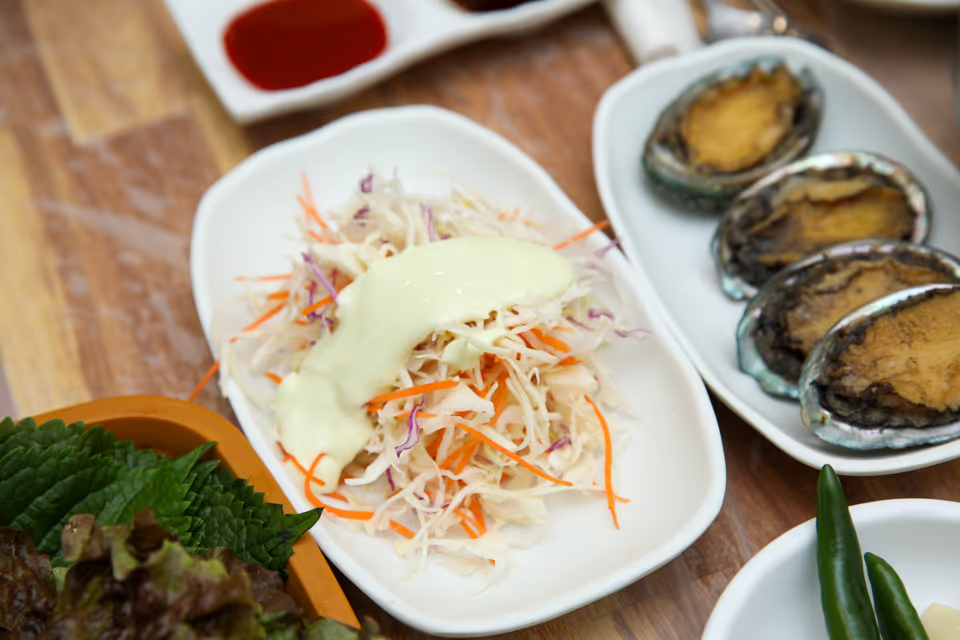
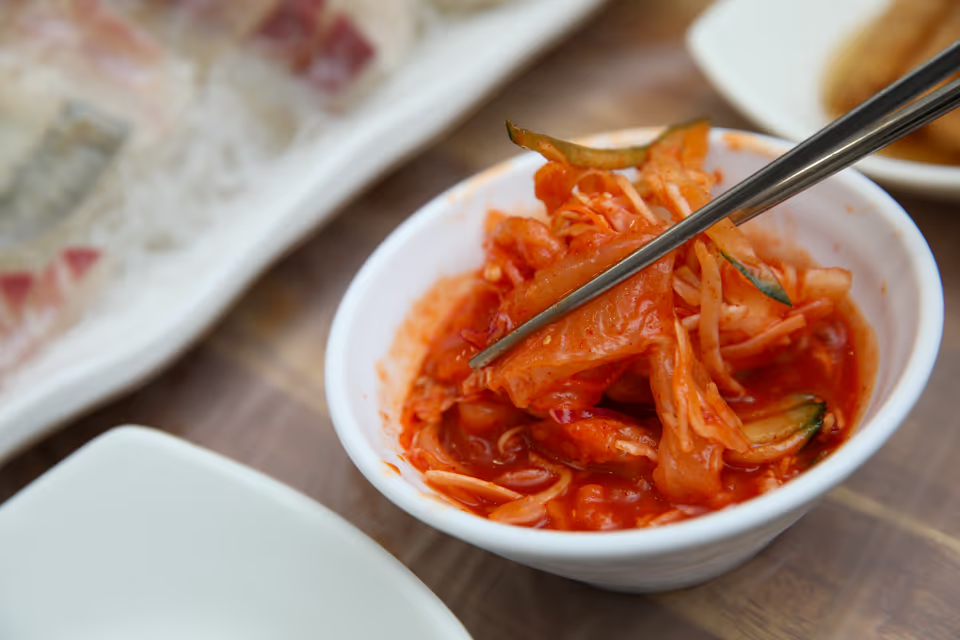
Because the sharp, spicy sauce rinses the bitterness of the soju away. Eating plain sashimi leaves your mouth clean enough that soju tastes harsh, but sashimi tossed in vinegared chili paste brings sweetness and sourness first with the heat settling behind, so a glass goes down smoothly. Lasting on the chopsticks is the other reason. A plate of assorted sashimi empties fast, but this salad has vegetables mixed through it, and most guests finish a bottle of soju on one plate. Among the side dishes, the cabbage salad matters especially. As in the photo, it is shredded cabbage and carrot under a mayonnaise dressing, and a bite of it between the spicy mouthfuls rinses your palate so the next piece tastes good again. Side dishes rotate daily based on what is fresh, so some days bring raw seaweed or another vegetable instead of the cabbage salad. Weekend dinner at 7 PM is the busiest hour, and at that time half the tables are the salad with soju. When ordering it as a drinking dish, save the noodles for the finish, and if you want broth, adding a small rockfish stew at KRW 50,000 (about USD 36) completes the table. One plate of sashimi, one salad and one stew and a four-person evening is covered end to end.
Before You Order
- A bite of cabbage salad between spicy mouthfuls resets your palate
- Ordering it as a drinking dish means saving the noodles for the finish
- One sashimi plate, one salad and one stew covers a four-person evening
수정횟집
The Jagalchi order for eating sashimi salad, and how to get here
Jagalchi Station Exit 2, 220m
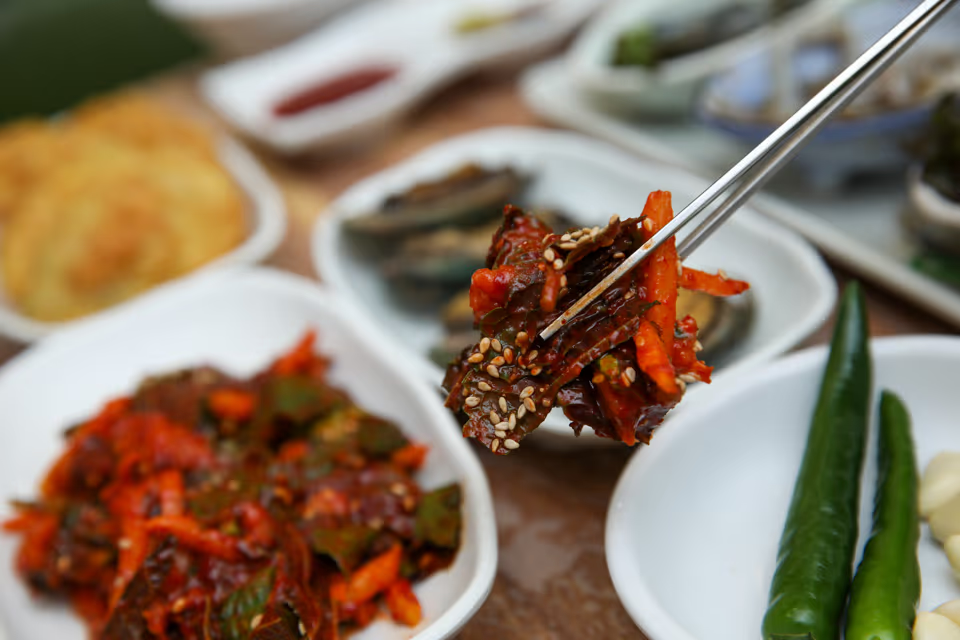
The Jagalchi order runs five steps. The moment it arrives, take one chopstick-load with the perilla leaf to taste the sauce, then work through about half the plate focusing on the fish. Midway, rinse your palate with the cabbage salad or raw seaweed, stir noodles or rice into the remaining sauce to finish, and if you want broth, close with mulhoe or a spicy stew. Since you have to eat it before the vegetables wilt, keeping the photo-taking under a minute is the better call. For directions, it is 220m from Jagalchi Station (Line 1) Exit 2 toward Jagalchi Haean-ro, about a 3-minute walk. It is two stops from Busan Station on Line 1, so you can be seated within 20 minutes of the KTX arriving, and a taxi runs about 10 minutes and KRW 6,000 to 8,000 (about USD 4 to 6) from Busan Station, or 20 minutes and KRW 12,000 to 15,000 (about USD 9 to 11) from Seomyeon. The restaurant seats 190 across the first and second floors so group dinners are welcome, and the Jagalchi main hall is a 3-minute walk with BIFF Square 5 minutes, which keeps the after-meal stroll short. The reason the restaurant's Jagalchi veteran with over a decade on the job asks your headcount and whether you are drinking before taking the order is exactly this build, and reservations and questions go to +82-10-8998-4803.
Before You Order
- First bite with the perilla leaf to taste the sauce, then work through the fish
- Keep the photo-taking under a minute, the vegetables wilt
- 220m from Jagalchi Station Exit 2 toward the coastal road, about a 3-minute walk
| Item | Price | Notes |
|---|---|---|
| Sashimi Salad (Hoe-muchim) | Sized to group | Built to headcount and what else you ordered |
| Mulhoe | KRW 18,000 | About USD 13 · the same base with icy broth |
| Premium Mulhoe | KRW 25,000 | About USD 18 · more generous fish build, for three or more |
| Sashimi Rice Bowl | KRW 15,000 | About USD 11 · the same base over rice |
| Rockfish Stew, Small | KRW 50,000 | About USD 36 · broth to finish a drinking table |
| Assorted Platter, Small | KRW 60,000 | About USD 43 · for 2, fixed-size pricing |
Sashimi Salad FAQ
Nearby Attractions
Jagalchi Market main hall
3-minute walkLive and fresh fish wholesale, a short walk after the meal
BIFF Square
5-minute walkSsiat-hotteok and other snacks after the meal
Gukje Market
8-minute walkTraditional market food and shopping
Yeongdo Bridge
7-minute walkOpens Saturdays at 2 PM, a walk by the water
Before You Order
- Eat it the moment it arrives, the vegetables wilt and the sauce thins
- Add noodles or rice only when you are about halfway through
- Name your headcount and whether you are drinking, the salad is sized to that
- For two, one salad plus one mulhoe gives the same base at two temperatures
- 220m from Jagalchi Station Exit 2 toward the coastal road, about a 3-minute walk
Suggested Evening Course
A Jagalchi Evening Built Around One Spicy Plate
- Browse the Jagalchi main hall, then arrive on Jagalchi Haean-ro
- Order the salad sized to your group, first bite with the perilla leaf
- Work through the fish with soju, rinsing with the cabbage salad between bites
- Stir somyeon noodles into the remaining sauce to finish the plate
- Close with a small rockfish stew, then snacks at BIFF Square
What to Eat Where
Jagalchi Haean-ro (the spicy plate)
- Sashimi salad
- Mulhoe
- Sashimi rice bowl
- Rockfish stew
Jagalchi Market main hall (live and fresh fish)
- Live fish browsing
- Fresh fish stalls
- 2nd-floor food court
Nampo-dong and BIFF Square (after the meal)
- Ssiat-hotteok
- Cafes
- Gwangbok-ro shopping
On Jagalchi Haean-ro, a Jagalchi ajimae with over 10 years of experience tosses the plate only once your order comes in
Sashimi salad sized to group · Mulhoe KRW 18,000 · Sashimi rice bowl KRW 15,000, 220m from Jagalchi Station Exit 2
Read the full guide