Wild vs Farmed Sashimi in Korea, How to Tell Them Apart and Why the Prices Differ
Firmness and finish, how each price is set, and the flounder belly test, the standards a Jagalchi sashimi restaurant actually explains to guests
The Short Answer
Wild sashimi is firm with a long finish and its price changes daily from KRW 80,000 at a daily selection price, while farmed sashimi is soft with even fat and its price is fixed, starting with the small assorted platter at KRW 60,000 (about USD 43) on fixed-size pricing. Tell olive flounder apart by whether its belly is white or blue-green, and on a first visit the farmed assorted platter is the right call.
수정횟집
Wild vs farmed sashimi, where the difference in taste and texture comes from
Jagalchi Haean-ro
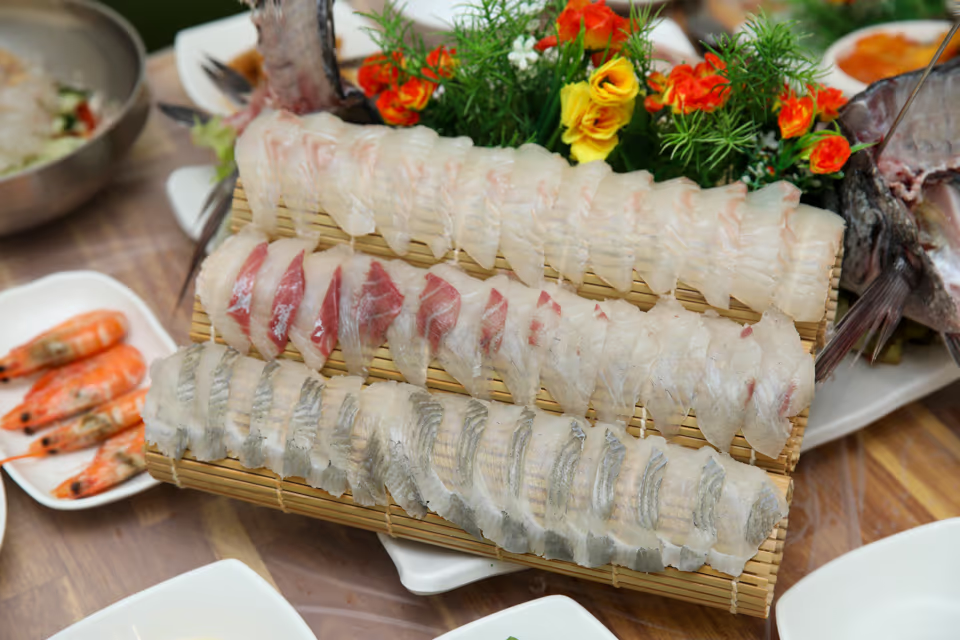
The biggest differences are how firm the flesh is and how long the finish lasts. A fish that grew up swimming in the open sea has dense muscle, so it pushes back when you chew, and after you swallow the sweetness rises slowly. A fish raised on feed in a tank has softer flesh with its fat spread evenly, so it sits easily in the mouth from the very first slice. Neither one can be called the better fish. At a Jagalchi sashimi restaurant, eight out of ten guests spot the wild one on the first bite, saying "this one is chewier", yet when the two plates are mixed together, half of them cannot tell the difference with a fatty species like olive flounder. The Jagalchi ajimae, with more than ten years of experience, always gives guests the same advice. If you want firmness and a long finish, choose wild, and if you want softness and evenly spread fat, choose farmed. With a species like sea bream the gap is clear, while with olive flounder and rockfish it tends to be small, so the answer depends on the species. Dipping heavily in vinegared chili paste buries the whole difference, so when you compare, use just a touch of salt or soy sauce.
Before You Order
- Resistance when you chew and a long finish point to wild
- Flounder and rockfish show a small gap, sea bream and other flatfish a large one
- Only salt, without chili paste, lets the difference show properly
수정횟집
Why farmed sashimi suits first-timers, families and group dinners better
Jagalchi Haean-ro
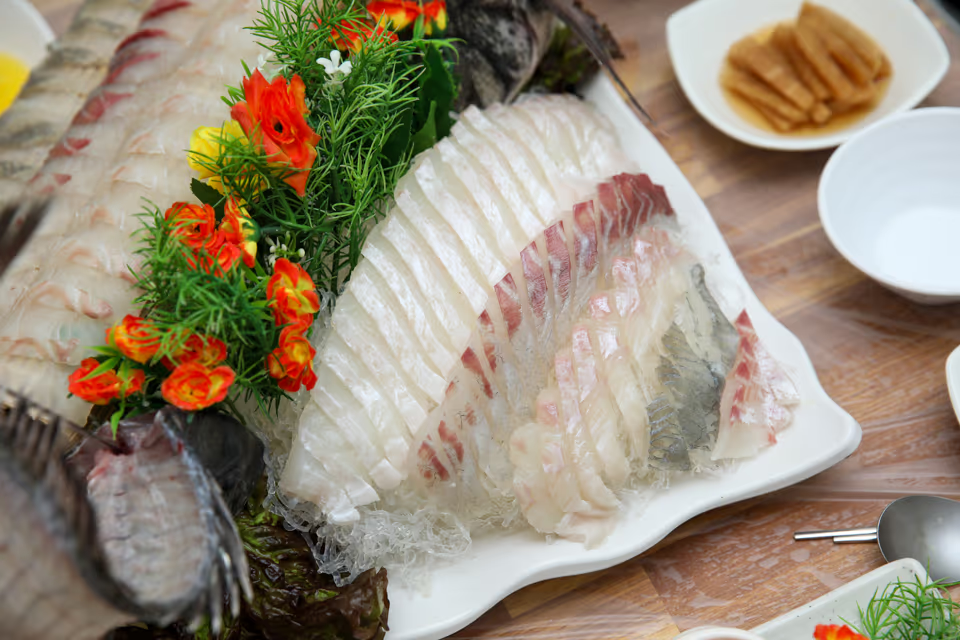
For first-time sashimi eaters and for family or company dinners, farmed sashimi is the right fit. There are three reasons. The flesh is soft, so children and older guests chew it easily, there is little fishy edge, so even without chili paste nobody balks at it, and the price stays the same all year, so once the headcount is set the bill is settled. The assorted platter at this Jagalchi Haean-ro restaurant is built on olive flounder, rockfish and sea bream, and farming is stable for these species, so the slices come out about the same thickness whatever the season you visit. Weekend evenings at 7 PM are the busiest hour, and most of the four-person family tables arriving then order the medium assorted platter at KRW 80,000 (about USD 58). Company dinners work the same way. When a group of more than ten goes all wild, the price swings a lot depending on the day of the species and the person collecting the money is stuck, but the assorted platter on fixed-size pricing is set at KRW 120,000 (about USD 87) for the extra large, which makes budgeting easy. The idea that farmed fish is a lower grade does not hold up on the ground at Jagalchi. It simply has a different use. People need a soft first experience before they go looking for the firmer one next time.
Before You Order
- For a family of four, the medium platter at KRW 80,000 is the most common order
- With children at the table, ask for mostly flounder and rockfish
- For groups, fixed-size pricing gives you the budget straight from the headcount
수정횟집
How to compare wild and farmed using the same species, a two-slice test
Jagalchi Haean-ro
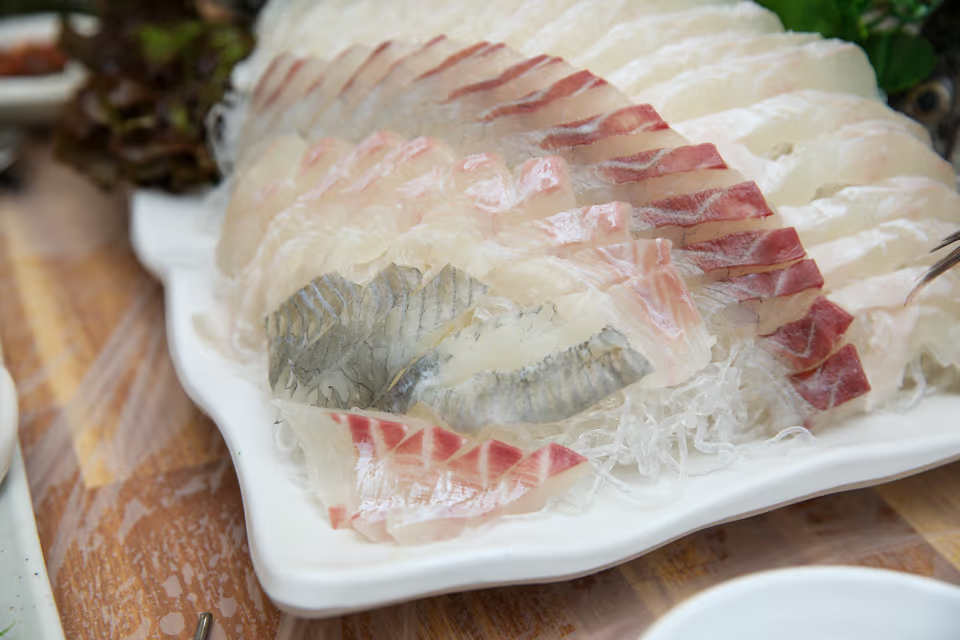
Laying one slice each of the same species side by side and eating them without chili paste is the fastest way to compare. The order goes like this. Dip one slice of farmed olive flounder lightly in salt and count how many times you chew, then right after that chew one slice of wild olive flounder the same way. If it takes three or four more chews, that is the difference in muscle. After swallowing, wait about ten seconds and compare the sweetness left in your mouth, and you can see the length of the finish. At this Jagalchi Haean-ro restaurant, ask for one slice of wild fish to be added on top of your assorted platter and the whole comparison is done on a single plate. The species guests use most for comparing is sea bream, and since the gap is clear there, even beginners notice it at once. Salmon, on the other hand, needs no comparison. The salmon that comes into Jagalchi is almost all farmed, and for that species the fattier side is actually the right one. Compare with white-flesh fish. Also take a sip of water before moving to the second slice, so the fat from the first one does not cloud your judgment.
Before You Order
- One farmed slice, then one wild slice, dipped only in salt
- Compare chew count and the sweetness ten seconds after swallowing
- Comparing with sea bream lets even beginners see the gap at once
수정횟집
Why wild sashimi costs more than farmed and why its price changes every day
Jagalchi Haean-ro
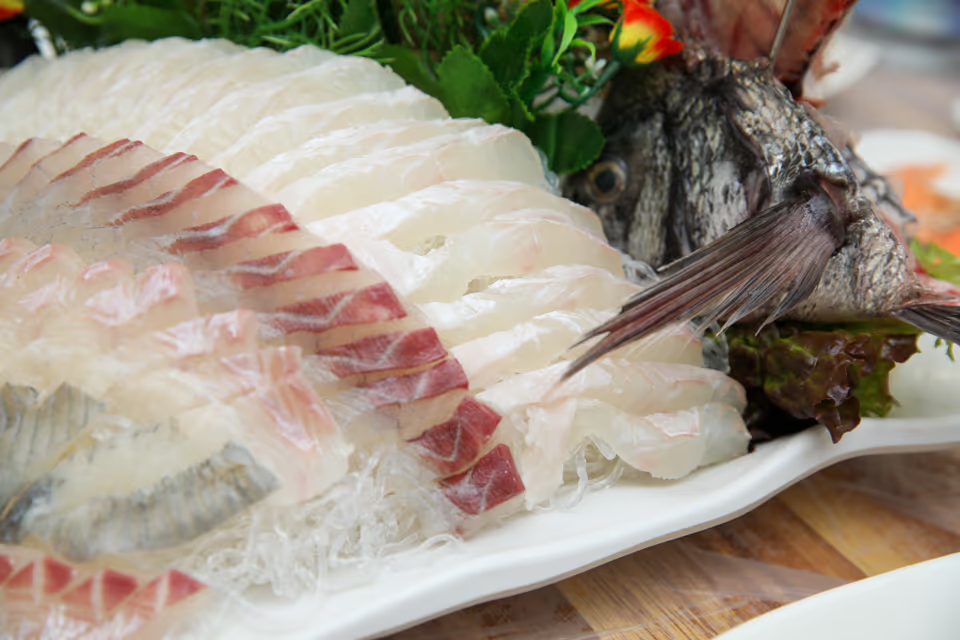
Wild fish costs more because the catch differs every day, moving fish while still alive is expensive, and some fish die along the way. Farmed fish raised to plan in tanks carries none of those three burdens, so its price can be fixed. That is why the assorted platter at this Jagalchi Haean-ro restaurant runs on fixed-size pricing, small KRW 60,000 (about USD 43), medium KRW 80,000 (about USD 58), large KRW 100,000 (about USD 72) and extra large KRW 120,000 (about USD 87), while premium wild sashimi is quoted from KRW 80,000 at a daily selection price. The daily selection price means picking, among the species that came in that day, the one with the best condition of flesh, and setting the price to match that build. On days when spotted halibut (ishigari) or roughscale sole comes in, the price moves up, and on days built mostly around red sea bream it comes down. The wild price not being printed as a fixed number on the menu is not a trick but a result of this structure. If the price feels like a stretch, you can add just one wild slice on top of the assorted platter. Most guests get their first taste this way. Before ordering, a single question, "what wild fish do you have today?", brings out the species of the day and the price right away.
Before You Order
- The assorted platter is fixed-size pricing, so the price comes straight from your headcount
- Premium wild sashimi starts at KRW 80,000 and varies with the species of the day
- Before ordering, just ask what wild fish there is today
수정횟집
How to tell wild olive flounder from farmed, the belly color test
Jagalchi Haean-ro
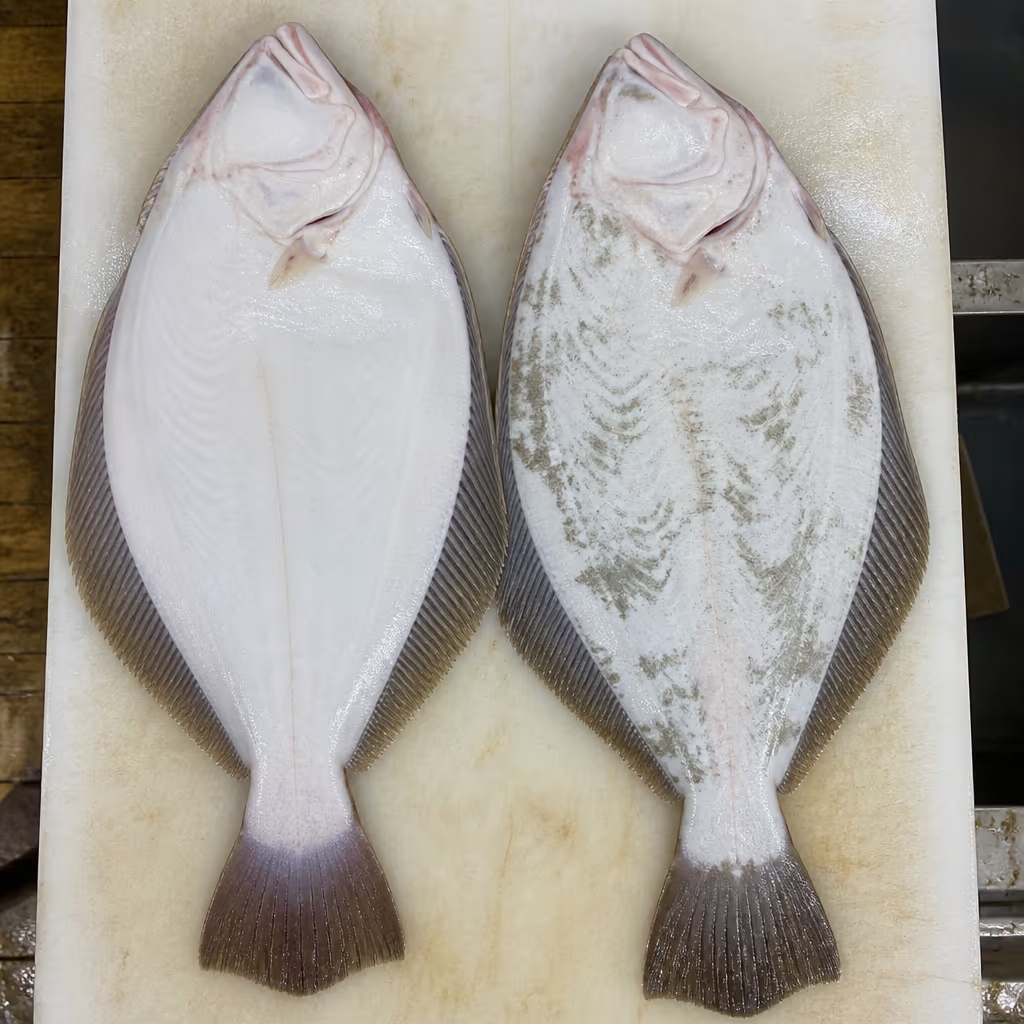
With olive flounder, look at the belly. A wild olive flounder has a plain white belly with no markings, while a farmed one often keeps dark blue-green blotches on its belly. A fish that roamed a wide sea floor grows up with a clean belly, while a fish that lay flat on the bottom of a tank for a long time has color soak into its belly. Ask at the tank for the flounder to be turned over and you can check it right there. This is the question guests ask most often in front of the tanks outside Jagalchi sashimi restaurants, so the vendors are used to it. This method works only for olive flounder, though. Sea bream, rockfish and black rockfish (bollak) are not sorted by belly color, and for those species you can only make a rough guess from whether the fins are intact and how deep the body color is. Once it has been sliced into sashimi, you cannot judge even olive flounder by its belly. At that point, go back to the chew-count comparison from the previous section. If you are not sure, just ask. A place that posts fixed-size prices has no reason to hide the origin or whether a fish is farmed.
Before You Order
- Ask for the flounder to be turned over in front of the tank
- The belly test works only for flounder, not for sea bream or rockfish
- Once sliced, fall back on chew count and finish
수정횟집
How to order wild or farmed at a Jagalchi sashimi restaurant, and how to get there
220m from Jagalchi Station Exit 2
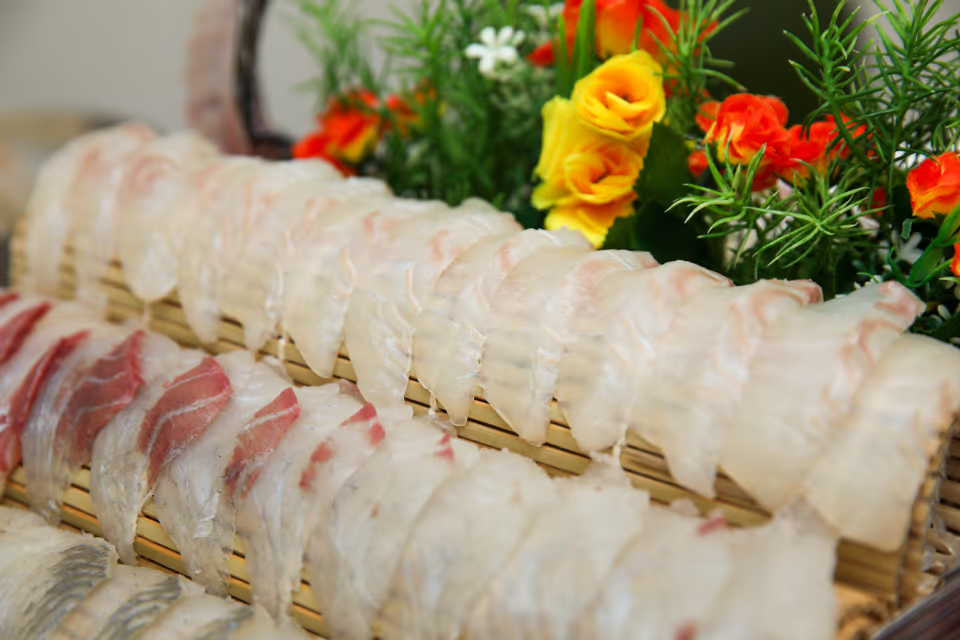
To order, you only need to say two things, your headcount and the purpose of the meal. Sujeong Hoejib runs both a standard farmed assorted platter and premium wild sashimi, so for everyday meals, families and company dinners it points you to the assorted platter (small KRW 60,000 to extra large KRW 120,000, fixed-size pricing), and for anniversaries or hosting guests to premium wild sashimi (from KRW 80,000, daily selection price). If you want to compare the two, ask for one wild slice to be added to the assorted platter. The side dishes change daily, built mostly around whatever is freshest. The restaurant is 220m from Exit 2 of Jagalchi Station on Busan Metro Line 1, toward Jagalchi Haean-ro, about a 3-minute walk, and three stops from Busan Station on Line 1. With 190 seats across the ground and second floors it can host group dinners, and for four or more, a call ahead to +82-10-8998-4803 will even tell you which wild species are in that day. Avoid lunch from 11:30 to 13:00 and dinner from 18:30 to 20:00 and you can sit down without waiting. Whichever you choose, the meal carries on to a spicy stew simmered from the bones or a bowl of rice, so there is no need to worry about leaving hungry after ordering only sashimi.
Before You Order
- Everyday, family and company meals take the assorted platter, anniversaries take premium wild
- To compare, ask for one wild slice added to the assorted platter
- For four or more, booking by phone at +82-10-8998-4803 is the sure way
| Item | Price | Notes |
|---|---|---|
| Assorted Platter, Small | KRW 60,000 | About USD 43 · for 2, farmed base, fixed-size pricing |
| Assorted Platter, Medium | KRW 80,000 | About USD 58 · for 3 to 4, fixed-size pricing |
| Assorted Platter, Large | KRW 100,000 | About USD 72 · for 4 to 5, fixed-size pricing |
| Assorted Platter, Extra Large | KRW 120,000 | About USD 87 · groups, fixed-size pricing |
| Premium Wild Sashimi | From KRW 80,000 | Daily selection price, spotted halibut, roughscale sole and others |
| Sashimi Set Meal | KRW 20,000 | About USD 14 · for one, an entry point for a first visit |
Wild and Farmed Sashimi FAQ
Nearby Attractions
Jagalchi Market main hall
3-minute walkCheck flounder belly color yourself at the live fish tanks
BIFF Square
5-minute walkSsiat-hotteok and other snacks after the meal
Gukje Market
8-minute walkTraditional market food and shopping
Yeongdo Bridge
7-minute walkOpens Saturdays at 2 PM
Before You Order
- First visit, the farmed small platter at KRW 60,000, from the second or third, add one wild slice
- When comparing, use a touch of salt or soy sauce instead of chili paste, on two slices of the same species
- At the tank, ask for the flounder to be turned over to see whether the belly is white or blue-green
- For premium wild sashimi, ask what there is today and you get the species and price
- Four or more, call +82-10-8998-4803, 220m from Jagalchi Station Exit 2, a 3-minute walk
Suggested Comparison Lunch
A Lunch That Compares Wild and Farmed on One Plate
- Jagalchi Station Exit 2, then check flounder belly color at the main hall tanks
- Into the Jagalchi Haean-ro restaurant, order a small platter plus one wild slice
- Compare chew count and finish on two slices of the same species dipped in salt
- Review the traits of each species and pick what to try next time
- Ssiat-hotteok at BIFF Square, then the Yeongdo Bridge opening (Saturdays at 2 PM)
Which Side Each Species Falls On
Wild territory (daily selection price)
- Spotted halibut
- Roughscale sole
- Red sea bream
Species where farming is stable (fixed-size pricing)
- Olive flounder
- Rockfish
- Salmon
Orders for comparing
- Small platter plus one wild slice
- Premium wild sashimi
- Sashimi set meal
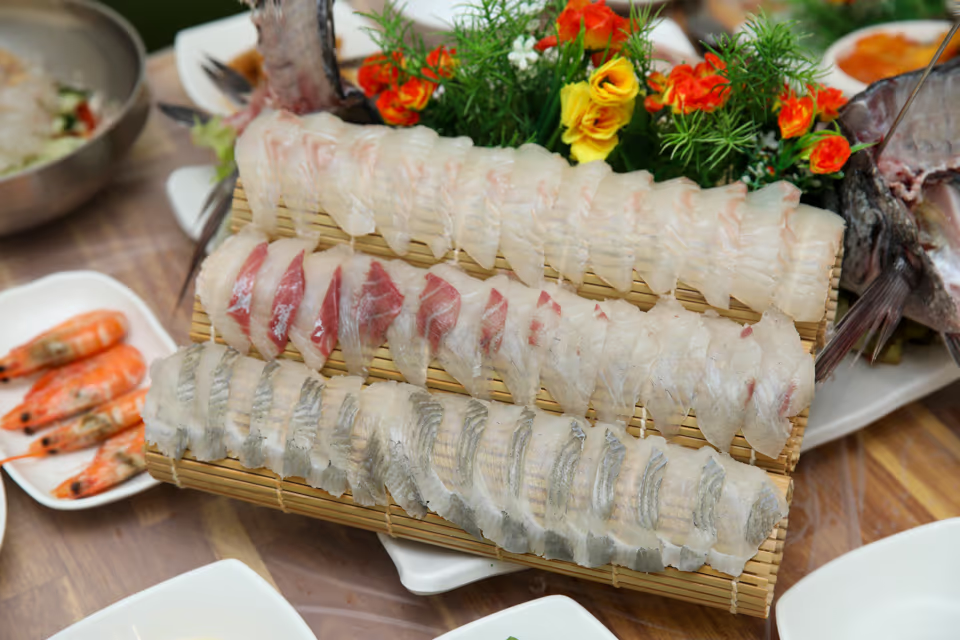
On Jagalchi Haean-ro, a Jagalchi ajimae with over 10 years of experience picks the species for your plate
Farmed assorted platter · premium wild sashimi · soy marinated crab · domestic live hagfish grilled over briquettes, 220m from Jagalchi Station Exit 2
Read the full guide