Four Kinds of Sashimi Place at Jagalchi Market, and How Each One Charges You
The four venue types price and seat you in completely different ways, so deciding your purpose first narrows the answer to one
The Short Answer
Jagalchi divides into four venue types that each charge differently: street stalls where you haggle, the main hall first floor with listed species, second-floor sauce-table rooms charging fish cost plus a per-person fee, and standalone restaurants on Jagalchi Haean-ro bundling fish, accompaniments and side dishes under fixed-size pricing from KRW 60,000. Takeaway suits the stalls, a long sit-down suits a standalone restaurant, and the three things to check are the price listing, the tank and the additional costs. 220m from Jagalchi Station Exit 2.
수정횟집
What types do the sashimi places at Jagalchi divide into
Jagalchi Market area
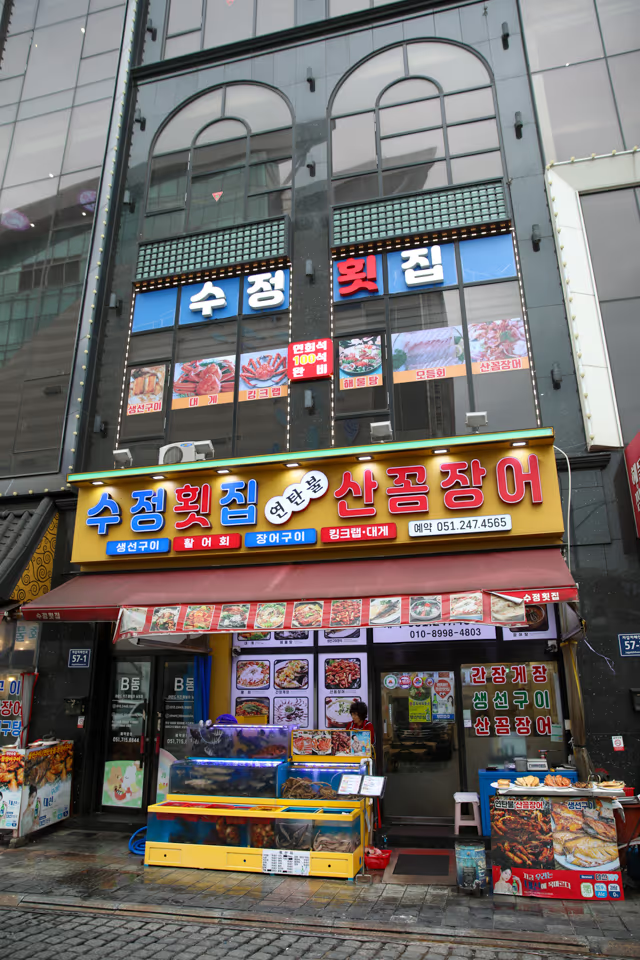
They divide into four types: the street stalls, the live-fish zone on the first floor of the market main hall, the sauce-table rooms on the second floor, and the standalone sashimi restaurants along Jagalchi Haean-ro. A stall is a spot on the roadside with tanks set out where the fish gets cut and sold, so takeaway is the center of it; the first floor of the main hall has live-fish and fresh-fish shops lined up under a roof, and it is where you pick a species and hand it over to be prepared. The second-floor sauce-table rooms work by carrying up the fish you bought below and paying a per-person table charge to eat it there, while a standalone restaurant is a place that serves everything from the fish to the accompaniments and the stew under fixed-size pricing in one shop. Even within the same Jagalchi, these four differ completely in how they set a price and how you get seated. Six in ten guests wander around the market entrance without knowing the types and go into whichever place calls out first, but settling your purpose first and then picking the type makes the math simple. As the restaurant veteran with over a decade at Jagalchi sees it, the stalls and the main hall suit the experience and takeaway while a standalone restaurant suits sitting down to a full table. In the evening a standalone restaurant has its front tank lit so it stands out from a distance, and the signboard lists its main dish, which shows you what the place does before you walk in.
Before You Go
- Stalls and the main hall for the experience and takeaway, a standalone restaurant to sit down to a full table
- Decide the type before you enter the market and you will not wander at the entrance
- In the evening a standalone restaurant is recognizable from a distance by its lit tank and signboard
수정횟집
How the fixed-size pricing at a standalone restaurant is put together
Jagalchi Haean-ro
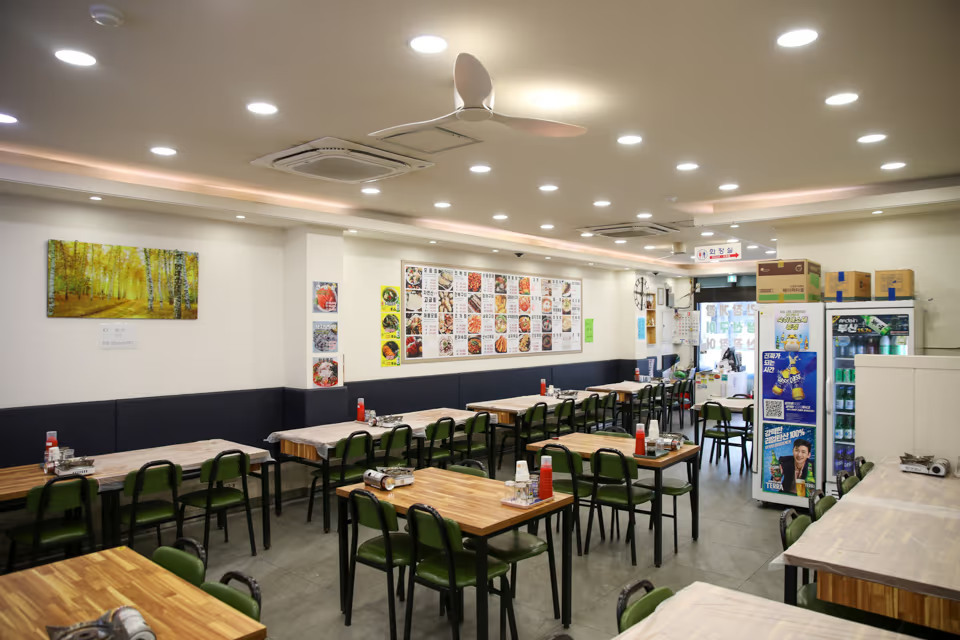
It is a method that bundles the sashimi plate, the accompaniments and the side dishes into one price. Pick the size that matches your headcount, such as an assorted platter at KRW 60,000 small (about USD 43), KRW 80,000 medium, KRW 100,000 large or KRW 120,000 extra large, and alongside the fish, accompaniments like steamed shrimp, abalone, sashimi salad, fried items and grilled fish come out in sequence, with side dishes rotating daily based on what is fresh. A spicy stew or fried rice is a separate order, but the prices are printed on the menu so the additions do not grow beyond what you expected. Premium wild-caught sashimi gets quoted from KRW 80,000 at the day-selected species price, with suggestions like spotted halibut or roughscale sole depending on what yielded well that day. The first-floor hall is a space you walk straight into from the entrance with no step, which keeps two-person and four-person tables turning over quickly. Between 6:30 and 8 PM is when the first floor fills first, and arriving before or after that gets you seated without waiting. Having the price set is the biggest reassurance for a first-time guest, and the whole of this method amounts to the bill carrying no number that differs from the menu. Knowing the size names alone settles your budget before you sit down.
Before You Go
- Small for two, medium for four, large for five or six, extra large for a group is the basic matching
- The stew and fried rice are separate orders but their prices are printed on the menu
- 6:30 to 8 PM is when the first floor fills, so before or after that is roomier
수정횟집
How costs get added at a second-floor sauce-table room
Jagalchi Market main hall, 2nd floor
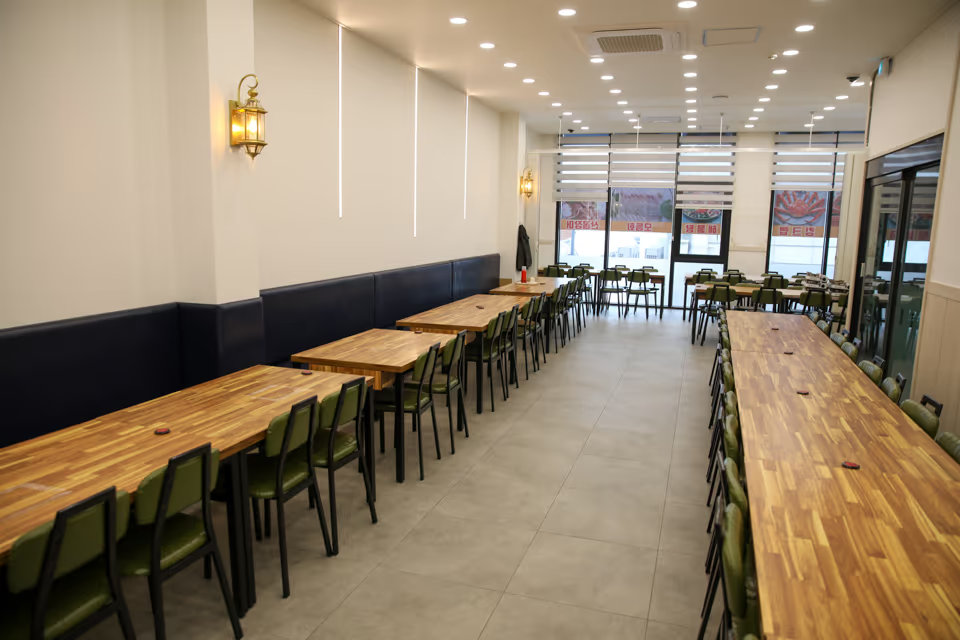
It is a structure where the cost of the fish and the cost of the seat get added separately. You pick a species at a stall or in the main hall downstairs and pay for the fish to be cut first, then go upstairs and pay a per-person table charge to receive the vinegared chili sauce, vegetables and basic side dishes. The spicy stew, rice and drinks get ordered separately on the spot, which means two or three additions appear on top of the budget you first planned. None of this means the structure is bad. There is genuine enjoyment in choosing the fish yourself, and for someone who knows species it is a way to buy exactly what they want and nothing else. The difficulty is that once your party passes six, securing seats gets hard, and the person buying the fish and the person claiming the seats have to split up and move separately. A standalone restaurant has none of that process. With 190 seats across the first and second floors it can take a group dinner, and the second-floor group seating lets you go up the stairs and sit in one long row. Nine in ten company-dinner guests choose to sit and receive everything at once rather than spend the time choosing fish. For a gathering with a set budget, the fixed-price side shows you the total in advance better than the table-charge structure does, while for a small group whose purpose is picking species, the sauce-table side carries the fun.
Before You Go
- A sauce-table room is fish cost plus a per-person table charge plus stew, rice and drinks separately
- Past six people you need to secure seats and split the roles between you
- A gathering with a set budget is easier on fixed pricing, where the total shows in advance
수정횟집
What is different between the street stalls and the live-fish zone of the main hall
Jagalchi Market area
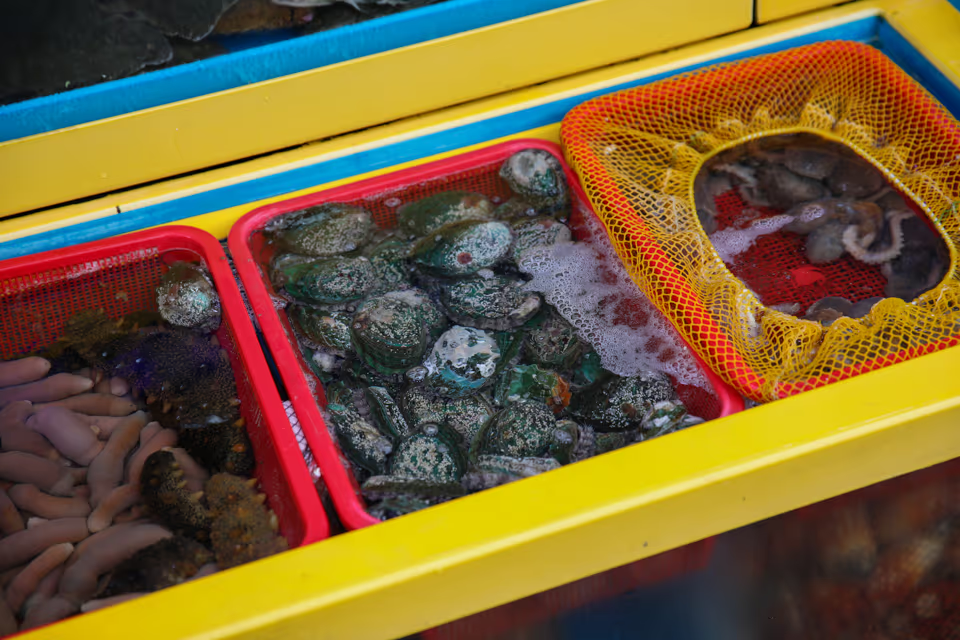
The biggest difference is that a stall is a roadside pitch while the first floor of the main hall is a permanent shop under a roof. A stall keeps only the species it will sell that day in one or two tanks and haggling goes back and forth, and since many of them carry no marked price, you have to ask before you buy. The first floor of the main hall has a number and a species listing at each shop with the live-fish zone and the fresh-fish zone separated, which makes it good for comparing as you choose. Both places prepare the fish on the spot, and packed with ice it travels with you for up to about two hours. On a rainy day the main hall with its roof is the easier one, and if you want the market atmosphere in your photographs, the stall street is better. A standalone restaurant also sets a live-fish tank out front, but that tank is not for selling. It is there to show the species being used that day, so there is no haggling and what arrives follows the menu sizes. Whether the species are alive and moving in the tank and whether the water is clear are two things you can judge by the same standard regardless of type. Either way, before 11 AM the water is clearest and there are fewer people, while on a weekend afternoon the front of the stalls is the most crowded part of the market.
Before You Go
- At a stall ask the price first; in the main hall choose by the shop number and species listing
- The tank in front of a standalone restaurant displays the day species rather than selling it
- Before 11 AM the water is clearest and there are fewer people
수정횟집
Which of the four types suits which kind of visitor
Jagalchi Market area
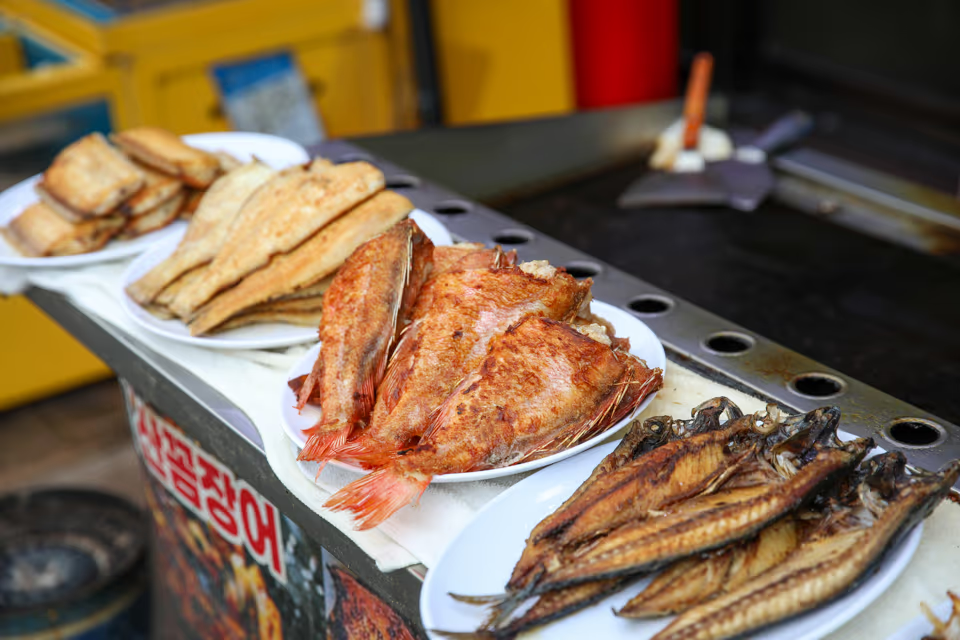
The stalls and the main hall for the experience and takeaway, a standalone restaurant to sit down to a full table, and a place with single-person set menus if you are alone. If you want to carry it back to your accommodation or you want the enjoyment of picking the species yourself, the stalls and the first floor of the main hall are the answer. An occasion where the sitting runs long and the party is large, like family, older parents or a company dinner, is easier at a standalone restaurant that splits across floors, and cooked dishes like the spicy stew and the porridge come to the same table. Alone, a standalone restaurant with single-person items such as the sashimi set meal at KRW 20,000 (about USD 14), the sashimi rice bowl at KRW 15,000 or the grilled fish set at KRW 15,000 carries less pressure, and with grilled rockfish, mackerel and flounder laid out by the plate on the display case out front, you can see what the grill is that day before you go in. A sauce-table room suits a group of two to four who know their species. Seven in ten guests follow the same flow, a standalone restaurant on the first visit and then choosing in the main hall for the sauce-table rooms from the second, so trying each type once settles which way is yours. A phone reservation to hold seats in advance is more reliable on the standalone side, and giving your headcount and time at +82-10-8998-4803 gets you matched to the first or second floor.
Before You Go
- Takeaway and the experience at the stalls and main hall, family and company dinners at a standalone restaurant across floors
- Alone, look for single-person items like the set meal at KRW 20,000 or the grilled fish set at KRW 15,000
- A sauce-table room suits a group of two to four who know their species
수정횟집
What to check at each type and how to find your way here
Jagalchi Station Exit 2, 220m
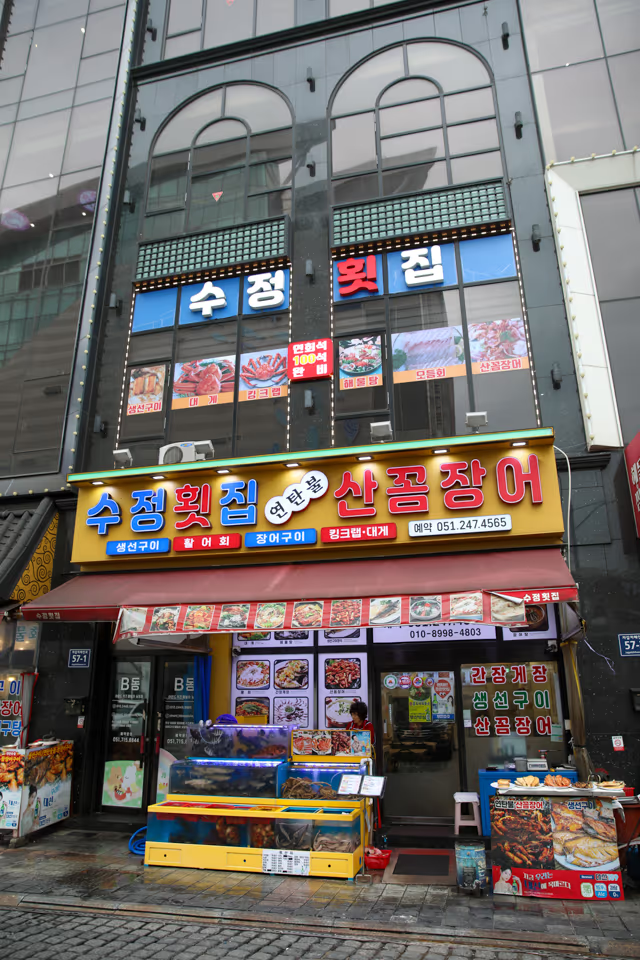
Three things cover it: the price listing on the menu, the condition of the tank, and the additional costs. At a standalone restaurant, look for whether the sizes and their prices are printed on the menu; at a sauce-table room, ask the per-person table charge and the stew price before you sit; at a stall, confirm the species and the price first and then hand it over to be prepared. For location, the standalone restaurant street is 220m from Jagalchi Station (Line 1) Exit 2 toward Jagalchi Haean-ro, about a 3-minute walk, and the market main hall is a 3-minute walk from there. It is two stops from Busan Station on Line 1, so 20 minutes after the KTX arrives you can be seated at any of the types. City buses 8, 30, 71, 113 and 1003 stop at Jagalchi Market, and a taxi from Busan Station runs about 10 minutes and KRW 6,000 to 8,000. BIFF Square is a 5-minute walk, Gukje Market 8 minutes and Yeongdo Bridge 7 minutes, which keeps the route after the meal short. For four or more, calling +82-10-8998-4803 holds a first or second floor seat matched to your headcount, and since 7 PM on a weekend is the busiest hour, arriving before or after it means no wait. Coming in with the type already decided removes the time spent wandering at the market entrance, and that time turns into time spent sitting down.
Before You Go
- Check the price listing, the tank condition and the additional costs, adjusted to the type
- Two stops from Busan Station on Line 1, seated 20 minutes after arriving
- Call +82-10-8998-4803 for four or more, and before or after 7 PM on a weekend means no wait
| Item | Price | Notes |
|---|---|---|
| Assorted Platter, Small | KRW 60,000 | About USD 43 · for 2, fixed-size pricing |
| Assorted Platter, Medium | KRW 80,000 | About USD 58 · for 4 |
| Assorted Platter, Extra Large | KRW 120,000 | About USD 87 · for a group |
| Premium Wild-Caught Sashimi | From KRW 80,000 | Day-selected species price |
| Sashimi Set Meal | KRW 20,000 | About USD 14 · single tray, dining alone |
| Grilled Fish Set | KRW 15,000 | About USD 11 · single tray, grill instead of raw fish |
Jagalchi Venue FAQ
Nearby Attractions
Jagalchi Market main hall
3-minute walkLive and fresh fish shops, 3 minutes from the restaurant street
BIFF Square
5-minute walkSsiat-hotteok and other snacks after the meal
Yeongdo Bridge
7-minute walkDeck lifts Saturdays at 2 PM, a walk by the water
Gukje Market
8-minute walkTraditional market food and shopping
Before You Go
- Decide your purpose first and the venue type narrows to one
- Check the price listing, the tank condition and the additional costs
- The tank in front of a restaurant displays the day species rather than selling it
- Before 11 AM the water is clearest and the market is quietest
- 220m from Jagalchi Station Exit 2 toward the coastal road, about a 3-minute walk
Suggested Day Course
Seeing All Four Types in One Afternoon and Evening
- Walk the stall street while the water is clear and the crowd is thin
- Compare species by shop number on the main hall first floor
- Lunch alone or in pairs on a single-tray set meal at a standalone restaurant
- Return as the front tanks light up, order by fixed size for the group
- Close with a spicy stew, then walk to BIFF Square
What to Do Where
Jagalchi Haean-ro (standalone restaurants)
- Assorted platter
- Premium wild-caught sashimi
- Spicy stew
- Single-tray set meals
Jagalchi Market main hall (live and fresh fish)
- Live fish by shop number
- Fresh fish zone
- 2nd-floor sauce tables
The stall street (takeaway and photos)
- Cut-to-order fish
- Iced takeaway
- Market atmosphere
On Jagalchi Haean-ro, a Jagalchi ajimae with over 10 years of experience matches your headcount to the first or second floor
Fixed-size pricing from KRW 60,000 · Single-tray set meals from KRW 15,000 · 190 seats across two floors, 220m from Jagalchi Station Exit 2
Read the full guide